Hacker News new | ask | show | jobs
by Joakal 2022 days ago
Coca-Cola privatises the profits from sales and socialises the plastic costs.

Even if people don't litter, there are landfills increasingly filling with plastic not being reused. The solution is quite mundane, a plastic bottle tax to pay for processing it. People litter and makes processing cost more? Increase tax.

They need to figure out ways to reduce this tax burden beyond lobbying. Ie campaign to avoid littering, glass bottles, etc. Currently they wage multi million campaigns against this simple tax all over the world, even in Australia where tax is 10c per bottle.

3 comments

The solution isn’t a tax but a deposit you get back for bringing back the bottles. It worked greatly for Germany and other European countries, but Coca Cola is heavily lobbying against similar laws.
Seems like we need both? A deposit encourages people to return the container responsibly but the product price still needs to accurately reflect the externalities. If the container is easier to reuse or recycle then the tax can be less.
You could just ignore the whole incentive thing and demand more recycling.

Here in denmark we still allow Coca-Cola to externalize the cost, but then we have a public system that collects and recycles/reuses the bottles, Funded by taxes (who cares which ones). In this way the product price still doesn't reflect the true cost, but at least the bottles get recycled.

Well everyone should care which taxes because that drives incentives.

Recycling is not ecologically free. If we are going to keep living on this planet we need to incentivize sustainable practices. Specific tax policies can help make those practices economically feasible.

If your grid is clean and you use a utility tax to fund recycling then you have inflated the cost of renewable energy and subsidized plastic.

Agreed on the deposit. We had that in Oregon and it worked wonders because the homeless would collect discarded bottles and get enough money for dinner off of them.
How about just bringing it back without a tax? Works pretty good in Switzerland...
Glass bottles are arguably worse for the environment.

More drink foundations where you bring your own bottle, and more convenient recycling options (smart bins everywhere that credit you 10c for every bottle you deposit... then raise this to 15c, 25c, etc).

I imagine the 10c doesn't encourage as many people as a +1 public recycling score on one of your social media profiles would.
In Finland almost every single can, and drinks bottle, has a corresponding price printed on it, ranging from €0.10 to €0.25. You can return them at almost any local store and receive cash.

There are hundreds of unemployed/retired/homeless people who scour parks, and the city centers, collecting these discarded containers and recycling them for the money.

The return rate is pretty high, even with the tiny amount of money per-item.

Note that the "homeless" people in Finland are mainly people who refuse to accept support from the social welfare, this is because they prefer to get drunk instead of spending it on food and rent. The social welfare eventually suggests a different system for such people: pay the rent for them and give a special card that can be used for anything except alcohol and cigarette. If the people keep refusing that other option, then they went homeless on their own accord and keep spending the welfare on alcohol and living on the streets. Such people are very rare in Finland in reality however, but they do exist.

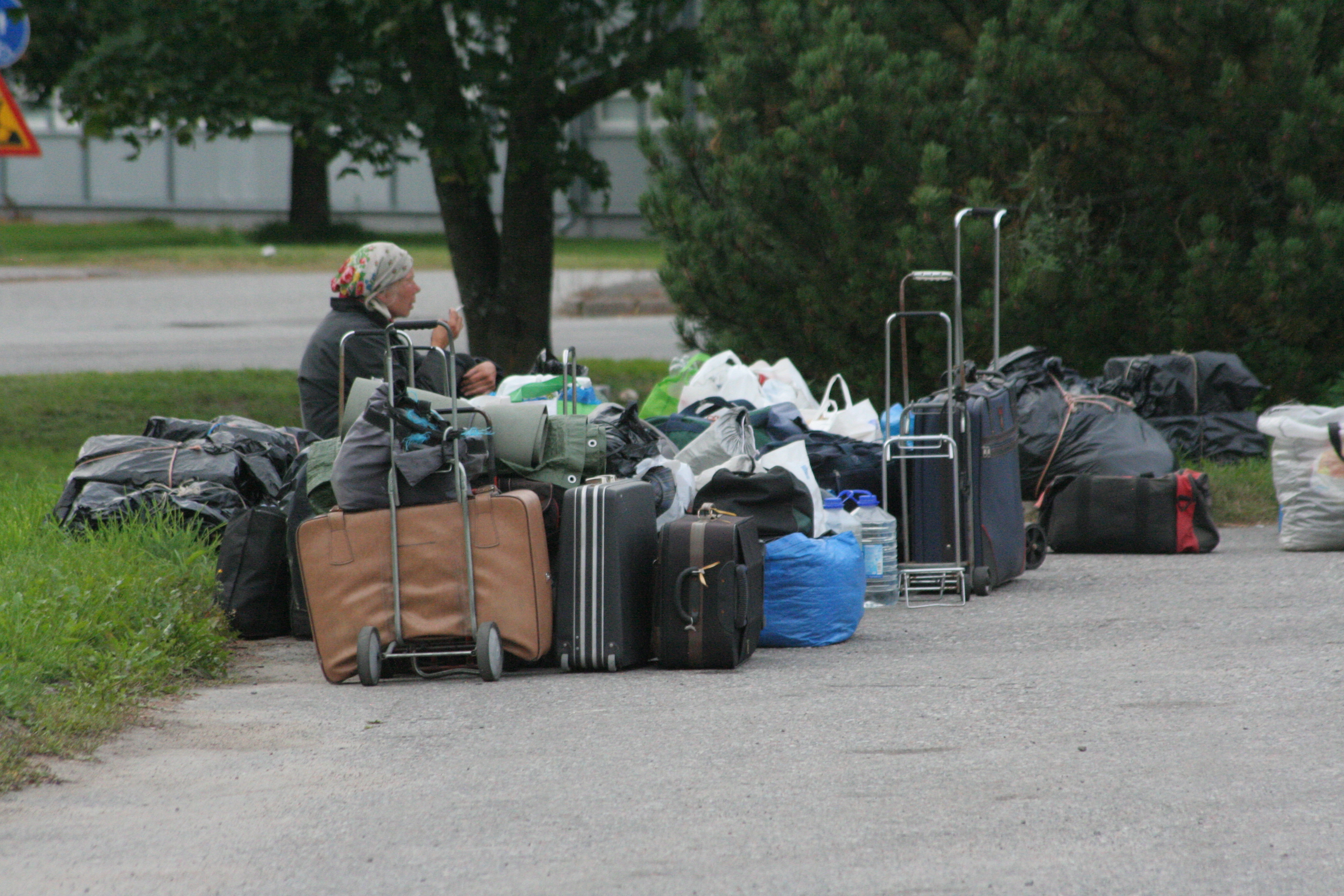
There is also one woman [1] who for whatever reason chooses to live homeless with bunch of luggage. She doesn't drink at all, and keeps moving from town to town with all her luggage, by walking.

Here's also a discussion about the Romanian beggars you see in Helsinki streets. [2]

1: https://shl.fi/wp-content/uploads/2012/09/IMG_2935.jpg

2: https://www.reddit.com/r/Finland/comments/79mqjs/question_ab...

I heard that too! How I wish that my country will do the same thing.
Hey students looking for extra cash do this often too!!
It's cheaper both economically and energy-efficent to just produce new glass bottles rather than to sort, clean, crush and melt old ones.
Why not clean then reuse the glass bottles (skipping crush, melt and fabricating)? This is what was done up until the 80s.
This is still done in Germany to a fairly large part, be it glass or reusable plastic bottles. An argument I've heard from the company producing one-time-plastic bottles for the Schwarz Group:

- Lots of chemistry and treatment is needed to clean used bottles. - It is logistically more efficient to crush one-time-plastic bottles instead of moving around trucks with plastic bottles or heavy glass bottles.

Logistically more efficient but what about the complete environmental impact? Are they also considering the costs of disposing of this plastic? Aren't trucks driving around empty half the time anyway? Can the grocery truck just haul empties back to the distribution center where they are handed back to the trucks from the manufacturer?
I just started getting glass milk bottles in the store here in Arkansas that I can return for a $2 deposit. Very happy about this and hope it becomes more popular (again, well not sure if the US ever did it).
That doesn’t take into account the economic costs Of a degraded environment or oceans gyres filled with plastic. It ignores the externalities.
Why point the tax specifically at bottles and not other plastics? Does the plastic used in bottles have some special chemical property that makes it more harmful to the environment?
Sure, tax all disposable plastics, or better yet, tax all disposable products, or even better yet tax products based on their durability. The point is use a regulatory mechanism to correct a market failing.