Worker always pays all tax. If you get X and pay Y tax and employer also pay Z tax, the reality is that you make X+Y+Z and pay Y+Z of tax, it just happens that Z is attributed to the employer, but it makes no difference. So if the Z increases, then X and Y will decrease or if X and Y stays the same, it only means you are now making more, but the difference goes to the state purse. Now if the increase goes beyond the budget allocated for salaries, the solutions are - increase the budget, make cuts, fire someone and if employer increases the budget then you just made a rise.
As an employer I would have an incentive to request works to show up in the office in order to not pay that tax.
Let’s say for a big company scaling down workspace they can offset the tax. For smaller companies it might actually be more cost effective to keep the office and demand works to come in.
Also why should anyone subsidise someone because their job requires them to be physically somewhere?
Also why stop there? Why not tax ppl who have a less stressful job? Or less mentally demanding? Or less physically demanding? And then distribute that tax around.
Honestly, I chose to be a CS because I can work from home. That was the one thing that made me switch from medicine or experimental physics. Why should I be put in a worse situation because of that. And finally I have invested heavily into creating a room in my flat that acts as an office: Multiple monitors, desk, chair, servers, gigabit internet, etc. This contribution to the economy would not have happened if I was not WFH.
It's the fact that a BANK is suggesting that CUSTOMERS take care of THE BANK's problems.
Their piss-poor planning is not my emergency. And if it IS my emergency, you can bet that additional taxes will not be on the table as a fix. Getting rid of the banking system and replacing it with something that works WILL be on the table, though.
I think the expectation is that employers would just reduce the salary of all WFH employees until they are paying the same amount as they were before. I would expect very few, if any, US companies would shoulder the burden themselves and keep their employees salaries the same
Even worse, this encourages companies to needlessly maintain office space so as to shift the tax burden onto the employee. So you have the inefficiency from lost income for the employee and inefficiency of misallocated resources.
Obvious solution is to tax high earners more than low earners. If the inequality is increasing anyways, increase the amount of tax the high earners have to pay, and lower the one for low earners.
But if you're one of those high earners (that let's say works at Deutsche Bank) who sit in an office, you're not gonna write a proposal for higher tax for yourself. So instead you focus on those other people, who are "stealing" your salary by not having to go to the office anymore.
That's exactly what they're suggesting. You forget what "high earners" are and aren't. It is not the super-rich since the assets of the super-rich don't actually amount to that much compared to the total.
The state taxes where the lion's share of TOTAL wealth is (not wealth per person). That's the income of the middle class. That's why another new tax on income is suggested.
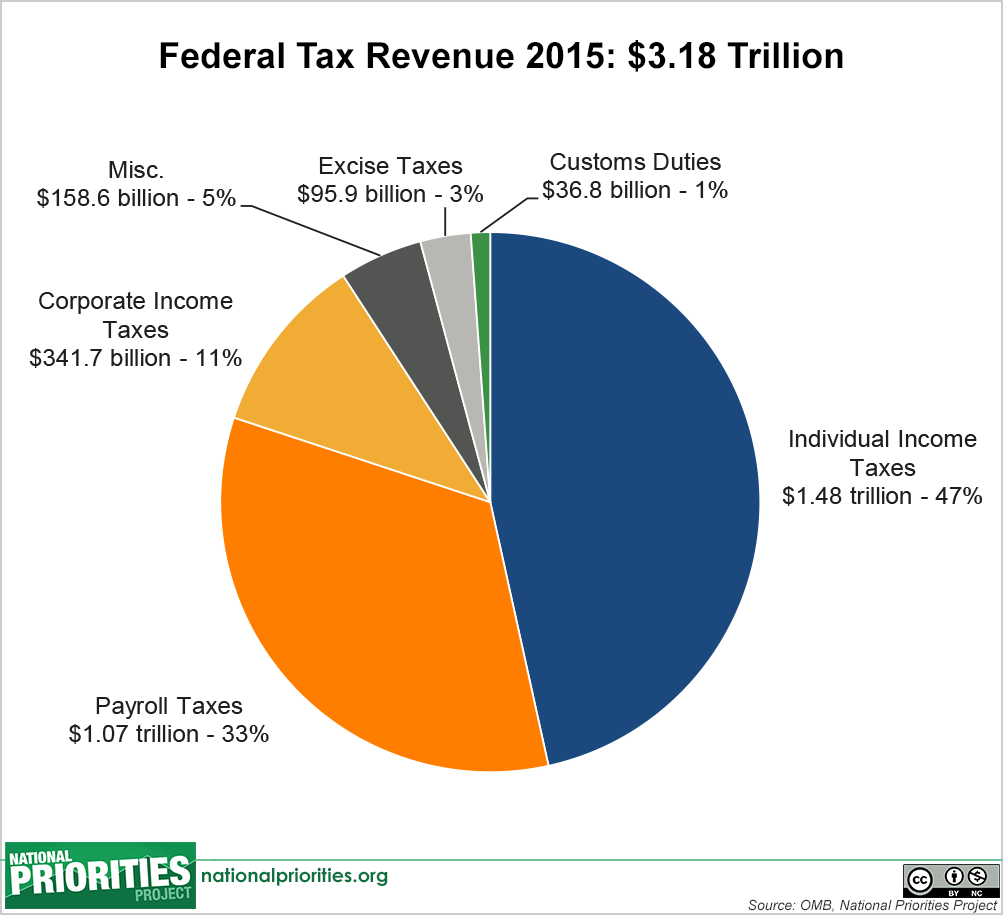
So middle class income represents 80% of the total tax income (and that's ignoring that customs duties and excise taxes also mostly come from that bucket, then we'd easily get to 85%)
"High earners" are generally defined as anyone earning more than double the average income in the country. For the US that's anyone making $62k2 = $120k per household*. Or for an individual that would be a chunk above that $62k, let's say $68k. All figures before tax, of course.
> The tax would be paid for by employers and the income generated would be paid to people who can't do their jobs from home.
But somehow nobody in this thread seems to have read that sentence.