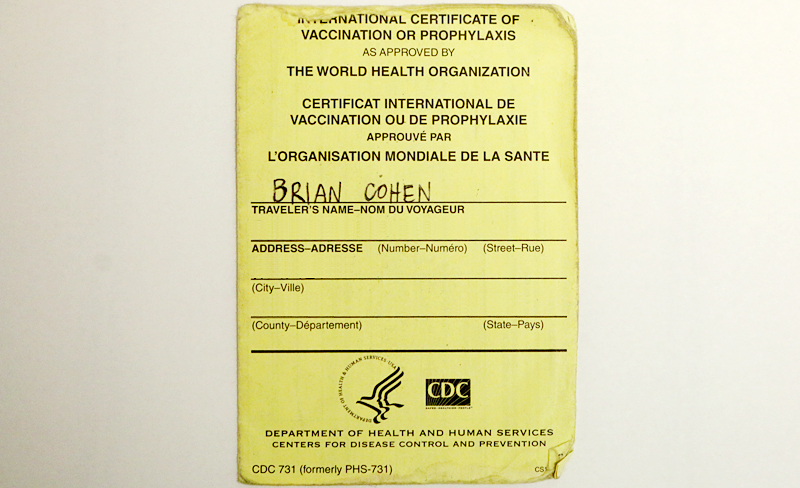
| Nothing there is at all incompatible with what I had to say. In context, the WHO is saying that getting the disease once may not be a lifetime immunity to COVID guarantee and shouldn't be used as the basis for issuance of something along the lines of yellow fever prophylaxis certifications like these [1]. I agree. In fact, its highly unlikely, as with coronaviridae we've seen that the milder the disease the less likely you are to obtain long-term immunity. Even SARS, a much, much more serious disease, gives you 2-3 years as per my reference. However, that's not what GP was arguing. GP argued broadly that "people who test for antibodies [may not be] immune to future infections." That's extremely unlikely. The question is how many people, and for how long, and then how do we utilize that information. Broadly speaking a positive test for antibodies means you're pretty likely immune at the time the test is taken. Of course the question is how that antibody response changes over time. I was pretty clear about that: "Generally for as long as you show antibody response you won't be re-infected because that's what antibodies do." The WHO is saying don't issue one-off certificates of immunity for life on the basis of testing positive for antibodies at one point in time before we know more. I agree. I suspect a round of infection is likely to tide us over to a broad vaccination program, but we need a study. [1] https://thegate.boardingarea.com/wp-content/uploads/2016/04/... |
""There is currently no evidence that people who have recovered from COVID-19 and have antibodies are protected from a second infection.""
They were prompted to issue this because some people were touting this idea of immunity being granted perpetually and allowing people to safely return to work.
"Broadly speaking, a positive test for antibodies means you're pretty likely immune at the time the test is taken."
That's in complete contradiction to what the WHO is saying. Read carefully: There is no evidence.
You're using circular arguments to provide bad information. Something you've consistently been doing.
"...but we need a study."
Why? You've said it's unlikely to be different than other viruses. Of course we need a study, because we don't know.