- the worms are very fragile, so they must no be too cold, too hot, having not enough food or too much of it or they die
- it supposed to be able to be inside, with no fly. But having no fly requires a very balanced PH, so if you mess up, you're gonna have a bad time
- it's slow. In the summer, I eat so much fresh vegetables and fruits the worms can't keep up.
Eventually I gave up.
The 2 setup that worked for me were:
- I'm in a flat, but the gov have a composting spot for the whole street. Common in Germany, very handy.
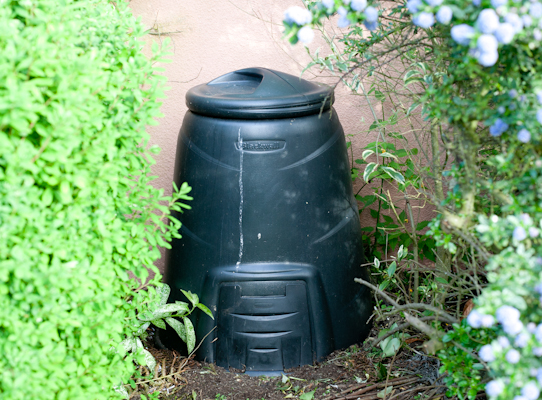
- I'm in a house with a garden, then I just have a big pile to compost things outside, no worms required. It's simple, no-maintenance, and handle up to 10 people green trash in the summer in the source of France.
have you tried putting the worm bins directly into the soil with the bottom cut out? It is a permaculture technique and i believe the soil keeps temperature relatively stable.
I am in scotland and it never gets below -4 degrees celsius or above 25.
if you get the mix of waste right, then the worms will come.
There are two types of composting: cold and hot.
Cold is most common becuase you are adding things gradually, so it doesn't have enough mass to get going (or it smells like fart). It takes longer to compost.
Hot composting is where you either get the mix just right, or you have enough mass (0.5m3+) of stuff to get it going. You can expect it to reach temperature of 40-60 degrees celcius. The compost from this is generally better, and doesn't have seeds waiting to cause weeds.
Tips on composting:
o If it rots, it goes in. (this means paper, cardboard, meat, cheese, etc,etc)
o If its smelling like fart, its too wet, put in tree chipping, straw/hay, anything woody that absorbs moisture and reduces overall density
o too much on one thing is bad (grass clippings is notorious)
o autmn leaf fall is brilliant, mix that in
o Mix with a fork once a month
o biodegradable bags only degrade if they are empty. don't fill them full of waste, they stagnate
Regarding grass clipping: I find it helps to let them dry out first (not completely) before mixing into pile. Otherwise they tend to mat up and not mix well.
I never tried worms because I had such good luck with hot composting using the above tips. Although you have to be careful with wood, I end up burning anything thicker than a pencil and then mixing the charcoal back into the pile.
I've been trying for a year and I'm on my third batch of worms. The first two batches died (I think due to summer/compost heat) but the soil they produced was really high quality so I will keep trying.
When it gets warmer I will need to put blocks of ice (in plastic bags) in to keep them cool. Will also try separating some worms and keeping them indoors with a much smaller quantity of food.
We've had worms for composting for about six years now.
To keep them happy, you just need enough paper / cardboard to regulate excess moisture. Plus a bunch of drain holes.
If the environment you've created isn't something a plant would want to live in, a worm isn't going to like it either.
Our worms have survived a tremendous amount of neglect.
Sadly, my wife had our worm bins sitting on the driveway on garbage day last fall and the garbage man mistook them for garbage. Trying to rebuild our colony from ones we dug up from the garden where we had deposited them earlier in the year. It's been slow going and we'd probably be just as well off to order a new batch.
If you do this, please do not release the worms into the wild unless you know they are a native species that isn't over running the local habitat. Worms can cause a lot of havoc.
We're looking into this as well (also vegans), it's just me and my girlfriend though and we wonder if we would produce enough food scraps to feed them. Do you keep them inside? and do you have any issues with them getting too cold?
They self-regulate in terms of food, assuming they have enough space. So if you don't generate enough food, their population dwindles a little bit. But I'm pretty sure a small household would be able to generate way more than what a reasonable single bin can handle. Especially if you eat fruit. Just a few banana peels and you're sorted for like a week! Also, remember they eat paper and other bedding which goes along with the food waste.
The best compost design for worms is called "horizontal migration". It provides a gradient of temperature, moisture, decomposition stages, and allows for eggs to develop undisturbed.
- the worms are very fragile, so they must no be too cold, too hot, having not enough food or too much of it or they die
- it supposed to be able to be inside, with no fly. But having no fly requires a very balanced PH, so if you mess up, you're gonna have a bad time
- it's slow. In the summer, I eat so much fresh vegetables and fruits the worms can't keep up.
Eventually I gave up.
The 2 setup that worked for me were:
- I'm in a flat, but the gov have a composting spot for the whole street. Common in Germany, very handy.
- I'm in a house with a garden, then I just have a big pile to compost things outside, no worms required. It's simple, no-maintenance, and handle up to 10 people green trash in the summer in the source of France.