|
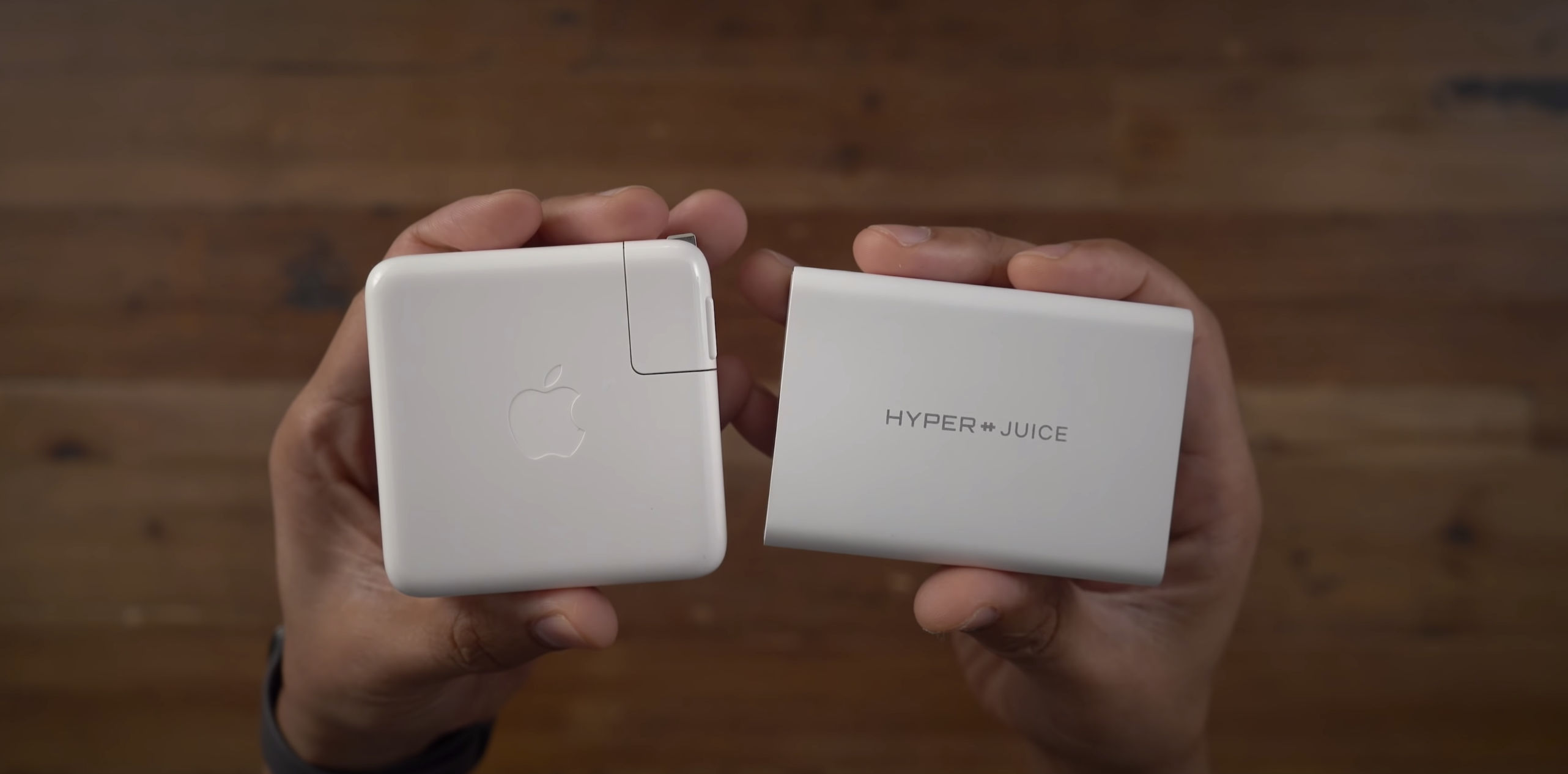
Well no, it is not, [1] is the world smallest 100W Charger with GaN and 4 Ports. And it is even smaller than the 61W MBP Charger with 1 Port. And the link to my previous question's answer [2] from an electrical engineer. I will paste it here as well. Cost, and the fact that it doesn't actually buy you much. I've evaluated GaN for a couple recent designs I've been involved in and found that its benefits simply didn't justify its costs.
What GaN actually does is, mainly, decrease switching losses. That means switching frequency can go up, or efficiency, or power density. These are all good things, to be sure, but the magnitude of improvement GaN brings to most designs is simply not large enough to justify the cost of the parts and the increased design attention needed to use them. (They're fussy little things.)
That said, I'm bullish on GaN in the medium-term. There are some cool tricks that are infeasible or impossible without them, and they really are better in a lot of ways. It'll just take a while for them to trickle downmarket, and even still they're not going to be replacing Si FETs anytime soon. (Part of the lag in GaN adoption is simply that Si FETs have gotten really, really good.) Yes, size is the main product-level advantage of GaN. But it only lets some of the system shrink; for something like a mains charger, you still need the isolation magnetics, so your overall size is still constrained. And at the power levels of a few watts that many chargers work with, Si FETs are simply good enough. A 5W USB charger isn't going to get any smaller with GaN. It only starts to get interesting with really high power densities. [1] https://9to5mac.com/wp-content/uploads/sites/6/2019/11/Hyper... [2] https://news.ycombinator.com/item?id=18853313 |