Hacker News new | ask | show | jobs
by nexuist 2422 days ago
Baby steps. Once the majority of human drivers get off the road we will almost certainly see an evolution in traffic control systems which will allow self driving vehicles to conquer poor weather conditions. As of now, each vehicle can only rely on its own sensor package to understand the world.

Tesla already has a system in place that lets one car learn from thousands of others; ie if everyone disconnects autopilot at a certain turn each car will learn to slow down even if they have never encountered that turn before. The future will have more of this.

Self driving has mostly been a solved problem, it just only works in ports, warehouses, docks, and factory floors. You might say those are tightly regulated spaces, but so are roads! All it takes is political will to scale up the same systems that guide robots today and install them onto every highway and main road.

5 comments

> Baby steps. Once the majority of human drivers get off the road we will almost certainly see an evolution in traffic control systems which will allow self driving vehicles to conquer poor weather conditions

That puts the cart before the horse. The cars need to be able to handle weather before “the majority of human drivers get off the road.” In most of the US, not being able to drive in bad weather will make self driving cars a complete non-starter.

> In most of the US, not being able to drive in bad weather will make self driving cars a complete non-starter.

This strikes me as complete hyperbole. "Most of the US" population wise is in cities, which have weather management (snow plows, bright lights), and plenty of people will buy a car that "self-drives" 80% of the time-most people's driving miles are boring highway commutes, not off-roading.

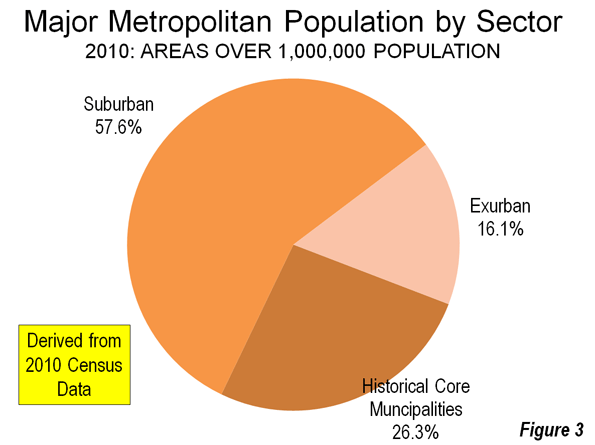
Most of the US population lives in the suburbs, not cities: http://www.newgeography.com/files/cox-uza-3.png. It can take days for local suburban roads to be cleared after a snow storm. Rain is also a significant impediment to self driving.

“Most people” (the criterion specified by OP, above) will not buy a car they cannot drive during a snow storm or rain storm. Peoples’ driving might mostly be boring highway miles, but for example here in the southeast you still need to get to work during the regular summer downpours where you can’t see the lines on the road.

I have every confidence that once self-driving cars have done a pretty good job of mastering city/fair-weather driving conditions, that ML will be able to handle poor weather just as good or better than humans. For example, humans are susceptible to panic when they start to lose control of the vehicle and do unproductive things like lock up the brakes. Even experienced drivers do this. Self-driving autos won't.

But yes, in the short term, self-driving is a non-starter for many regions during winter months or inclement weather.

I'm curious. What is so unique about perception through weather that ML cannot handle now?
I have to imagine that the duty of clearing roads of snow and such will be an early problem set for autonomous vehicles to tackle at much slower speeds when we're sleeping.
Chicago does what it can during the winter months, and is doubtless pretty competent at what it does, but the streets are still often treacherous, and the city's ability to mitigate weather effects varies between arterial roads and smaller roads. A self-driving car in Chicago would need to be able to deal with inclement weather in all the ways you'd intuitively expect it to have to do so out in the countryside.
Disagree we have huge thunderstorms and no snow. I’m not sure bright lights will help anyone. If it can only drive in clear conditions and on the the highway that’s not autonomous that’s a car with driver assist features.
But they won't only drive in clear conditions on highways. That's the easiest case to handle, but it doesn't mean they won't go further. It's obvious to go further.
Splitting hairs a bit: the qualifications and regulations for driving in ports, warehouses, docks, and factory floors are far more stringent than public roadways, and the conditions on roads are far less predictable and controllable.

Wouldn’t want to end up like Klaus: https://youtu.be/-oB6DN5dYWo

> Once the majority of human drivers get off the road

This leads to a dystopian future. When the majority have given away their driving freedoms to machines controlled by corporations, the outcomes are not good.

> All it takes is political will to scale up the same systems that guide robots today and install them onto every highway and main road

Well, that and a massive amount of infrastructure spend.

>> All it takes is political will to scale up the same systems that guide robots today and install them onto every highway and main road

> Well, that and a massive amount of infrastructure spend.

And before we put anything close to that kind of money toward autonomous cars, I demand the spending go toward urban micromobility infrastructure first.

Many places in the world already have reflectors installed into all major and many minor roads. Seems like a reliable and very cheap way of detecting lane geometry. https://www.worldhighways.com/_resources/assets/inline/custo...

Snow isn't a problem either, because reflectors can be (and often are) mounted onto plastic poles. https://c7.alamy.com/comp/EC79CD/reflector-signal-white-post...

> if everyone disconnects autopilot at a certain turn each car will learn to slow down even if they have never encountered that turn before.

That can't be the bar. Full self-driving technology must be able to handle any situation as well as the bottom ~1% of human drivers the first time any vehicle on the road encounters it.