Hacker News new | ask | show | jobs
by thedudeabides5 2436 days ago
I mean, if you liked 20% ownership at 50bn, you prob love 70% ownership at $8bn.

This is where the value of all that liquidation preference kicks in. At some point it becomes in SoftBanks interest to push for lower valuation, as it means they get to wipe out all the people that came before.

3 comments

But the reason they liked 20% ownership at $50bn is presumably because they thought they can cash-out at $80bn+. This cash-out valuation was not value-based but growth/hype-based. It seems that weworks will no longer be valued on growth/hype, which means that the value of weworks is much lower.

Liking 20% ownership at 50bn doesnt mean you like 70% ownership at $8bn. The value of the company had significant future growth/hype component which required other investors to pour additional money in to keep up the growth, that is now gone.

They basically bought control of the company for ~$15B. Any valuation north of $20B ought to put them in the black.
Big Edit: multiplying is hard, forgot to multiply by the PE ratio! Actually, potential valuation is 660B.. so 20% would mean 3% of US office real estate business. At a less generous pe of ~10 (perhaps more appropriate given they don't own the buildings), it would be about 10% of real estate market.

------

Sure, but $20B valuation seems hard to achieve.

US commercial real estate market by revenue is ~$1.1T [0]

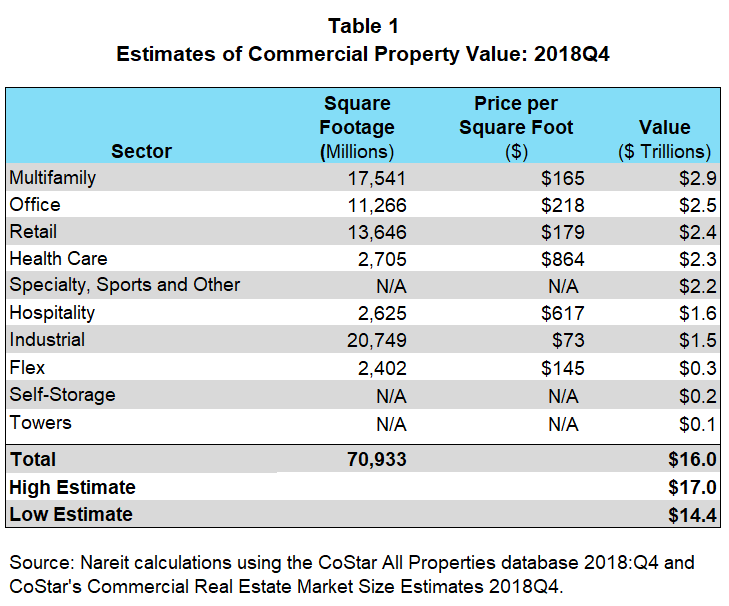
Office space by value is about 1/8th [1]

Regus gross margin is ~16% [2]

Real estate generally has good PE ratio but partly because they usually own the property [3], so let's be generous at 30x.

So if we value WeWorks as a normal real estate company AND weworks has %100 of US office real estate business we have a valuation of 1100 / 8 x 0.16 x 30 = $660B.

Now, weworks exists outside of the US, but the valuation you propose means they must have ~equivalent of all US office real estate.

[0]- https://www.ibisworld.com/industry-statistics/market-size/co...

[1] - https://www.reit.com/sites/default/files/chartjuly92019.png

[2] - http://www.annualreports.com/HostedData/AnnualReports/PDF/LS...

[3] - https://www.investopedia.com/ask/answers/052815/what-priceto...

Don’t you need to multiply that 22B by 30, or did you get all of those references but you don’t understand the difference between profit and valuation...
you're right, apparently multiplying is hard! I first decided to make my back of napkin calculation (forgot to include the PE ratio) then wrote the post. I've amended it now.
What about the 30x earnings multiple? Shouldn't it be $22B*30?

So WeWork "only" needs to capture ~3% of the US market to be worth $20B

>> US commercial real estate market by revenue is ~$1.1T [0] >> Office space by value is about 1/8th [1]

I'm a big fan of the WeWork concept, not commenting on specifics of how the business was run.

The way things worked in the past was just silly -- you signed a multi-year lease with no elasticity. I paid WeWork for personal space before and now my employer pays. It is expensive, but only on a unit basis. The model totally makes sense to me as a purchaser.

I guess the WeWork risk is the buy-long sell-short model which is always risky unless you are earning sufficient spread.

I think it’s a given that Softbank’s involvement means the target market is global, with expansion in EMEA through acquisitions or mergers with other portfolio companies.
Probably less if we take into account tax credits.
Also makes the sale possibility much more likely for the brand and whatever it is they call all that IP that they have.
They can also wipe out themselves by throwing good money after bad.
Same could have been said for AirBnb, Boston Dynamics, SpaceX etc.

Many of the best companies look like risky bets at the start.

How do you consider Boston Dynamics successful? They are continually sold to new owners because nobody knows how they can generate a profit.

SpaceX likewise is also in a somewhat murky financial position, although I suspect they will come out doing great in the future. My limited understanding is they are avoiding an IPO because their financials are not up to snuff.

AirBnB was heavily derisked before serious investors took notice - YC loves talking about them as an example because they had so much trouble raising a seed round before they skyrocketed into their A round shortly thereafter. Also I suspect AirBnB is actually going to IPO at a lower valuation than their last round, but I realize I am very much an outlier with that assessment.

I understand high risk high reward, but sometimes investors are just being dumb. I feel like you chose terrible examples to make your point. And since all of your examples are private companies it is impossible for us to analyze their finances.

> My limited understanding is they are avoiding an IPO because their financials are not up to snuff.

My understanding is that they're avoiding an IPO because it would jeopardize SpaceX's mission of getting to Mars. When they're privately held, Musk can vet investors to be sure that they're aligned with SpaceX's mission, or ensure that they're powerless enough that they can't make problems if they're not (eg. no board seats). When they're publicly held, things like unveiling Starship when NASA is pissed about Crew Dragon not being ready yet is just inviting a shareholder lawsuit. Wall Street tends to take a dim view of long-term highly risky bets, and going to Mars with privately funded R&D is precisely that.

I highly doubt going to Mars is the reason space x is still private. Given that astronauts have shown somewhat serious issues after being in space for six months, it’s unlikely the human body could survive three years in zero gravity without serious damage. Which means that a space flight to Mars would also require some form of artificial gravity and so for our lifetimes, is likely going to remain science fiction.

No, Musk is going to keep SpaceX private because he hates public oversight, like the kind he’s gotten with Tesla.

Where'd you get the idea that a Mars trip is going to involve three years of zero-G?

A Hohmann transfer orbit (minimum energy) will get you there in nine months. SpaceX is targeting a higher energy, shorter trip that'll probably wind up being about six months each way (with Mars gravity in the middle).

I don't think you understand space and space technology well enough to evaluate SpaceX if you think there's no way to 'generate' gravity in space without using space magic gravity generation.
> They are continually sold to new owners because nobody knows how they can generate a profit.

They were founded in 1992, were bought by Google and then sold to Softbank. I don't think that qualifies as "continually sold", particularly when the buy-and-seller was Google. I'm not as negative on Google's acquisition strategy as many here, but Google selling companies a few years after acquisition is hardly unheard-of.

Fair point, the way I said it exaggerated the issue. But I still think any company sold more than once has an issue. Boston Dynamics was first sold to Google, and then sold to Softbank - so they meet my criterion.
As far as I understand, the reason why Google sold Boston Dynamics was not because it wasn't able to make a profit, but because the obvious way how it would make a profit - military contracts - were not considered strategically acceptable.