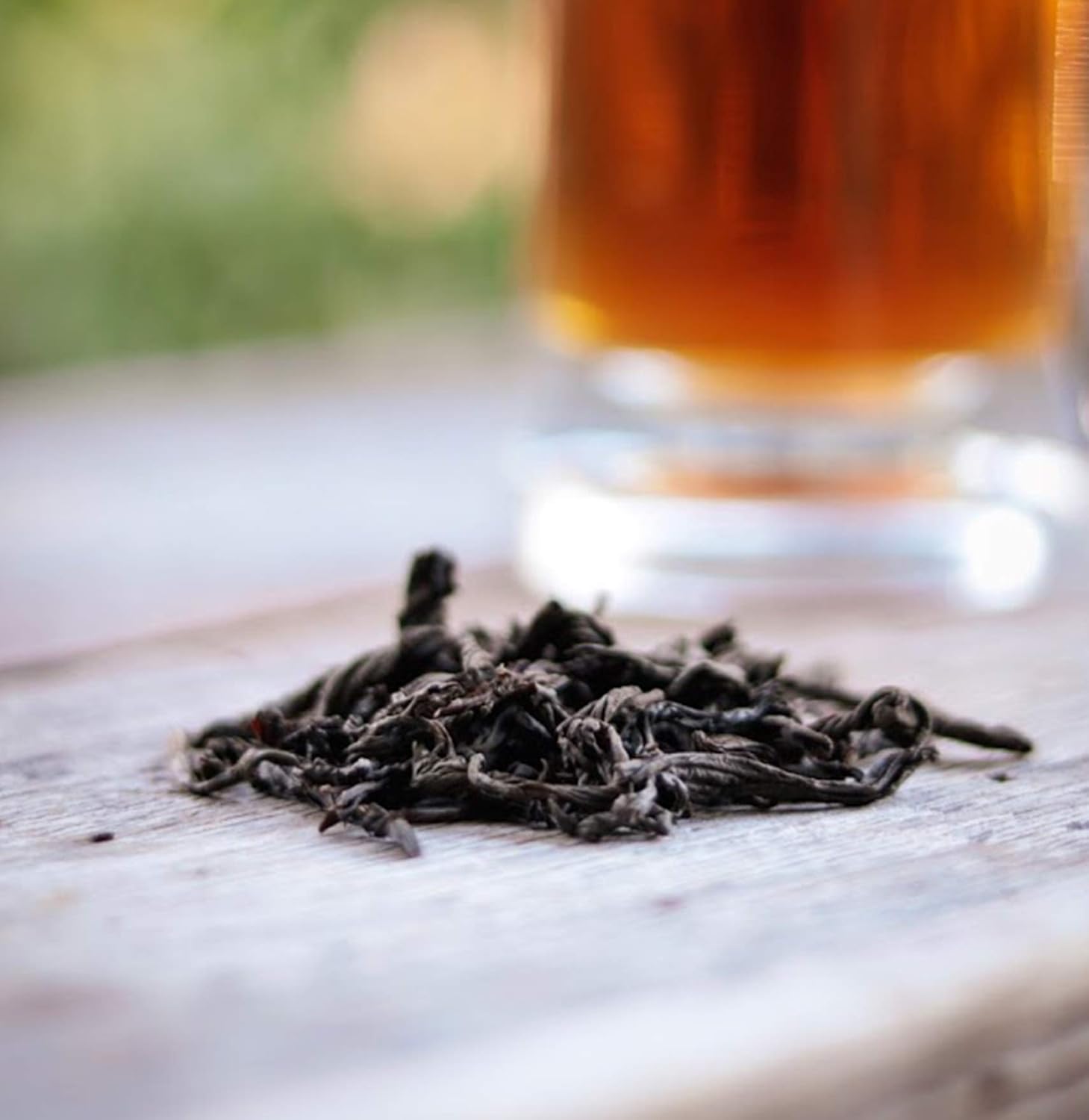
Can't compare the grade of loose leaf I'm talking about to the dust Lipton sells, having tasted the difference. Even visually...it's like comparing champagne to cooking wine.
IIRC (struggling to find a source), Thomas Lipton was the guy who formalized the tea-leaf grading process for Western Europe. The "legend" goes that back in the day, all of the imported tea would be dumped onto the floor of a particular room. The first round of tea producers would come and extract the full, unbroken tea leaves for top-shelf tea. The next round of producers would extract the broken leaves for mid-grade tea. On and on.
Finally, what was left would be the tea leaves that had been so crushed, broken, or pulverized that they were little more than a tea dust. This is what Lipton would then sweep up to make Lipton tea.
Which is to say, Lipton knew what he was doing. He went for the cheapest stuff possible. And that's what you get.
3) Boil a kettle of water and prepare a mug of each. Note the varying instructions: the teabag is only recommended to steep for about two minutes, because the tea dust is comprised of smaller particles and will overextract if left alone too long, while the loose leaf tea calls for about 4 minutes of steeping.
4) Taste and decide for yourself whether you feel there is a meaningful difference between the two. If not, then great! You can continue to buy the more convenient option without feeling like you're being deprived somehow.
* I'm sure there are other brands, but Twinings was the only one off the top of my head that sells both teabags and loose-leaf of the same flavor and can be found in most grocery stores.
First, the higher surface area brews differently - faster, which is convenient, but changes the ratios of what's infused. That's not inherently bad, matcha is green tea specifically prepared to be served that way, but it's usually detrimental to a tea intended for larger leaf brewing.
Second, sitting around powdered in paper sachets means far more air exposure. This is basically the same type of difference as fresh-ground and powdered coffee, which isn't hard to taste.
If you drink tea with milk and sugar, I'm not sure it matters. But for straight tea, it matters at least as much as for straight coffee.
Indian chais are commonly made in most Indian homes with dust tea. It's cheap, produces a very strong cup, which can stand up to the milk, sugar, and spices. Chai made with long leaf teas is just awful.
I wouldn't use a dust or CTC tea if I want to drink the tea straight, though. Different types of tea for different uses.
Yep, that makes a lot of sense. I suppose if cost were no object at all, you could approach it like matcha: de-vein and powder long leaves to get a strong, high-grade brew that doesn't have time to oxidize. But I'm not even sure it would be better, since Indian chai isn't spiced with that process in mind.
I was going to say I've had chais made with long leaf tea, but I realize those were middle eastern versions that are only spiced with a bit of cardamom. I'm sure it's not an accident that the recipe has a lot less spice where long leaves are in use, but I'd love to know how that difference came to be.
No, lipton tends to get the cheap crushed remnants of better tea, and only processes whats left to consistency. Others start with whole leaf, and then diliberately crush and seive it to a givin size (selling the remnants to lipton). Not to say its bad tea, just a bit cheap and oxidized. And if going cheap, luzianne (sp?) is the one to grab. Lipton is reserved for weak iced tea imho.