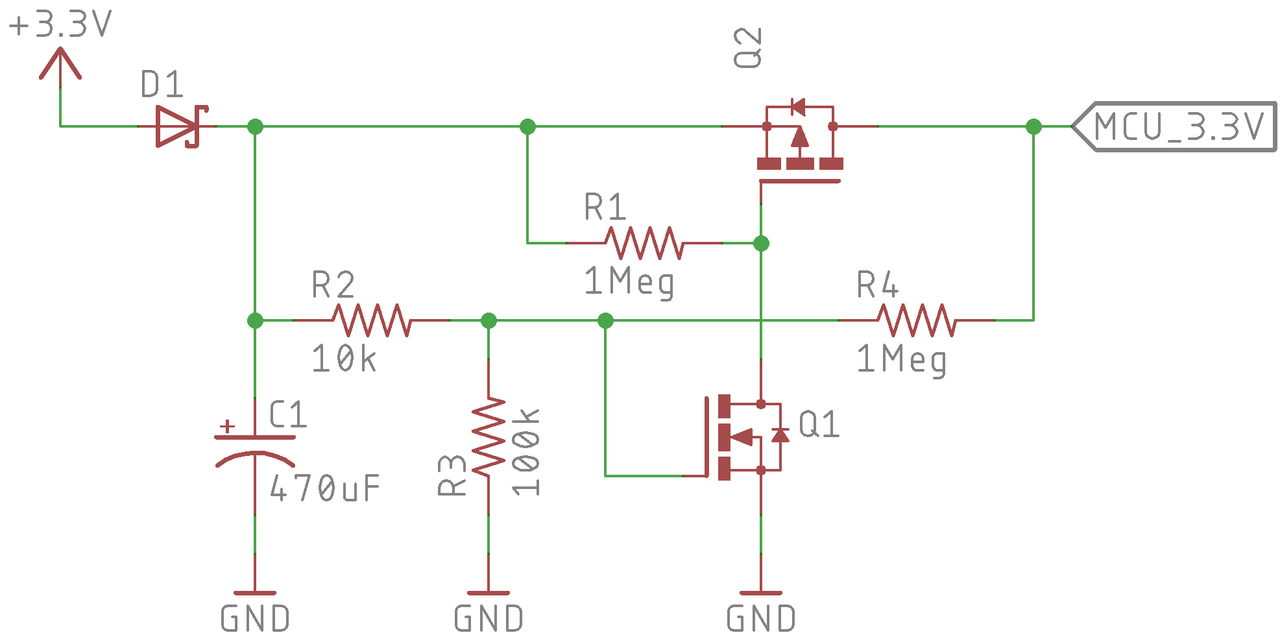
Many MCUs do not appreciate slow rise-times when using their internal regulators. Then you start oversizing your regulator or providing them replacement regulators. Which then opens more cans of worms, etc, etc.
And if you don't have this, I posted this circuit example I just made for a delayed power turn on time above. Capacitor is about 5 cents, the transistors are about 6 cents each. If you need it you need it, but power good to the reset line is better.
Those microcontrollers aren't reliable anyways. If you design those in you have to accept that if they have persistent state they will eventually brick themselves. If they don't have persistent state they will hang and require user intervention on a regular basis.
Yeah, paying thirty cents for a capacitor to coddle a ten-cent MCU doesn't make a bunch of sense. Much cheaper to teach your software folks how to write transactional updates to that flash. Typically you pay a small speed penalty to get update atomicity (in addition to having a more complicated implementation).