|
|
|
|
|
|
by strmpnk
2576 days ago
|
|
|
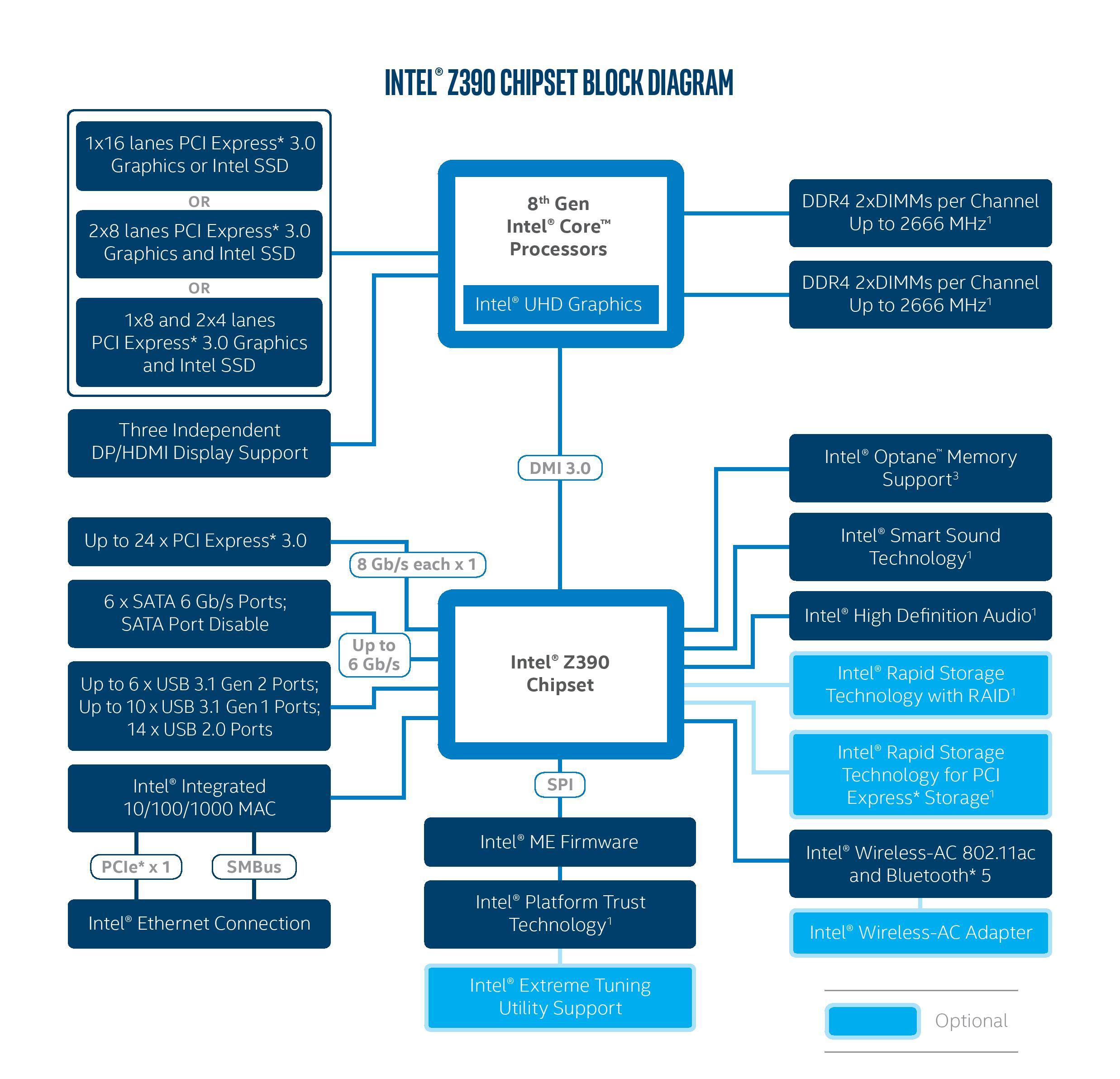
AFAICT lanes are not shared but there are chipsets which can break lanes out into other sets of lanes which are then routed back onto the original set of lanes. So if your CPU has 16 lanes you can hang a chip off of it which then provides more lanes which are then signaled back to the CPU over some subset of those lanes. It’s not clear if the lanes themselves can be multiplexed with packets from many devices but they can change the number of assigned lanes after initialization so a clever chipset could probably dynamically allocate lanes as used. |
|
|

these generally basic passive devices operating at analog signals level, no higher layer activity required. however some may exist which operate as "retimers", which do participate in the lowest layer of the PCIe electrical protocols (generally to extend reach). these are unlikely to be used for a typical x16 <-> 2x8 sort of motherboard feature though.
the example i picked here is 4 lanes, and you would need 4 such chips to do a x16 <-> 2x8. (spoiler: you mux lanes 8-15 from slot X to lanes 0-7 of slot Y, and there are both TX and RX pairs which need muxing.)
there do exist devices called "pcie switches" which operate at all layers of the pcie protocols, and allow for all sorts of sharing of the point-to-point links. examples at microsemi [1] ... for example a 48 lane switch could be used to connect two 16 lane GPUs to a 16 lane slot. this would allow either of the GPUs to burst to the full 16 lanes, or on average if both GPUs are communicating with the host then they would see 8 lanes of bandwidth. there's a picture of such a dual GPU card in this article [2], you can see the PCIe switch ASIC centered in between the two GPUs, above and to the right of the edge connector.
[0] http://www.ti.com/product/HD3SS3412
[1] https://www.microsemi.com/product-directory/ics/3724-pcie-sw...
[2] https://graphicscardhub.com/dual-gpu-graphics-cards/