We need to give this argument a rest. Cycling infrastructure has everything to do with availability and very little to do with hills. I don’t avoid biking to work because of the hills, I avoid it because it’s treacherous.
Disclaimer: I don't like cars, I love driving, but as a sport, not in urban areas.
Biking is like running, playing soccer, playing tennis, swimming, many people don't do it because they don't do any sport.
Biking requires skills that normal people usually don't have, but that they believe they have.
It is in fact more dangerous than driving (compared to the driver, not pedestrians)
As soon as older people could not bike anymore, they started buying electric scooters and in Holland they have now more deaths caused by scooter accidents than cars.
France is going to ban them because they are too dangerous.
People than cannot drive anymore because of age or because they had their driving license revoked, started using less "law encumbered" vehicles and the number of accidents began to rise.
People on bikes are less controlled,they are not forced to use safety measures, they are not inside a "secured box", they don't have anti intrusion bars, air bags, safety belts, etc. etc.
Very few wear an helmet, many of them don't follow street rules, they bike on the sidewalk, very fast, they are very quiet and many pedestrian don't hear them coming.
They pay a lot less taxes (and fines), taxes used to implement mobility politics.
In Italy, for example, the money that cities earn from fines, cannot be used for anything else than mobility.
City planning is complicated, you don't solve problems just by changing few rules, you have to carefully plan for them
Changing a model that has been THE model for at least half a century and that have become so popular because freed people from the task of commuting or having to go somewhere, fast, without having to share the ride with other 150 people, just like the washing machine freed women from the task of washing clothes, it's not an easy task.
EDIT
I don't want to give the idea that cities are doomed, but biking is not the solution, biking is just like cars but with different problems, THE solution is walkability.
Most of your argument is about motorized vehicles, not bicycles. I agree that motorized two-wheeled vehicles are inherently more dangerous than non-motorized forms of transportation, but that is multiple separate discussions, and your argument doesn't necessarily apply to bicycle-oriented vs car-oriented city design.
Walkable cities are for everyone.
This is trivially untrue. Cities with lots of steps or staircases are only accessible for pedestrians, but no one else.
Bikeable cities are just for bikers.
I guess it depends a lot on what you consider "bikers". When you think of bikers, do you think of image [1] or [2]?
> Most of your argument is about motorized vehicles, not bicycles
They are the same thing.
Bicycles have wheels, they should be on the streets.
> Cities with lots of steps or staircases are only accessible for pedestrians, but no one else.
And that's good!
BTW, you can walk the bike.
Just like you do when you have to jump on a train or take the subway.
If you're talking about accessibility in general, that's a whole other problem.
Bike lanes on sidewalks aren't accessible either, there are deaf pedestrian, blind pedestrians, handicapped pedestrians, that are put at risk by sharing the same space with bikes.
> I guess it depends a lot on what you consider "bikers"
[1] is very young
[2] is expert bikers, people that dresses for biking
the percentage of the population that can bike regularly in a large city is quite small and Copenhagen is a very small city.
The point is that you don't solve anything with bikes, just like you don't solve anything with skates, kick scooters and whatever you are thinking of
You're over optimizing for a small percentage of the population.
You solve a lot by removing cars from the streets (think about underground parking lots) and giving way more space to walking lanes, hardly separated from wheeled vehicles (cars, public transport, motorbikes, bycicles, whatever...)
If you improve the walkability, you also improve the mobility: people can easily switch from bike, walking the bike for a bit on a sidewalk, take the public transport, get off, walk a bit more, jump on the bike again.
If you cannot walk easily, safely and fast, you're packing pedestrian on very small areas, you're making their journey uncomfortable and leaving them at the mercy of wheeled vehicles, because they can be obviously faster and demand precedence.
And those who use a vehicle are encouraged to leave it very close to where they are going, because walking, even a little bit, is painful.
That's how we end up with cars parked in handicapped spots or on double lines or on the sidewalks or bikes chained to school gates or road signs or bus stops as you can see in cities like Milan [1] (where they use the bike a lot)
Ironically the road sign in the picture says "bikes chained here will be removed"
The majority of people in large cities walks, even if you don't notice it, even in cities terrible for walking like Rome, it's what people are good at.
> You're over optimizing for a small percentage of the population.
From the link [1] in my GP post: "Cycling accounts for 24 % of all commuter trips." That doesn't sound like a small percentage.
> You solve a lot by removing cars from the streets (think about underground parking lots) and giving way more space to walking lanes, hardly separated from wheeled vehicles (cars, public transport, motorbikes, bycicles, whatever...)
There are people in their 90s swimming in freezing water
Would you say it is ok for everybody?
What kind of discussion are you trying to have?
> That doesn't sound like a small percentage.
And what accounts for the remaining 76%?
You are trying to force Netherlands way as if it is the only one.
But Netherlands is a very _uncommon_ place.
> What would you change in that picture?
Why would I want to change anything?
Can you see that there are vast areas for walking in that picture?
Do you think there aren't other small cities in the World where bike is the preferred vehicle?
This is Ferrara, Italy [1] [2]
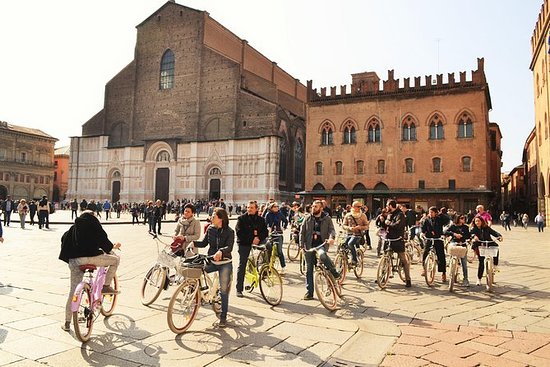
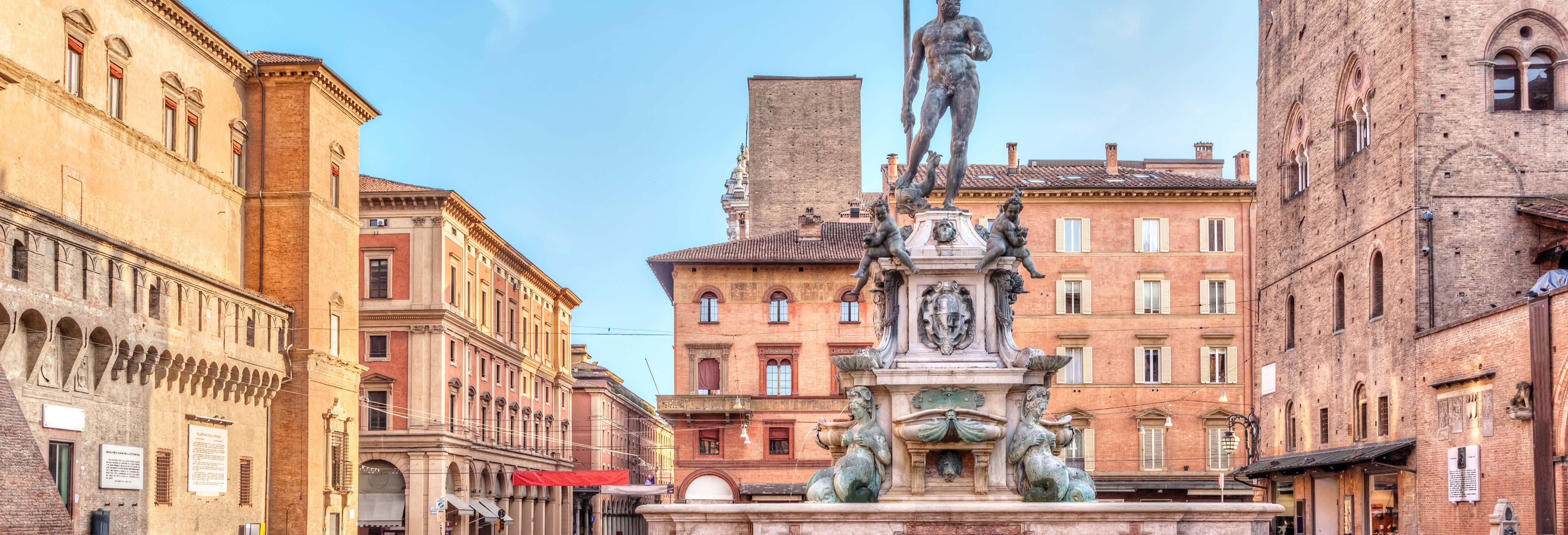
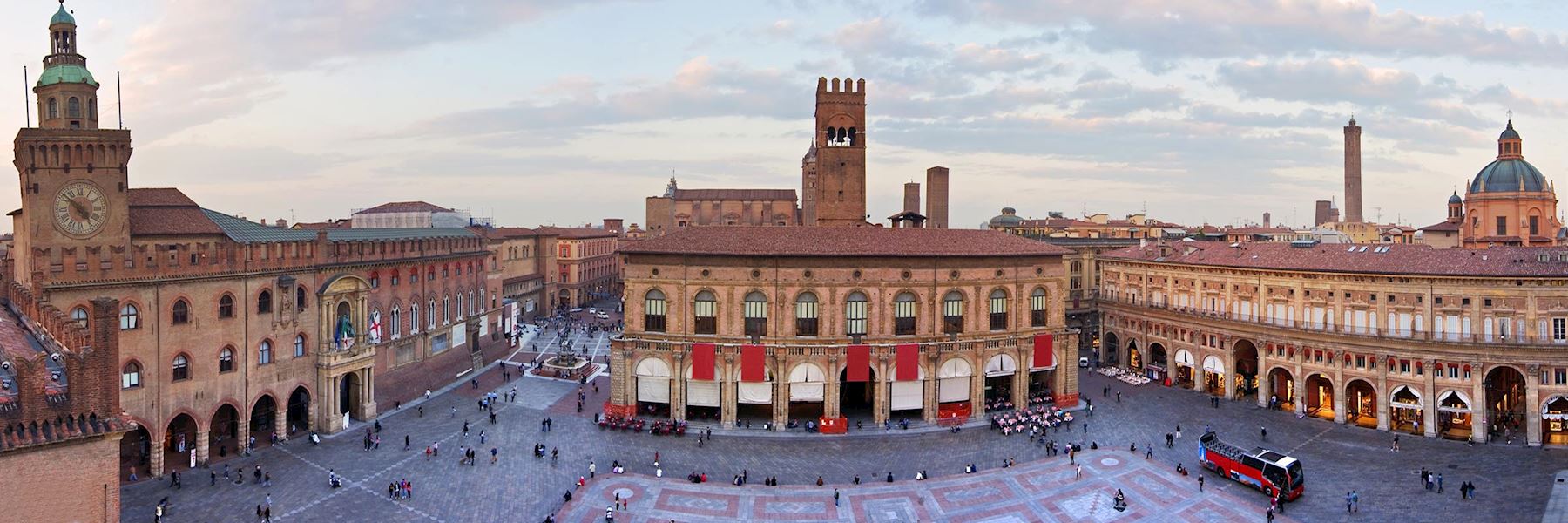
This is Bologna, Italy [3] [4] [5] [6]
Can you see the large pedestrian areas?
I think they're even more beautiful then Deen Haag.
I've lived in Bologna for 2 years, I never had to drive a car or ride a bike, because I could walk.
Because they're also also very small (the size of Deen Haag) and everything is close.
Now let's talk about big cities:
Large areas for walking means that other vehicles have their spaces as well
Small areas for walking means that ONLY vehicles have their own spaces (streets have to be big enough for cars, but sidewalks can be reduced to a bare minimum or eliminated completely [7] <- this is in Rome) which make moving painful for the majority of citizens, especially the low income ones that cannot afford to own a car or to live near the workplace or people with kids or people with reduce mobility, that's why they then switch to using cars, because streets are not safe for them and bike lanes wouldn't change a thing.
Another aspect of this are discriminatory laws that apply to cyclists. Most states in the US have laws that state that cyclists have the rights and duties of vehicles, but then state that they must keep as far right as practicable within the lane when going less than the normal speed of traffic (no such requirement applies to slower traffic in general). Some states also require cyclists to use the bike lane or other path when one is available.




Biking is like running, playing soccer, playing tennis, swimming, many people don't do it because they don't do any sport.
Biking requires skills that normal people usually don't have, but that they believe they have.
It is in fact more dangerous than driving (compared to the driver, not pedestrians)
As soon as older people could not bike anymore, they started buying electric scooters and in Holland they have now more deaths caused by scooter accidents than cars.
France is going to ban them because they are too dangerous.
People than cannot drive anymore because of age or because they had their driving license revoked, started using less "law encumbered" vehicles and the number of accidents began to rise.
People on bikes are less controlled,they are not forced to use safety measures, they are not inside a "secured box", they don't have anti intrusion bars, air bags, safety belts, etc. etc.
Very few wear an helmet, many of them don't follow street rules, they bike on the sidewalk, very fast, they are very quiet and many pedestrian don't hear them coming.
They pay a lot less taxes (and fines), taxes used to implement mobility politics.
In Italy, for example, the money that cities earn from fines, cannot be used for anything else than mobility.
City planning is complicated, you don't solve problems just by changing few rules, you have to carefully plan for them
Changing a model that has been THE model for at least half a century and that have become so popular because freed people from the task of commuting or having to go somewhere, fast, without having to share the ride with other 150 people, just like the washing machine freed women from the task of washing clothes, it's not an easy task.
EDIT
I don't want to give the idea that cities are doomed, but biking is not the solution, biking is just like cars but with different problems, THE solution is walkability.
Walkable cities are for everyone.
Bikeable cities are just for bikers.