Hacker News new | ask | show | jobs
by youareawesome 2550 days ago
If you took the total combined wealth of the wealthiest 100 Americans, you wouldn't be able to fund the federal government for more than half a year or so.

Taxing the rich sounds nice as virtuous political rhetoric but it won't effectively address poverty, just further erodes the liberty of private citizens. If you want to fund more social programs then tax corporations, like the oil companies and the large investment firms, like ExxonMobil and Goldman Sachs. Don't punish success.

3 comments

> just further erodes the liberty of private citizens

How does taxation do this? Taxation is a mechanism for funding the maintenance of an ordered society which enables extreme wealth creation. It's the wealthiest citizens who benefit the most from law enforcement, infrastructure, and national defence.

Taxation is well-acknowledged a trade-off between liberty and social responsibility.

This is a new type of tax that has never been implemented in the US. If the goal is to reduce poverty, it won't do that. So what is the goal?

> If the goal is to reduce poverty, it won't do that.

[citation needed]

Do you really think an extra $100B-$200B added to federal revenue of currently ~$3.6T (5%) will have any noticeable effect on poverty?
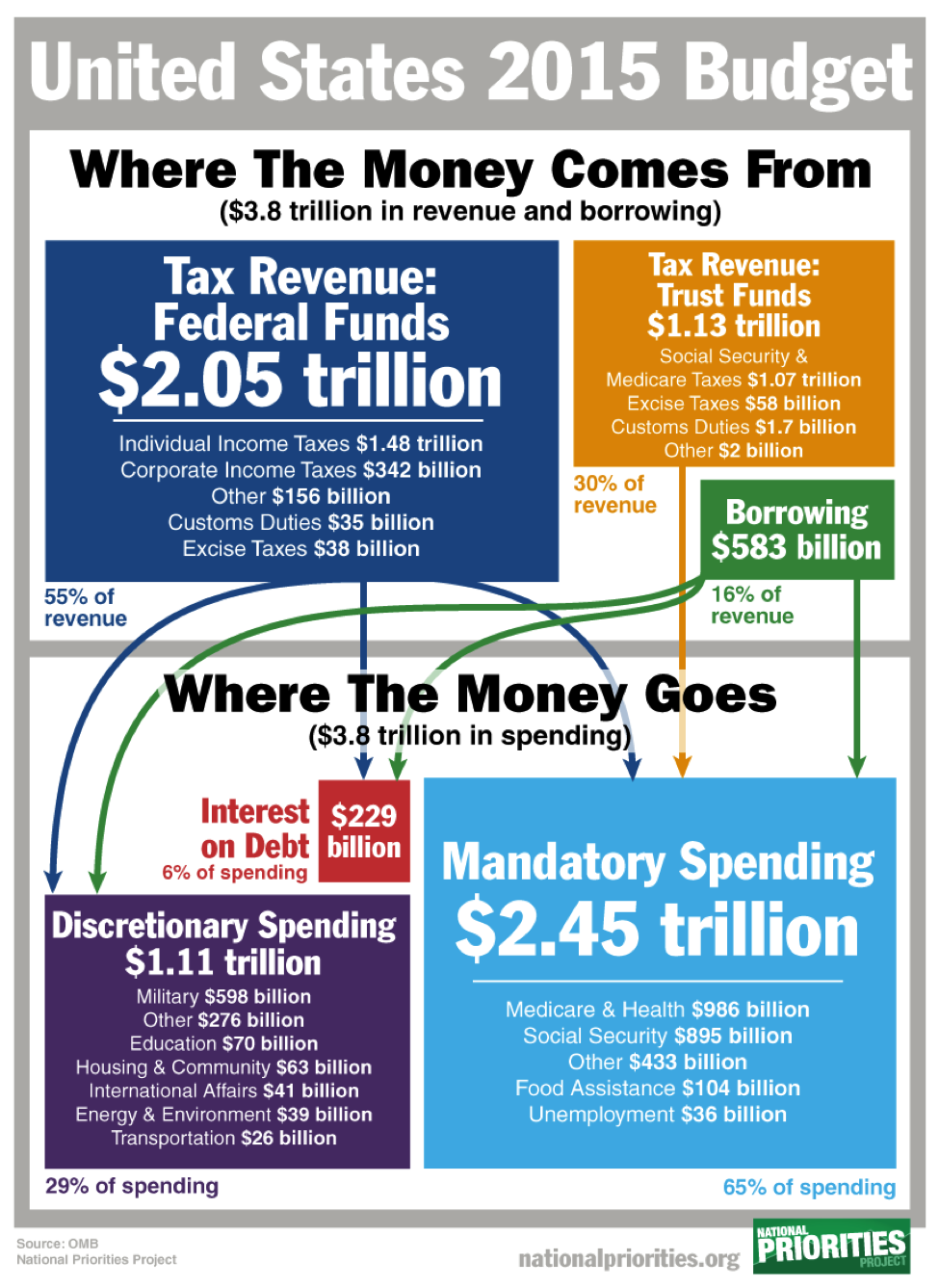
Yes, because the amount the US spends on welfare is a smaller fraction of the whole budget. For example, the US spends around ~$100 billion on food assistance [1]. Wikipedia estimates that all non-medical poverty assistance accounts for around $400 billion of the US budget [2]. Increasing expenditure by 10-20% (or even 5%) will almost certainly have a noticeable effect on poverty.

[1] https://media.nationalpriorities.org/uploads/budget-graphic.... [2] https://en.wikipedia.org/wiki/Expenditures_in_the_United_Sta...

Yeah I don't think increasing welfare is really the solution to ending poverty. Lots of evidence that welfare actually prolongs poverty, not to mention the waste endemic to bureaucratic administration. How about instead of taxing individuals we tax corporations to incentivize paying their workers more?
You do realize that the top 1% is more than just the wealthiest 100 Americans, right? And you do realize that nobody's saying "reduce everybody else's taxes to zero", right?
Only those with more than 50 million in total assets will be paying a "wealth tax" according to Liz Warren's plan, everyone else won't be paying.

I never claimed the top 1% is just the top 100 wealthiest Americans.

Senator Warren's plan would affect about 83,620 people[1].

I'm not saying you're point isn't valid, but your reference to the wealthiest 100 Americans is relatively meaningless to any discussion being had here.

Also, the federal budget is composed of so many things[2], saying that taxing high wealth individuals couldn't affect it is a bit disingenuous. The bottom line is that if you have more money in the pool (either by raising revenue or cutting expenses), you can pay for more new projects. Taxing these people could add millions of dollars to that pool. I'm not trying to say that's good or bad. It's a zero sum game here, either the individuals spend it on the projects of their choice, or the government gets it and spends it the way they want.

1-https://dqydj.com/how-many-millionaires-decamillionaires-ame... 2-https://www.nationalpriorities.org/budget-basics/federal-bud...

Just because it's not literally applicable doesn't mean it's meaningless, it emphasizes an important point that people overlook. The amount of wealth held by the top 80K is a drop in the bucket when compared to the total revenue of the federal government.

The greatest effect of this policy is that it will harm individual liberty. It will have nearly no effect on improving poverty or increasing social programs.

But it's not. 45% of the federal government's income comes from individual taxes.

In 2016, the US took in about 1,442,385,000,000 total of which 839,898,000,000 was from the top 5% of individual earners. That's OVER HALF of the total amount[1].

You're wrong. You're point is not valid or based in the actual data. To say that hundreds of millions or billions of dollars in extra revenue couldn't help fund social programs or improve the conditions of the impoverished is factually inaccurate.

[1]https://taxfoundation.org/summary-latest-federal-income-tax-...

The IRS only enforces tax collection on the wealthiest individuals because it isn't efficient to do otherwise, that's why you see most of the tax revenue coming from the wealthy. They only go after the big fish.

You're wrong if you think that taxing individuals is going to decrease poverty or wealth inequality. Wealth inequality is not due to wealth individuals holding assets, but due to pay inequality. Corporations hold their profits instead of paying their workers fairly. It would be much more effective to impose a wealth tax on corporations to incentivize them to pay their workers.

Large multi-national monopolies are the problem, not rich people. If you can't see that, the corporations have effectively used your own morals against you. The uber rich won't be affected, only the new rich, people rising from the middle class.

> I never claimed the top 1% is just the top 100 wealthiest Americans.

But in a response to an article about the top 1%, you used the top 100 wealthiest Americans as a counterpoint. If you're not trying to make a connection, why bother with the analogy?

To be fair to the other commenter, they were also talking about taking those 100's entire wealth, not just taxing a bit more.
I never brought up the top 1% and the top 1% has nothing to do with the wealth tax. The wealth tax will apply to all Americans with assets over $50 million, which is roughly ~80K people, or 0.02% of the population.
The top 1% has been brought up by the articles title you commented on.
You could fund the entire federal government for half a year with the wealth of only the top 100 people in the US? That's mind-blowing, and makes me way more optimistic about the practical effect of taxes on extreme wealth than I have been.
After that first year there would be no one left to tax, so how would you sustain your government's revenue long term?
No one left? Only 100 gone!
Yeah, so then let's eliminate the next 100, and so on and so forth until everyone is penniless.
As the money hasn't left the system, this will never happen.
Yes, everyone will eventually be equally poor and dependent on the government. Sounds great