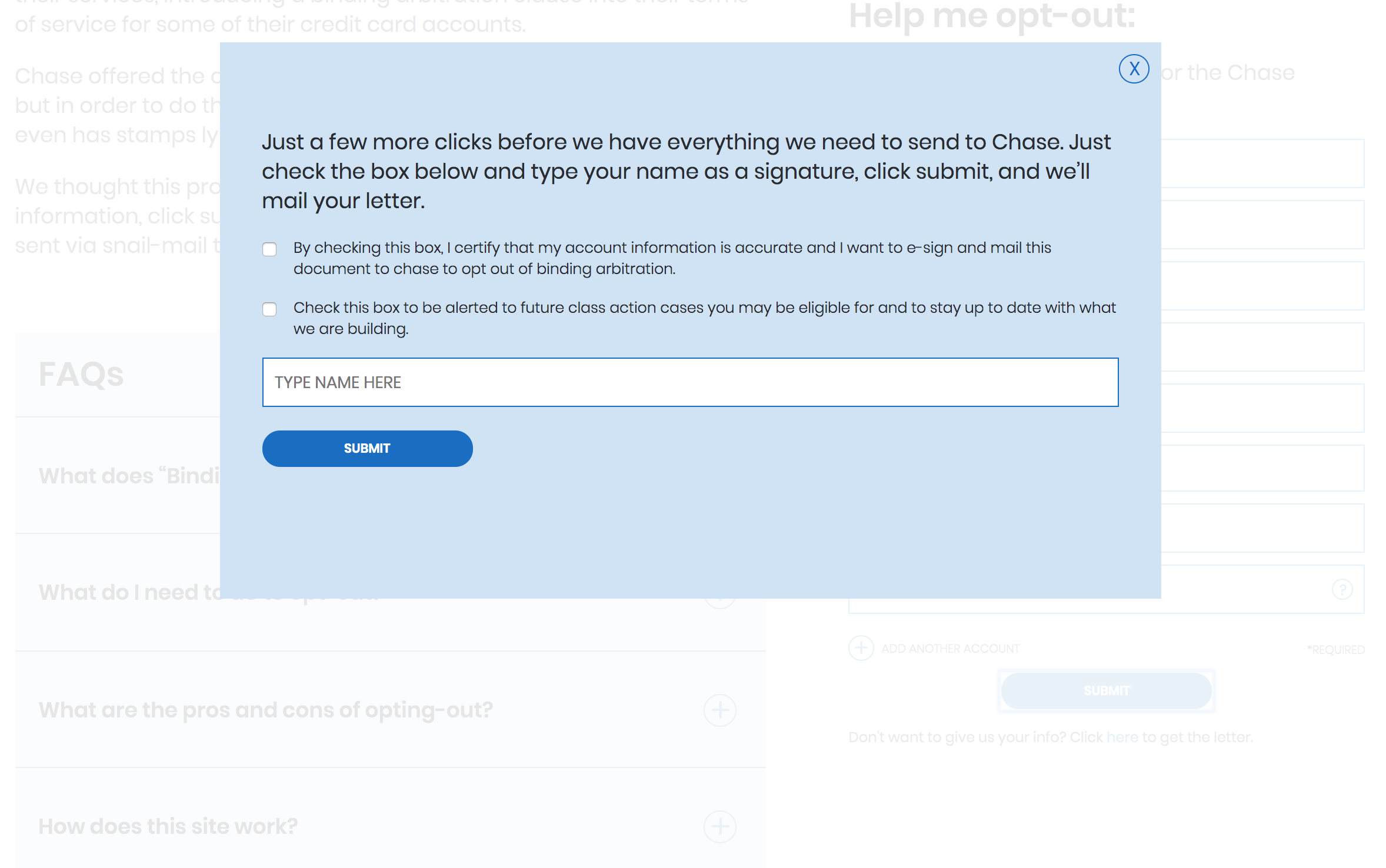
| Okay, so you are confusing concepts like "what is a signature", "what is an original", and "what would a court accept as valid evidence". We are going to mostly put aside the third for now. First: A signature does not change form once created. A physically signed document is a physically signed document, regardless of whether i scan it in. An electronically signed document is electronically signed regardless of whether i print it.
Period. The form does not change once created. Only it's originalness and acceptability as evidence. So then what is electronic. Second: Your definition of electronic is ... not encompassing enough.
Let's go to the E-SIGN act: "ELECTRONIC– The term 'electronic' means relating to technology having electrical, digital, magnetic, wireless, optical, electromagnetic, or similar capabilities." That's a lot. "ELECTRONIC SIGNATURE– The term 'electronic signature' means an electronic sound, symbol, or process, attached to or logically associated with a contract or other record and executed or adopted by a person with the intent to sign the record." Note that because of the definition of electronic in the first part, the second is a lot broader than it looks despite it also being fairly expansive. It only has to be associated with and then executed/adopted by a person with intent to sign a record. Note that it does not say electronic record (which the act defines) or electronic contract. Other parts of the act are restricted to electronic records/contracts, but given the duality, no court i'm aware of has read the limitation into this part of the act (the opposite is in fact true). So what i gave you what a clear electronic signature. It was electronic process associated with a contract or record, executed by a person with intent to sign it. It doesn't matter if it was later printed. The act itself will even support this. Now we move on to what does the act say about such signatures or contract or ... ; " (1) a signature, contract, or other record relating to such transaction may not be denied legal effect, validity, or enforceability solely because it is in electronic form; (2) a contract relating to such transaction may not be denied legal effect, validity, or enforceability solely because an electronic signature or electronic record was used in its formation. ... (g) Notarization and Acknowledgment.--If a statute, regulation, or
other rule of law requires a signature or record relating to a
transaction in or affecting interstate or foreign commerce to be
notarized, acknowledged, verified, or made under oath, that requirement
is satisfied if the electronic signature of the person authorized to
perform those acts, together with all other information required to be
included by other applicable statute, regulation, or rule of law, is
attached to or logically associated with the signature or record. ... (h) Electronic Agents.--A contract or other record relating to a
transaction in or affecting interstate or foreign commerce may not be
denied legal effect, validity, or enforceability solely because its
formation, creation, or delivery involved the action of one or more
electronic agents so long as the action of any such electronic agent is
legally attributable to the person to be bound.
" Remember again our definition of electronic is very broad here. The first says the signatures and contracts are valid even when they were in electronic form. That is again true even if i print it out and later mail it.
You may run into the issue about what is acceptable evidence to a court for the document itself, but you will not run into the issue of "is the signature on this document, which was originally electronic, valid as a signature". The second says that a contract (again, very broad definition, definitely includes letter like this one!) can't be denied validity just because you used an electronic record or signature in forming it. The printing it out doesn't make it less of an electronic signature.
The section on notarization makes this even more clear. It doesn't even require an electronic record (as other parts of the statute explicitly do), it says you can electronically notarize a regular record, as long as you attach or associate it somehow. Even further, e-sign destroys the argument that you didn't make the contract. It even allows me to use an electronic agent to make, form, and deliver contracts if i like, as long as it's attributable to me. UETA is even more straightforward (though inapplicable in this particular case): "
(c) If a law requires a record to be in writing, an electronic record satisfies the law.
(d) If a law requires a signature, an electronic signature satisfies the law.
" It even says email does not change form: "“Electronic mail message” means an electronic message or computer file that is transmitted between two or more telecommunications devices; computers; computer networks, regardless of whether the network is a local, regional, or global network; or electronic devices capable of receiving electronic messages, regardless of whether the message is converted to hard copy format after receipt, viewed upon transmission, or stored for later retrieval." Note the last sentence.
There are lots of state court and federal court opinions on this. Outside of other laws, etc, clicking a button on this form will be considered mailing a physical copy of an electronically generated signature. |