|
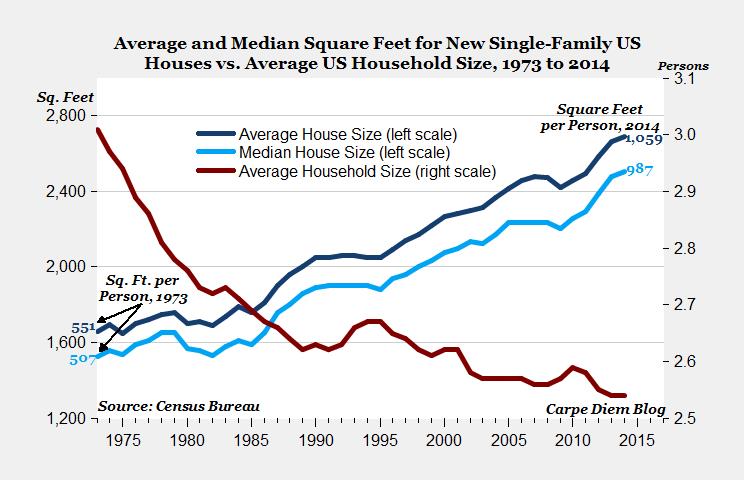
Hah, the go-to video for everyone to start with! Did anyone else think they'd make a good couple? Anyway, I wish we'd finally agree as a community to use one word for one thing, but not the other. i.e., small homes: just small homes (like OP's link, serious and important approach to housing). tiny houses: the new trend of putting a small home on wheels/trailer. (like 99% of the links on Google). I'm all for the former (small units, when fit with modern-appliances, sound-proofing, and well-designed) can be a great way to live for young people for a few years, and help reduce costs. Take a look at Amsterdam for example, it's population only recently growing back to the 1960s levels. [0] (suburbanisation happened in between). However, housing prices grew by about 8x since the bottom.[1] The funny thing you find is that we actually have way more housing than we used to, and until recently we actually had fewer people in the city than we used to, but prices are way higher. So what's changed? The most important change that I see is that, considering we have fewer people in more real estate, we all live larger. And you can see this in a lot of data. Average home size in the US has grown way larger, while household size shrunk, you can see in this graph. [2] The axis kind of get exaggerated a bit, but still the effect is clear. We have twice the amount of space per person today than just 40 years ago. That's not ancient history. This seems to be pushing up real estate prices more than anything. And one way to solve the issue is to simply reverse this trend of living larger. Instead, let's live a little smaller. If you look at other developments in our lives, this should make sense. A lot of our technology has miniaturised. We don't need a library of books or CDs at home, no record player, we have multiple virtual desks, some of us don't need a TV. We're more and more able to use public spaces to meet people, host people, be entertained. And of course, the nature of the family has changed, we marry less and later, have fewer children, live more individually. The trend of ever larger houses makes no sense in a world where we need smaller units, and often can't afford housing as it is. There's a lot of room for more (but always limited) smaller units in our housing stock, I think. Although I'm thinking 20-35m2, not 10! The second trend of putting small homes on wheels/trailer, just isn't interesting to me. They're mostly just campervans, only a bit less mobile. They don't really solve any issue, as they're super low-density. They exist only in cheap low-density areas where they can be parked, where there typically isn't a housing shortage issue anyway, or in a HCOL environment, in a grey area of the law when parked in someone's garden or something, which isn't a solution at scale. They're fun, but not a serious approach to housing at scale. Yet these terms, small/tiny houses/homes are often intertwined and it muddies the conversation a bit. [0] http://destadamsterdam.nu/wp-content/uploads/2017/11/demofac...
[1] https://www.nvm.nl/marktinformatie/marktinformatie
[2] https://azgolfhomes.com/wp-content/uploads/2016/07/American-... |

In the UK it’s availability of finance. Mortgages used to be limited to three times the main earners wage, now it could be four or more times joint wages.