| > The GUI features Google introduced were very important. I don't trust my memory, so I'm checking with Firefox 3.0.1[0], released in July 16, 2008[1], definitely before the first release of Chrome. I can't be bothered to also test early Chrome and multiple old versions of Firefox, so the fact that a feature isn't in Firefox 3.0.1 doesn't mean that it came first in Chrome. > Draggable, swappable tabs Firefox 3.0.1 had these. > that can be pulled out into separate windows, Not quite — you could drag tabs between existing windows, but apparently not out into a separate window. > address bars with integrated search engines, If you entered a keyword, rather than a URL into the URL bar, Firefox would search for it in Google. (In addition, there was obviously the dedicated search bar.) > built in PDF viewers. Firefox 3.0.1 didn't have one. According to Wikipedia[1], the PDF-viewer arrived officially only in Firefox 19 (February 19, 2013). It was installable as an add-on earlier, but almost certainly not before Chrome's in-built viewer. OTOH Konqueror (KDE's browser) had an embedded PDF-viewer before either — at least as early as August 2008[2] — not that that's relevant for mainstream use, or for a comparison of Firefox and Chrome. Overall, only 1, possibly 1.5 of the 3 features came earlier in Chrome. 1.5 were definitely already in Firefox when Chrome launched. [0] I couldn't find the binary for 3.0.0, which was my first choice. [1] https://en.wikipedia.org/wiki/Firefox_version_history [2] https://en.wikipedia.org/w/index.php?title=Konqueror&oldid=2... |
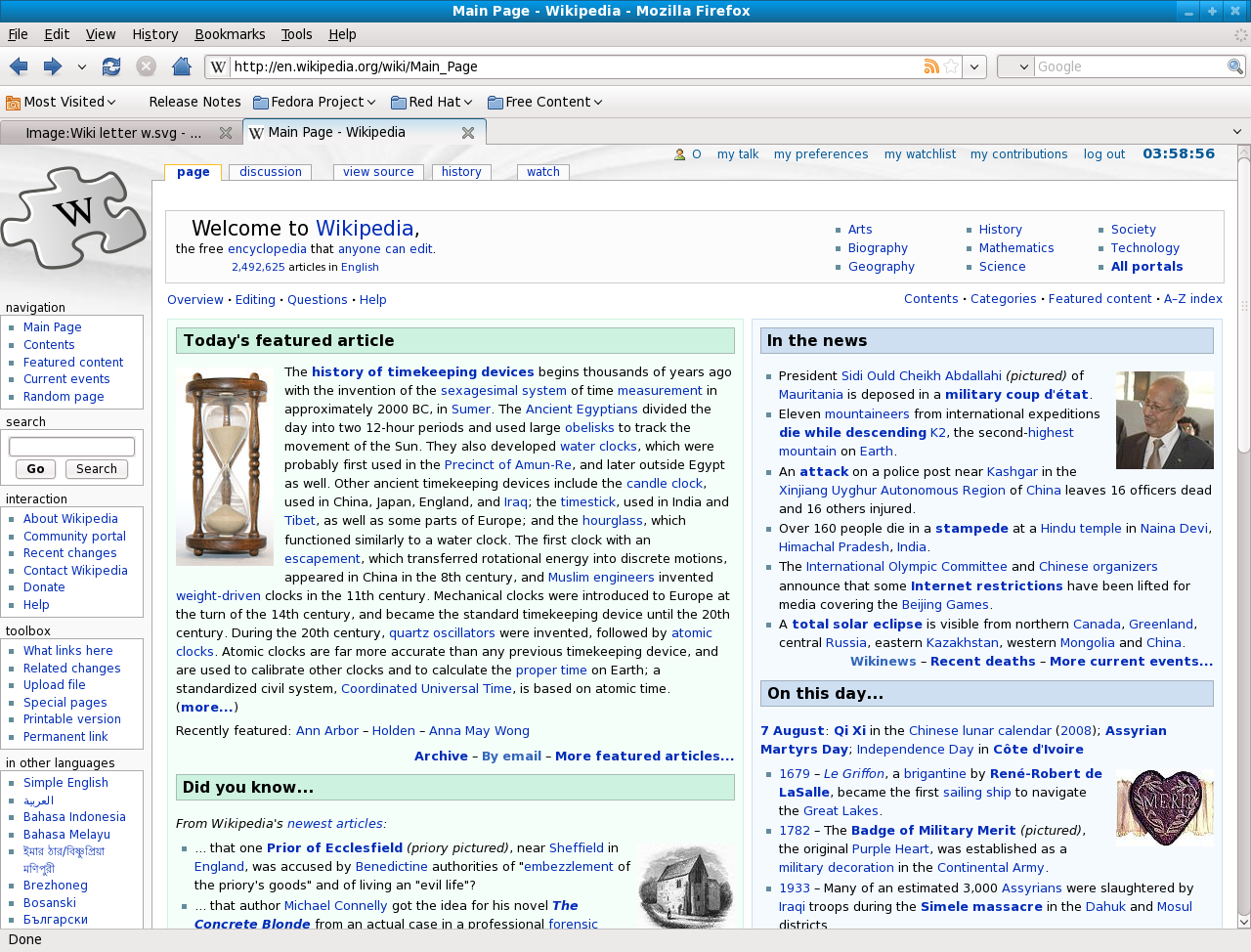

The search features were brand spanking new too. Firefox had a search bar, but the behavior of Chrome is what later prompted Mozilla to create the omnibar function.
The PDF and Flash built in were major features at the time because they avoided needing to install awful and exploitable third party components.