Hacker News new | ask | show | jobs
by androidgirl 2690 days ago
I understand this is a manifesto, but really the dialogue around Facebook and social media has truly become unhinged. Facebook is just a symptom, it seems

What is there to be _done_? Pandora's box is open, so to speak. If Facebook disappeared overnight, are we really going to assume the problems they're in are going to go away?

Everyone is potentially connected to everyone, everywhere, on the entire planet. There has never been a technology so powerful as the centralized internet.

Furthermore, outside of media companies and the HN bubble, people _do not care_. Your average person doesn't care about decentralization, preventing social media addiction, gamification, or polarization of online communities.

To the contrary the market shows that companies like FB are massively successful.

So what are we to do? The world has been changed, drastically. Were we ready for it? And if we somehow were rid of Favebook, are we ready for what follows?

7 comments

> Furthermore, outside of media companies and the HN bubble, people _do not care_. Your average person doesn't care about decentralization, preventing social media addiction, gamification, or polarization of online communities.

My parents, who are deeply not the HN crowd, are starting to care, and this is not my doing. They didn't two years ago, but they're starting to have the same sense of something being wrong that started to show up here 6-ish years ago. They're behind, but they're on the same arc.

I too have struggled to get people to care. Partially because the public has such little insight into how these things can used to manipulate and shred privacy.

I posted a few of my recently successful talking points to get people's attention on these issues here: https://news.ycombinator.com/item?id=19010553

and am always looking to hear from others how they explain important issues they actually understand and listen to.

for example, some older people don't care if fbk steal the photos from their phone (they don't have many, and none that are 'naughty') - however when bringing up that these apps can steal the pics from their daughter's phones without explicit knowledge, and send them to how many non-perv people to manually inspect? And forward them to how many agencies etc.. they start to have ears perk up.

also the psych tricks to random hit notifications and such - these things show a company that is trying to game and use the users, not a company that is just trying to make it easy to send holiday pics to the family.

"What is there to be done?"

A $0.01 tax per ad impression.

Such a thing would not destroy the advertising industry, but it would do wonders for making it much less worthwhile to deploy massive surveillance technology to make .03 cents more per user per day, and leave only very high-value advertising behind. It would probably anti-decimate it or more, though (leave only 10% behind instead of destroying 10%).

$0.10 per impression if you're feeling feisty.

I fail to see how this would reduce the incentive to collect data. If anything, wouldn't it require _more_ information on users to figure out whether or not showing an ad would be worthwhile?
See cousin reply. It's not about what they want to do, it's about what they can afford to do profitably. They'll want to do it even more so, but they won't be able to do so.
According to https://blog.adstage.io/google-display-ads-cpm-cpc-ctr-bench..., advertisers spend around $2.80 for a thousand impressions in display advertising. You're proposing a tax that is 3.5 times as much as the thing itself costs. That would have pretty steep ramifications on the industry.

Also, when one thinks about high-value advertising, it doesn't always correlate with high-value to society, but rather things that are expensive. That of course would incentivize advertisers to make sure their ad spends are effective which would in turn create more incentive for more ad tracking.

"You're proposing a tax that is 3.5 times as much as the thing itself costs."

Yes. Yes I am. I did say it would probably cut 90% of the industry.

"That of course would incentivize advertisers to make sure their ad spends are effective which would in turn create more incentive for more ad tracking."

They may sit there and wish for more tracking, sure. They're pretty addicted to that as the only model in the world for making money.

But if you may something much more expensive, and therefore much less profitable, you are saying that you'll get even more of it. That's not how raising prices works.

They're not tracking every last cough we make because they have to to make any money. They track everything because it enables them to make .03% more off of us, and that .03% is profitable. (Number made up, but the evidence strongly suggests we're long past the point of diminishing returns on more tracking, yet they do it anyhow.) Take away the profitability, and they'll stop doing it.

They'll have to. Most of them will be bankrupt and won't be tracking anybody anymore.

Besides, exactly what "more" tracking are we concerned they're going to deploy in a world where they have 90% less money and probably even less profit? They already read all our email, track everywhere we go, track everything we see on the internet, listen to a good chunk of what we say, and use our social connections in every conceivable way to monetize us. What's left?

Web advertising shouldn't just be considered advertising, but also data collection. Data collection should not be cheap.
It's almost as if websites had to pay for the bandwidth they sent to the browser would change the economics of blasting out ads everywhere.

:thinkingface:

It's almost as if networks themselves would start injecting ads, which has been going on for years[1].

[1] https://www.privateinternetaccess.com/blog/2016/12/comcast-s...

Such a thing would not destroy the advertising industry

Then it's not enough.

FB and friends are selling a product that's pleasurable, possibly habit forming, has big negative externalities, and presents all sorts of non-obvious risks to consumers. This is the textbook case for regulation. Some future iteration of the GDPR (or similar) will eventually outlaw FB's business model, at which point non-toxic social media will hopefully emerge, and we will realize that "potentially connecting everyone to everyone else, everywhere" is something that can be done ethically.
I agree that facebook is just the most visible dimple. Internet causes a lot of stresses at the personal and social level. We could wipe it out, we could learn how to deal with it.. let it fly so future generation adapt to it for better or worse.

Personally I have my scissors ready.

The minds that were behind LiveJournal, Friendster, and MySpace, to name just 3 other social platforms that had monthly active usership in the millions, were not as disgustingly criminal and unethical in nature as the mind of Zuckerberg, so, to answer your question, another online social platform could be more civil and nicer, and not as aggressive (with auto-playing, auto-looped videos, for one thing), and manipulative, and silo-creating in terms of the design and algorithms in the same way, and could be far less ruthlessly greedy, invasive, and devious toward its users in terms of the requiring, gathering, selling, and sharing of those users' data.

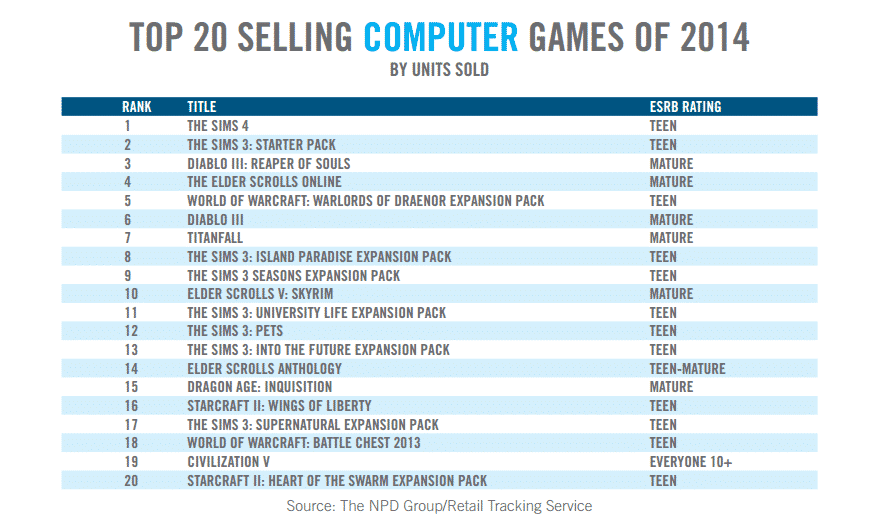
An online social networking platform could even take a total different format than one that invites users to upload all their real personal life information and photos; there could be a platform as one where the users are playing ficitonalized characters in a make-believe world, and there isn't the same severe data-mining and harvesting of users' minds and lives, let alone with clear algorithmic and editorial favoring of political-themed content; I'm thinking first of something like the The Sims from 2000 to 2015[0], but there is a now a certain game that has become the de-facto social network of pre-teens to early teens, and that is Fortnite Battle Royale - see these 2 articles from December 2018[1]-[5]. Yes, there are other risks and dangers with such a platform (where gamification is taken to a much further extent: you're playing much more of a character in a game than you are with the "character" you "play"--in the sense of "portray" and "direct" on Facebook)[6], but it's not, in my view, nearly as immoral and irresponsible as what Facebook does.

[0] Sims popularity, as recently as 2014, when the latest version of it was still the #1 computer game:

https://simscommunity.info/wp-content/uploads/2015/05/Screen...

[1] Charged: Fortnite isn't a game, it's a place - As social media becomes ever more toxic, Fortnite has become the new social network and a place to hang out where you go to talk to friends

https://char.gd/blog/2018/fortnite-is-the-new-hangout-spot

[2] WSJ: How Fortnite Triggered an Unwinnable War Between Parents and Their Boys

http://www.wsj.com/articles/how-fortnite-triggered-an-unwinn...

[3] See the selected tweets here, including: "Fortnite is the tween generation's Facebook (at least for boys). Spent a few hours last weekend with a friend's 12 YO, Fortnite is the platform for his entire social/academic life. FYI i was labeled an 'old noobie'."

https://www.techmeme.com/181222/p8#a181222p8

[4] The astonishing usership stats (scroll down to the list):

http://www.businessofapps.com/data/fortnite-statistics/

[5] Many more stats:

https://en.wikipedia.org/wiki/Fortnite_Battle_Royale#Player_...

[6] Impact:

https://en.wikipedia.org/wiki/Fortnite_Battle_Royale#Impact

>Fortnite isn't a game, it's a place - As social media becomes ever more toxic, Fortnite has become the new social network and a place to hang out where you go to talk to friends

Who are the boomers writing this shit that don't know groups of friends socialize online without social networks? Both before and during the era of social networks? Games as the rallying point isn't novel. Has this guy never heard of ventrilo, mumble, discord?

The worst part is, people who never used the internet to talk to people before the iphone will believe this dreck.

>Were we ready for it?

No, our brains evolved for millions of years to operate in groups of less than 100. Social media is basically high fructose corn syrup for our dopamine system. Within a span of roughly 20 years the way we live our lives and communicate with other humans changed massively

All the MSM hate for Facebook though is simply because they are butthurt that they've lost their spot in society in terms of controlling influence and information

You make an interesting point about expanding social spheres and influence, nice. However, do you really believe in this concept of a conspiratorial all powerful MSM, that spans the political spectrum and co-ordinates efforts to refute viewpoints they disagree with!? How would such a cabal work? With respect, it sounds a bit infowars/trumpian to me.
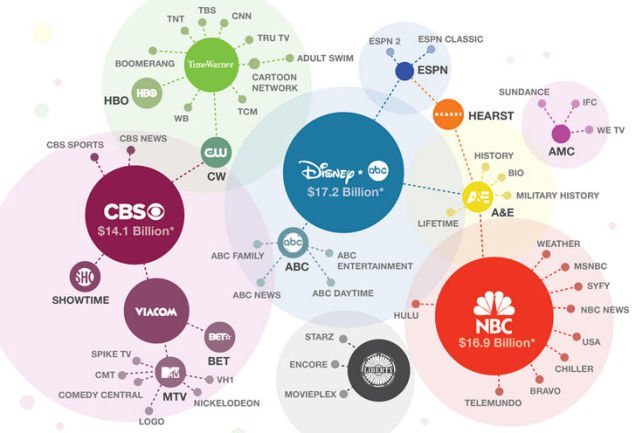
>However, do you really believe in this concept of a conspiratorial all powerful MSM, that spans the political spectrum and co-ordinates efforts to refute viewpoints

Pretty much all the media we see is controlled by a handful of corporations with varying degrees of connection

https://assets.rbl.ms/18622935/980x.jpg

It's worse now than the image above because AT&T is purchasing Time Warner

With relation to Facebook it's pretty obvious that everybody in the traditional media industry would like to see them lose influence because it costs them money. Instead of watching the news or buying newspaper subscriptions people get the info from Facebook. There really doesn't need to be coordination because it's in their self-interest to pile on Facebook.

Go back 20 years before social media and if the news and the newspapers didn't cover it, it basically didn't happen. The MSM has lost a massive amount of influence due to social media because they can't completely control what information is spread around.

Hmm, I’d add that being owned by corporations does not always equate to being controlled. Editorial policy will be set by a range of people within these organisations, it can be very complex this chain of command, and the degree of influence that the board will have will vary considerably. I’d also posit that the current negative press around Facebook is of its own making to varying degrees and is the result of various substantive academic studies. The media would be doing us a disservice if they did not report on such things, as they are there to mediate, create awareness to the public against malpractice, accountability etc. This generalisation of ‘MSM’ is reductionist and not an entirely helpful to me. It is also the language that Trump and Alex Jones use and that is something that makes me very wary.
There is a solution: all sites (above a scale of say 1m users) must offer a zero advertising, zero tracking account option at a yearly fee of exactly advertising revenue per user per year.

Most people would not take this; but rich people would. The top 1%? Top 5%? This would cripple the monopoly model and open the market.

The article made an interesting point, namely manipulation.

As you say, most people wouldn't pay to avoid the tracking, the people who would pay could just as easily do without Facebook or Twitter. The question becomes: Would you pay to not be manipulated?

How would that cripple the monopoly model?
Because the key customers that the advertisers are after are no where to be seen (they paid) which means that if you want to get advertising to them you need to find smart, diverse and innovative ways to do so.