Hacker News new | ask | show | jobs
by klodolph 2714 days ago
Most circuits trip on current, because I^2R heating is what causes fires in house wiring, 15A is relatively common, to get power you multiply by voltage which varies by country, in US that gives you 1800W and UK it’s 3600W. There are a ton of circuits which aren’t 15A though.

If you live in UK, you might note that electric tea kettles work fine, but in the US they do not (they’re too slow). That’s the biggest practical difference to my mind, very few other portable appliances need that kind of juice, except the biggest space heaters. Big, fixed appliances get wired differently.

2 comments

If you’re handy with electricity and don’t mind fracturing a few rules, European kettles work just fine on 240V 60Hz power. A British 13A plug in the kitchen is a nice conversation piece too.

Note: because of the US “split phase” system, the neutral wire won’t be neutral anymore but rather 120v above ground. The kettle bases I’ve used are well designed, but do be careful.

Specifically to being careful: put a GFCI upstream of the kettle outlet. Which should be there anyway because it's a kitchen, but even more important with a phase-to-phase setup.
It never occurred to me that the voltage difference between America and Europe/Asia would cause a corresponding differences in watt output given the same amps... But yes indeed, US kettles boil much slower.

Other appliances that require a lot of juice include vacuum cleaners, electric hobs, space heaters, portable ACs/dehumidifiers. So having something trip a living room circuit pulling just 2000 watts would drive me nuts in the long run

I live in Japan where we have a paltry 100V. In our apartment it's made by for by having lots of (20A) circuits - 3 for the (small) kitchen alone [which uses gas for the stove anyway]. Total of 14 breakers for a small 3 bedroom + living + kitchen apartment.

In 3 years we've only tripped a breaker once - running a microwave, toaster oven and dishwasher all off the same outlet at once.

sounds like more amps would fix it, yeah
You could imagine it driving you nuts, in my experience trips are rare (once every few years?) unless you love space heaters. Electric ranges (hobs?) run on their own dedicated 240V circuit. As a tradeoff, the plugs are small and convenient; I can fit a phone charger in my pocket, plus the phone and cable—true in Europe, but not the UK. I can also get a power strip with 8 outlets and it won’t take up much space.

A couple days ago I tripped a circuit breaker for the first time in many years. It turns out that the refrigerator shares a circuit with the rest of the kitchen, so when I ran a rice cooker and deep fryer off the same circuit, when the compressor turned on it tripped.

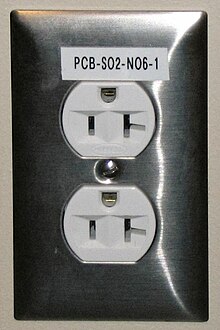
Note that many businesses, and some circuits in residential homes, are wired for 20 amps. The sockets that definitely support 20 amps have an additional slot for 20 amp connectors. See: https://upload.wikimedia.org/wikipedia/commons/thumb/4/42/El...