Hacker News new | ask | show | jobs
by gchadwick 2725 days ago
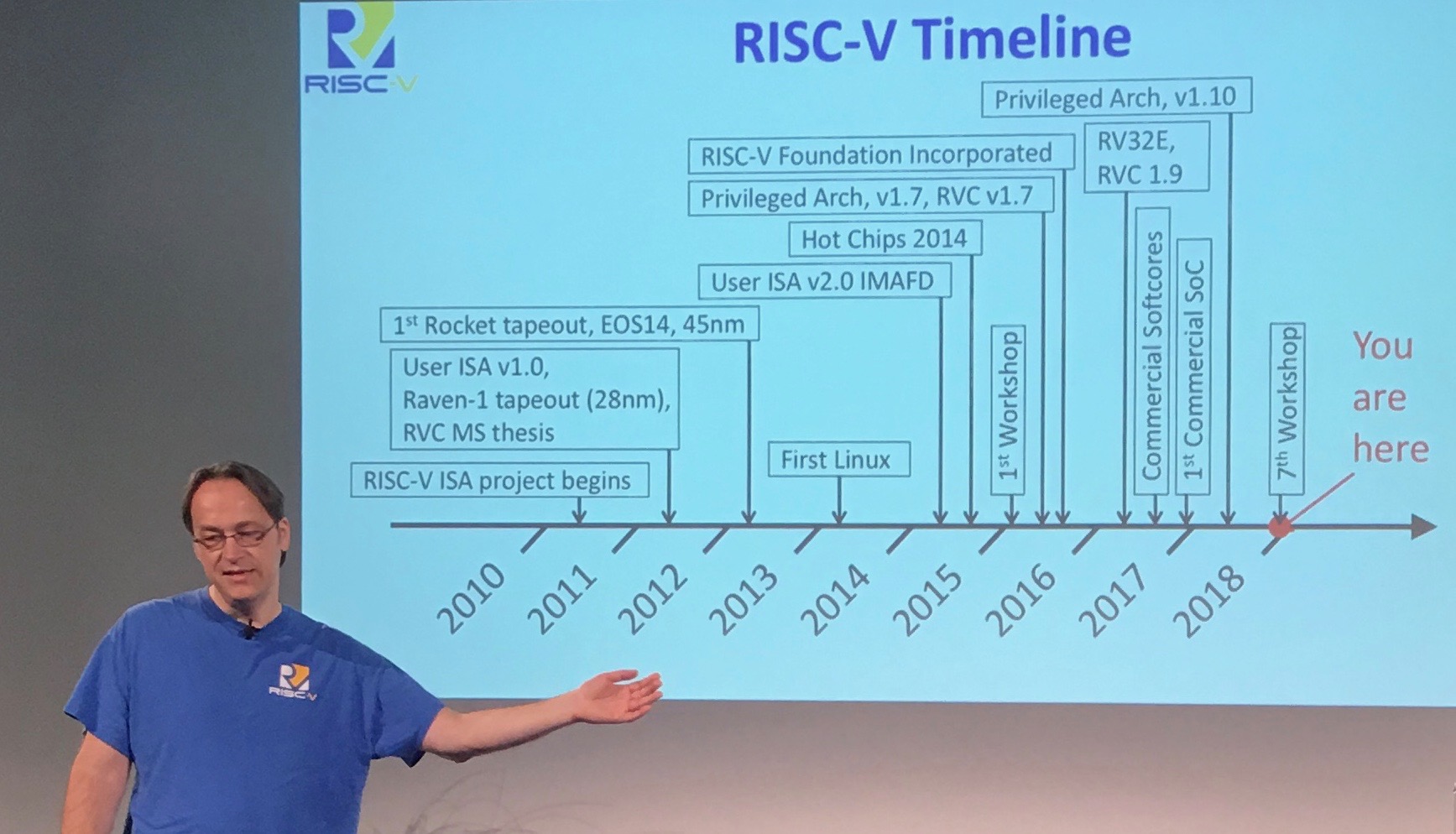
It's worth noting the age of RISC-V, according to Wikipedia (https://en.wikipedia.org/wiki/RISC-V) it originated as a 'short, three-month project over the summer' in 2010. So ~8 and a bit years old. It's taken a while to really take-off but now it does really seem to be picking up momentum. Though no serious use in production hardware that I'm aware of.

Perhaps a good comparison point is LLVM. It too originated as an academic project. Again looking at Wikipedia (https://en.wikipedia.org/wiki/LLVM) it started development in 2000, first release 2003, Lattner hired by Apple to develop it 2005, Clang released by Apple 2007 (so ~7 years from initial LLVM creation to serious production use potentially less depends when Apple were using it internally).

3 comments

I do believe Western Digital is going to start shipping their products with RISC-V processors soon
Yes, but the important part was once RISC-V left the university. That's when its rise actually started for real.

https://community.cadence.com/cfs-file/__key/communityserver...

So I agree, it takes 7 years. RISC-V is already in production in many places by now.

You can't really compare hardware with software.

It's just a question of opportunity for change.

RISC-V while take on when there's a reason to not use ARM and if it's better than the competition (eg: MIPS).

> RISC-V while take on when there's a reason to not use ARM and if it's better than the competition (eg: MIPS).

No licensing fees.

But your company will need to pay more in R&D to develop the cores.

Most companies license ARM cores, not the ISA.

Not really, the foundries are on the cusp of fully validating rocket cores on the various processes, and you can just include them in your design like you would a Cortex-M or Cortex-R. They've recognized that 3-5 stage classic RISC cores are a commodity market now, and it's in their best interest to make it as easy as possible to add to your design.

Above those simple cores, we should expect to see more and more RISC-V cores hit the same level of "just drop it in for no licensing, already validated, the pieces like register files are already optimized for the process". BOOM is ~Cortex-A9 perf/gatecount/IPC, which puts it into greater than RPi territory (usable, but not really out crazy). There's still work to be done on the higher end still, albeit, but it's not like you can just go out and licence the highest perf ARM cores anyway (those are Apple's).

ARM has an existential threat, IMO.