Hacker News new | ask | show | jobs
by foobar2020 2771 days ago
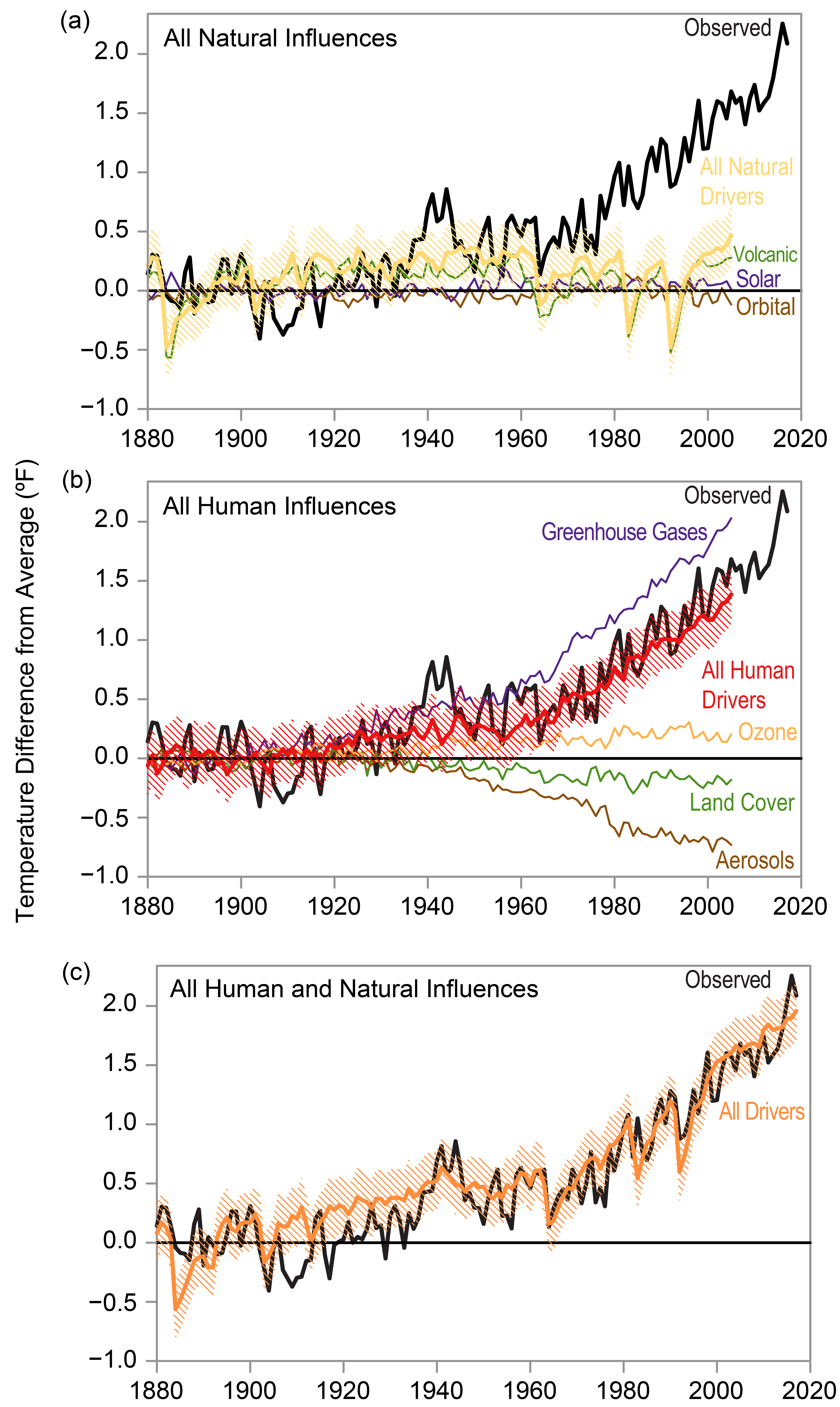
Chapter 2 has a plot of our understanding of the impact of all natural and human causes on the change in temperature: https://nca2018.globalchange.gov/img/figure/figure2_1.png

It's pretty clear (according to the models) that the human created aerosols combat a fair chunk of the increase caused by carbon emissions (around 0.7 deg C at the moment, which is substantial; we'd have already been around 2 deg C without it). Is deliberately increasing the amount of aerosols in the atmosphere a viable path forward? Is this economically feasible and safe? Can this be used to bring us back to the pre-industrial temperature levels?

1 comments

There's lots of studies suggesting you can do this at low cost. There are issues, from not solving some problems at all (ocean acidification) to creating others (localized rainfall reduction).

My own thoughts are that we should be exploring doing this as a secondary backstop (it has pretty high ROI), while aggressively cutting emissions as well.

https://www.carbonbrief.org/solar-geoengineering-may-not-coo...

In my view, this could be dangerous if we do it before we are on the way to eliminating carbon via an alternative. If we get a symptom reduction via aerosols, we might just burn everything we can, and have some terrible effects on the oceans.

We might have to do it anyway, but I'm hoping we can hold off till we have a replacement, so as to avoid compounding things even worse than they are. Human psychology being what it is, we'll use aerosols to push off solving things.

Anyone know the expected outcome of a seriously acid ocean? My assumption is it would be civilization ending in some way, but maybe that's wrong.

It seems like we have to do some geoengineering no matter what, because the emission cuts required to solve the problem are unattainable even if every government on the planet was trying to do its part.

The current climate change problem has been caused by unintentional geoengineering with an undesirable outcome. It's reasonable to assume that different methods of geoengineering can have different effects, and might be capable of helping solve the problem.