|
|
|
|
|
|
by danaliv
2805 days ago
|
|
|
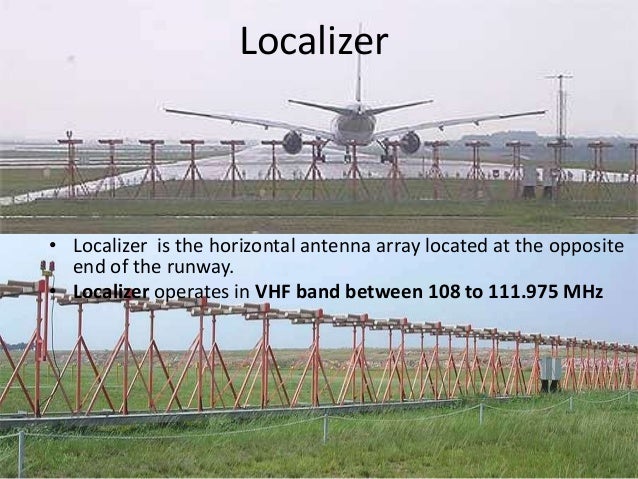
Others have noted that ILS stands for Instrument Landing System. It’s a system used for landing airplanes when you can’t see the runway, typically getting you down to 200 feet, but with special training and equipment you can get down to 100 or even zero (autoland). ILS is the world standard for getting airplanes onto runways in bad weather. The ground portion of an ILS consists of two antenna arrays, one at the end of the runway called the localizer, and one just off to the side called the glideslope. These arrays produce two fan-shaped signals that vary left-to-right and up-and-down in such a way that an aircraft can determine its location relative to the runway with remarkable precision. The localizer signal provides lateral guidance to the runway centerline, while the glideslope provides vertical guidance down to the touchdown zone, usually on a 3° glidepath. One or both of these arrays is what this airplane ran into. The system is passive, in that the signals are simply broadcast from the ground continuously, aren’t unique to a particular aircraft, and there is no return or response from aircraft. The ground antennas simply “shout into the void” as it were, and aircraft receivers determine their location based purely on the shape of the signals at the aircraft’s location in space. For illustration here is a localizer antenna (though note that the airplane in this picture is “backwards,” i.e. the localizer for a given runway is at the far end of the runway, though it is possible to “fly the backcourse” and land with one at the near end): https://image.slidesharecdn.com/instrumentlandingsystemils-1... And here is a glideslope antenna: https://i.pinimg.com/originals/8f/56/b3/8f56b3b52fb9b81c84f7... |
|
|