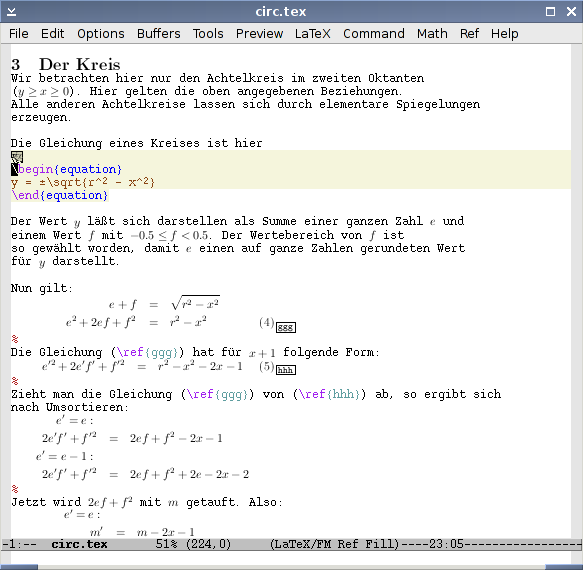
This seems to make easy things easier and harder things really hard.
Kinda like https://www.lyx.org/Screenshots or using org-mode for latex. Convenient for simple matters and something you have to fiddle with or work around when you want to do anything more advanced.
Oddly, Knuth prefers ${a \over b}$. I think I agree, if only because it actually reads well.
An odd thing I found, was the once I learned how to verbalize many of the maths that I encountered, reading them became much easier. LaTeX actually helped a lot here, because most of the constructs have good readable macros to typeset them.
Also, if you're interested in readable languages, there's the family of roff languages that might seem terse at first when coming from LaTeX but actually have a very enjoyable grammar. The LaTeX ecosystem is so great that I don't really miss roff but I do have nice memories of writing reports in roff a couple of years ago. More to the point I found it wonderful to write graphics in the roff pic sublanguage.
Edit: actually even more to the point is the eqn sublanguage which really competes with Knuth notation.
It's not a coincidence: in fact, eqn (the ACM paper by Kernighan and Cherry was published in 1975) predates the initial design of TeX (1977), and Knuth explicitly based the math notation in TeX on that of eqn. Initially, like eqn he had no backslashes, but quickly (before any code was written) changed it to one with backslashes.
He discuses these matters of syntax in his Gibbs lecture of of January 1978 (https://projecteuclid.org/euclid.bams/1183544082): see Figure 3 on the top of page 344, where the notation of eqn is marked "Type B" (“developed at Bell Telephone Laboratories”) and the third column is "Type T".
> I found it wonderful to write graphics in the roff pic sublanguage.
I happen to have fond memories of using lots of TikZ to do lots of graphics, making full-color posters with it. It was only because I was too poor to buy InDesign.