|
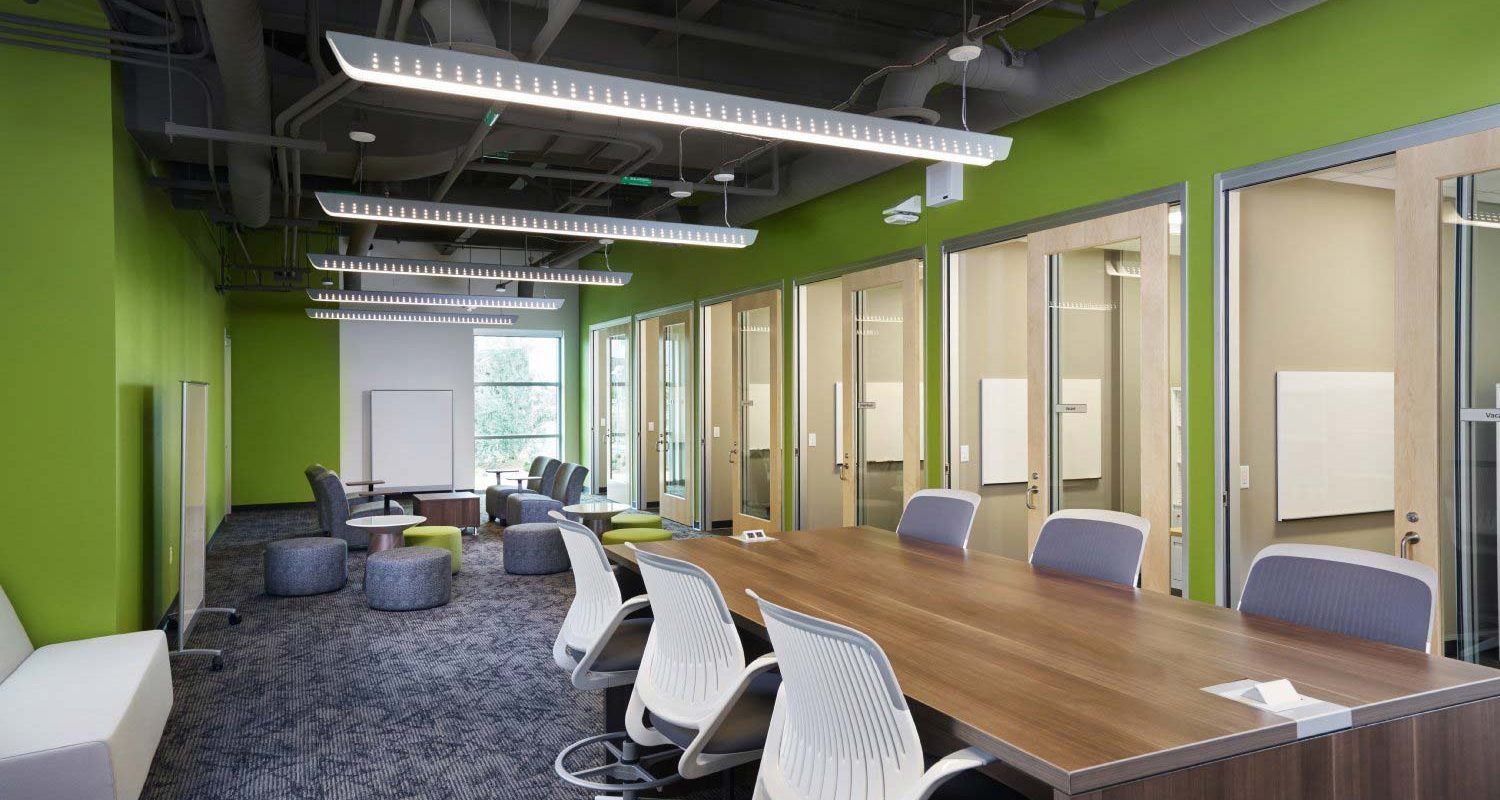
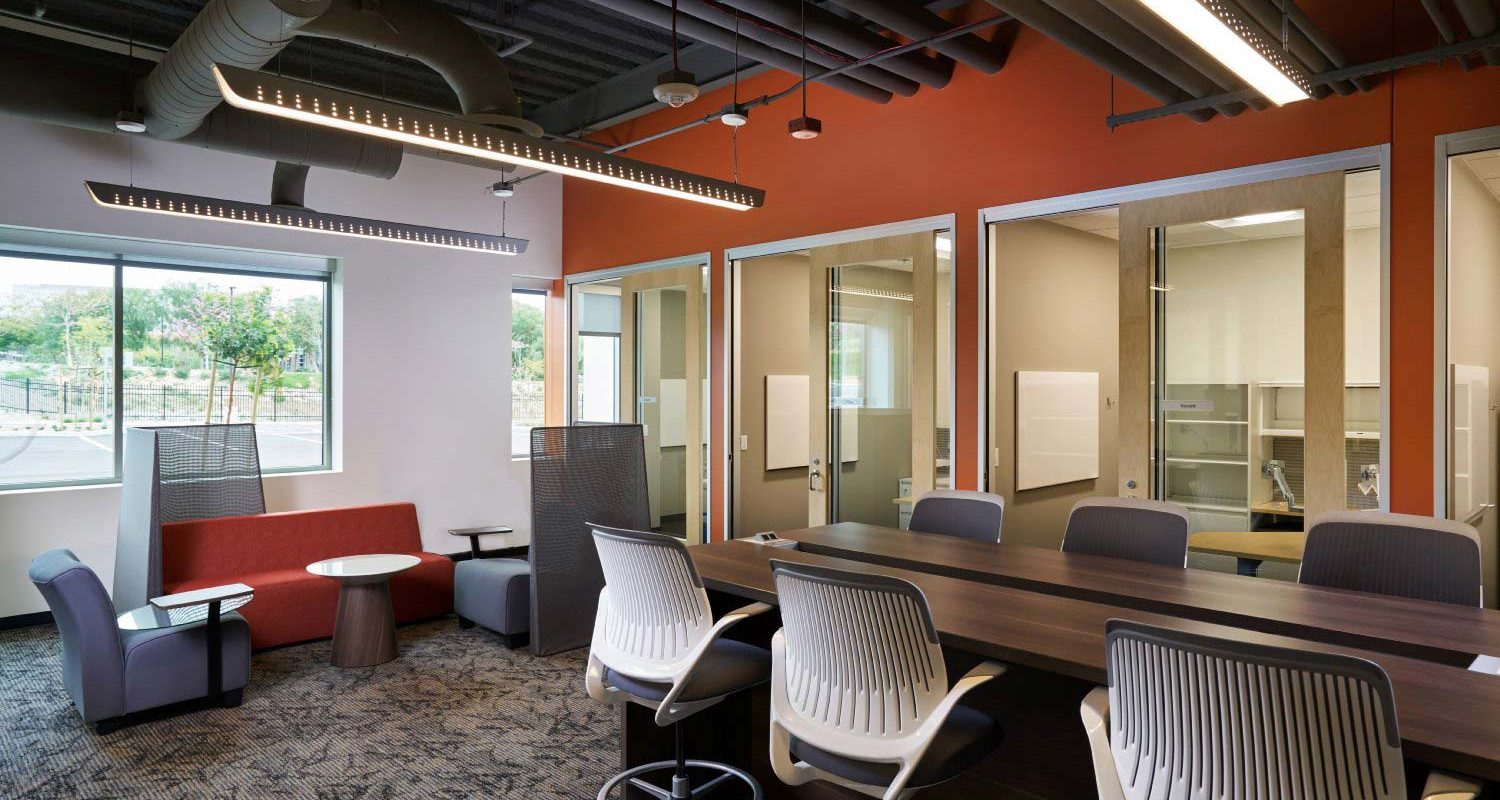
I work for Viasat; all of our new-build offices in the past few years have been designed around what we call the neighborhood concept. A neighborhood is a set of individual offices (maybe 60sqft-ish?) with three solid walls, and one glass/wood wall with a sliding door. All the offices open into a central room that can be outfitted in a bunch of different ways. There are neighborhoods of different sizes, and basically, each team gets a neighborhood to themselves. The whole concept was developed through a series of experiments that took several years. Some teams make use of the space better than others, of course, but for my group it's been a huge boon to our collaborative culture. The offices are well-insulated, so you don't need headphones to achieve quiet, but if you want to, you can leave your door open and hear what your teammates are discussing at any time. Over time we're upgrading our older facilities to the same model, but in general there are few open-plan offices or cube farms in the company, and I highly doubt we're going to build more. Many years ago, our founders made it a company priority to give folks a door they can close, to get away from "it all" and focus. |
The door provided effective sound isolation, and years later I realized the window was a psychological link to what was going on in the inner "courtyard", after spending time in a completely closed office at Microsoft. The message at Apple seemed to be "Okay, we know you need to concentrate on work, but remember that you're part of a community" while the office of the particular group I was in at Microsoft seemed to say "Please just sit there and write code and do email -- we will feed you under the door".
Architecture matters in the weirdest ways, and sometimes tiny tweaks make a big difference.