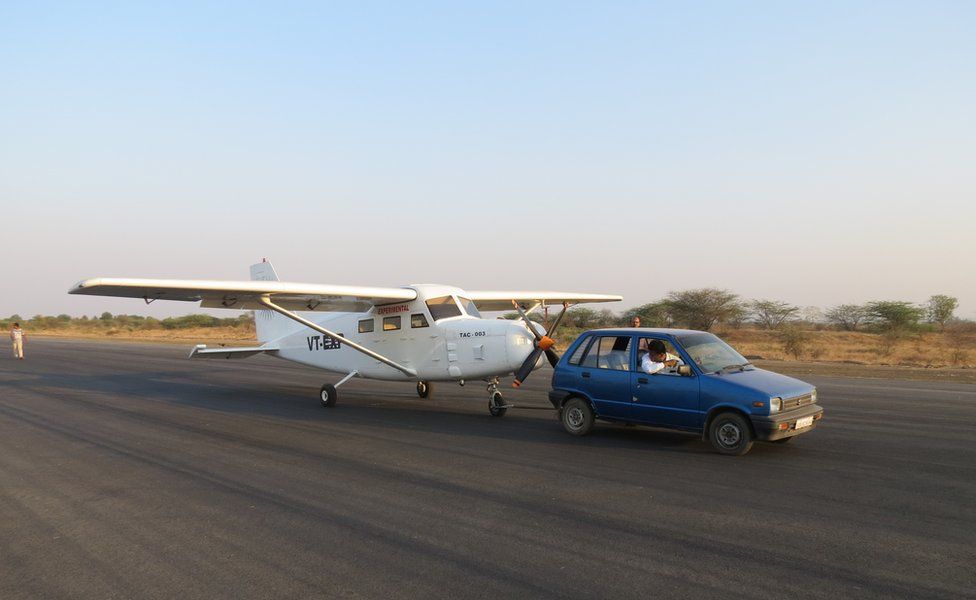
It's also where the tail is compared to the main wheels. When you want to take off the pilot moves the elevator on the tail which pushes the tail down causing the nose to lift up pivoting on the rear wheels. If you look at a pic of a normal plane https://upload.wikimedia.org/wikipedia/commons/4/48/Cessna.f... you don't have to push down too hard on the tail to lift the nose.
Have you ever seen a 150 in real life? There's nothing in the tailcone. If you had a battery and some avionics boxes in there, the you could probably move the tail a few feet towards the front to achieve the same moment.
You simply can't guess the balance from a picture.
He fully deflected the elevator and bounced the nose gear. With zero passengers. You put 6 adults and a co-pilot forward of the rear gear and I bet even bouncing will be out of the question. But we don't know if the ground speed was even representative of take off, so we're all just guessing here. With regard to cooling you can see an evolution here in the BBC photos: the first two images show no cooling ducts on either side of the TAC-003 engine compartment, but later images show several. I think geff82 is probably spot on about the design.

You simply can't guess the balance from a picture.