> I don't really get this line of thinking, it just seems like a denial of globalization, automation, and economics.
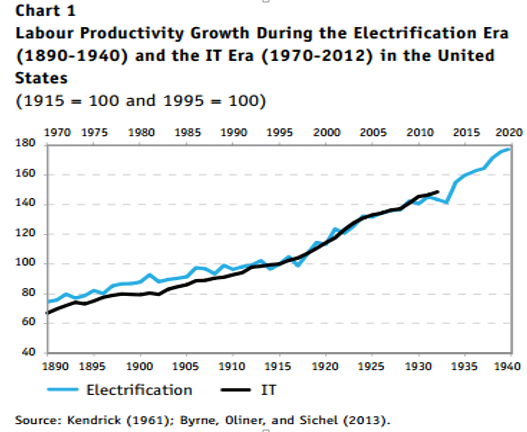
So what is the qualitative change in these three factors that changed so much in your opinion? Globalization was important for the US from its very inception (example: European price and production developments where a big factor in the Panic of 1819[1]). And productivity growth has been more or less constant over the last 100+ years [2][3].
I think it has been the gradual march of technological progress and globalization. For example remember the civil war was largely fought over protectionist trade policies for northern manufacturers. And that was in the age of sail when many goods would not even make if from North America to Europe. Similar protectionist policies would be unthinkable now. Also the rise of America from being an upstart industrial power like China and India are today to being a wealthy nation with (relatively) high standards of living for its low and middle class.
Unions are fascinating, honestly I am surprised that the era in which they were strong ever existed so early in history. They rely on having a monopoly on labor or at least a large percentage of it but with modern transportation the size of the labor pool is just too large and too poor for a relatively small, wealthy nation like the US to organize it.
If I had to point to seminal events causing the change, they would be construction of the Suez and Panama Canal, MacArthur's reconstruction of Japan, and Nixon opening trade with China.
This last one could be the reason we are all still alive today, but clearly the American middle and lower class have born the brunt of the costs relative to where we all were after WWII.
Btw thanks for the discussion. Has been a while since I read about panic of 1819! I also blame the aspects of Keynesian economics that do not constrain the growth of government debt for increasing the power of existing wealth relative to the working class, but I admit that is a more questionable opinion.
>For example remember the civil war was largely fought over protectionist trade policies for northern manufacturers.
That's a falsehood pushed by the south to deny their support of slavery. This short video about it from prager University is helpful: https://www.youtube.com/watch?v=pcy7qV-BGF4
Here you can read South Carolina's actual declaration of Succession, where they make a point of spending most of the 13 pages talking about how their "right" of slavery was being infringed upon: http://www.teachingushistory.org/pdfs/DecImmCauses.pdf
My previous reply is being down voted a lot so I'll try again and compare them.
These tariffs were effectively a tax on slavery and a redistribution of income from agriculturalists in the south to industrialists in the north. The major cause of the South's succession may have been slavery, but the immediate cause can still be these taxes which were putative to slavery. They didn't suceed in response to the emancipation proclamation.
Edit: MacArthur's reconstruction of Japan is just a easily identifiable event. What I am really saying though is how industrious the Japanese people have been since the age of exploration. Perhaps the seminal event should have been Commodore Perry or the Meiji restoration.
Unions are fascinating, honestly I am surprised that the era in which they were strong ever existed so early in history. They rely on having a monopoly on labor or at least a large percentage of it but with modern transportation the size of the labor pool is just too large and too poor for a relatively small, wealthy nation like the US to organize it.
If I had to point to seminal events causing the change, they would be construction of the Suez and Panama Canal, MacArthur's reconstruction of Japan, and Nixon opening trade with China. This last one could be the reason we are all still alive today, but clearly the American middle and lower class have born the brunt of the costs relative to where we all were after WWII.
Btw thanks for the discussion. Has been a while since I read about panic of 1819! I also blame the aspects of Keynesian economics that do not constrain the growth of government debt for increasing the power of existing wealth relative to the working class, but I admit that is a more questionable opinion.