Hacker News new | ask | show | jobs
by anythingnonidin 3253 days ago
Yes.

> Proportion of users that become dependent:

> Tobacco: 32-68%

> Alcohol: 15-23%

> Cannabis: 9% (30% of users with abuse or dependence)

> Cocaine: 17-21%

> Stimulants: 11%

> Anxiolytics (includes benzodiazepines): 9%

> Analgesics i.e. pain relievers: 8%

> Psychedelics: 5%

> Heroin: 23%

> Anthony, Warner, Kessler, 1994; Lopez-Quintero, Pérez de los Cobos, Hasin, et al., 2011

http://www.rethinkpsychedelics.org/

6 comments

Almost everything is > ~10%. Maybe it's just me, but I would consider 1/10 people getting addicted (i.e. psychologically or physically dependent on the drug to the point of ruin or death) extremely high.
> i.e. psychologically or physically dependent on the drug to the point of ruin or death

That's not what dependence means. That could be an outcome. And each of those drugs has a different potential outcome from long term use.

Take for example the difference between marijuana and cigarettes. Cigarettes are much more addictive, and have clear evidence of causing lung cancer. It would seem logical that marijuana would also cause lung cancer, but there is not enough evidence to say for certain that it does.

So dependence on cigarettes can definitively kill you. Dependence on marijuana might make you less employable, but it's not certain that it might kill you.

It would seem logical that smoking marijuana would also cause lung cancer. But there are many other ways in which you can take it.
Why would it seem logical that smoking marijuana would cause lung cancer? That seems like an overly simplified model for cancer.

Anyway, there is no data showing smoking marijuana causes lung cancer (rather, there is no high quality data. I'm sure some NIDA-funding scientists have found otherwise, but it's not considered correct).

The NSF review concluded that, at most, smoking marijuana causes respiratory problems, but not lung cancer. The only type of cancer positively associated with marijuana smoking was a form of prostate cancer, which happens to be easily treated.

Logical in a sense that it's a reasonable initial premise in the absence of other evidence. Not saying that it's true, but if you don't know if it's true or not, and you know that smoking other things does give you cancer, that's the side I'd err on.
nope, the null hypothesis is "smoking something does not give you cancer". That smoking other things gives you cancer is specific to what they contain.
Yeah, those are not numbers that would indicate "rare" for any other medical condition.
I think they are if you multiply through by the number of people who'd want to try them (legal or illegal) in the first place.
The thing is War on Drugs is doing more harm than good.
It's interesting that even Heroin has only 23%. I always believed that one shot of Heroin would be enough. On the other hand I met someone a few years ago who had done a lot of drugs who told me he had done done heroin a few times, didn't like it and never did it again.
I wonder what that would be broken out by intake mechanism. Heroin can be smoked a few different ways, eaten in brownies, eaten as pills, insufflated, or injected.

From what I understand, the addiction mechanism for heroin is more subtle then non users think. Its easy to try once, enjoy it, and then not be compelled to do it again. The problem is many users see the lack of negative experiences on their first use as sign that the drug is "safe", so they use a month later, and it still ok, so they quickly start to use most weekends, ramping up until they use every day.

Similar to you, an old boss of mine well experienced with drugs told me the only two drugs he would advise people against are heroin and crack. Heroin because you're always going to remember your first time and its amazing, and crack because you will be amazingly high for 10 minutes, crash, and really feel the insanely strong need to take another hit.

Why would you believe that aside from taking DARE classes? There is so much FUD in the drug space that it clouds proper judgement.
Probably because we don't generally become aware of anyone's heroin usage, whether they're a celebrity or someone you know, until it's a problem spiraled out of control. Most people never see non-addictive, non-destructive recreational use.
Mainly because that's the only information most of us ever get.
yep its true and very possible, while i have not tried street heroin i have tried the pharmaceutical version of it along with other opiates both weaker and stronger. ive also tried just about anything you could name but im not addicted to anything and never have been, i have a solid job and have never been in any trouble with the police etc

so you can trust me when i say there is no such thing as a "if you do it once youre hooked forever" chemical or certainly not in the 100+ unique psychoactive chemicals i have tried.

feel free to ask any questions you may have

I certainly would like to discuss psychedelics more with people who have actual experience with them. I find the topic very interesting but I don't know anybody who has experience.
The error bounds on some of these numbers is gigantic. Is 32 to 68% the best figure that could be arrived at?
Two questions:

1. What is the harm for different drugs once addicted? (health, possibility to lead normal life)

2. What percentage of people addicted can successfully quit?

I would suggest the biggest harm in drugs today is their illegality.

I personally think what we are doing today is far worse than had we never done anything about drugs in the first place.

How "rare" indeed! Imagine if car accident rate was 10%. Every 10 days you'd total your car.
No, that's not what it means.

If it meant that, all drug users would become addicted every 10 days.

It actually means 1 in 10 drivers would total their car, over a lifetime.

I'm not qualified to advise anyone on how they'll react to a substance, but I find the stats for cocaine addiction interesting. Perhaps the stats include crack cocaine, which is meant to be highly addictive and is something I'll never try, but I don't know what the big fuss is about cocaine. I've tried it a few times, it makes you feel more confident but otherwise isn't much of a 'trip'. Perhaps people become dependent on that artificial confidence.
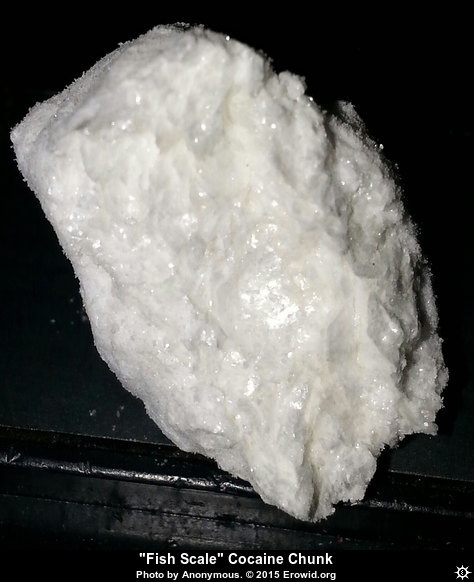
Did you have good cocaine? Good cocaine smells noticeably and has a shimmering, "scaly" appearance like below.

https://erowid.org/chemicals/cocaine/images/archive/cocaine_...

Smoking crack feels essentially the same as cocaine, only the level of stigma is different.

It wasn't sold as a solid rock, it was in powder form, so it didn't look like the picture you showed, and it's hard to judge the purity of a powder, and I don't know how to describe the smell, but let's just say I got it from a dealer that was recommended by someone who had been addicted to cocaine and was still a customer.