Hacker News new | ask | show | jobs
by mkstowegnv 3250 days ago
I started a group with a long shot dream that some day total solar eclipses will be properly celebrated in the form of giant high tech festivals http://shadow.dance. But in addition to celebration, they are opportunities for somber reflection on history. Any arbitrary long path anywhere on earth will include historic sites that reveal depressingly dark human behavior but the Aug 21 path is remarkable in that it includes the most important historic sites for almost all the dark aspects of US history, including the Minidoka Internment Camp, Fort Laramie where the Sioux were falsely promised the Black Hills, The Trail of Tears and Sullivan’s Island (North America’s largest slaveport). (The most detailed map is on p 6 of the detailed technical proposal which is 3 clicks in – the 16 sites still sadden me when I look at them.) Readers here could be a big help for our project which was unable to get support for our 2017 ambitions but hopes to find fruition in the 2024 Mexico US Canada eclipse – contact information on the web pages.
3 comments

I may just be a bit thick, but what's the significance of Aug 21 in this? (In plain terms, if you can.)

Just for context: I have actually observed a total Solar eclipse, and while it was pretty significant and "awesome" in confirming my (philosophical term:) belief in Science[1], it -- in no way -- implied much else.

[1] It was predicted at least 2 years in advance... which is astounding given the speed at which the earth is hurtling around its orbit, etc. I don't think they even needed much more than Newton's laws for that prediction.

Sorry I do not really understand your question. I hope I made it clear that I do not attach any supernatural significance to the fact that the Aug 21 eclipse includes "dark" history in its path. By chance it includes historical sites that most people have heard of, and it is a shame that we couldn't drum up some luminaries to talk about them and emphasize the common themes - humans are at their worst engaging in horrors that you hate to think about - when: bigotry is widely accepted, when there is assymetry of power between groups, when ruthlessness in the pursuit of profit and power is not condemned and when the actions remain out of sight and there is no investigative journalism to reveal them. If we are of good conscience and do not want to repeat our past then we must constantly be on guard against those factors.
Oh, OK, I apologize. I think it might just have been the phrasing of your original comment that confused me. I definitely think it's a good idea to drum up a bit of interest in history, historical sites, etc. I will say, however, that the look of the webpage you pointed to did induce a little bit of a "cranky" vibe just because of the look, big fonts, etc. If you control it, you might want to tone it down it a down, or if you don't... just avoid linking to it. What you just posted is much more interesting and informative than that page.
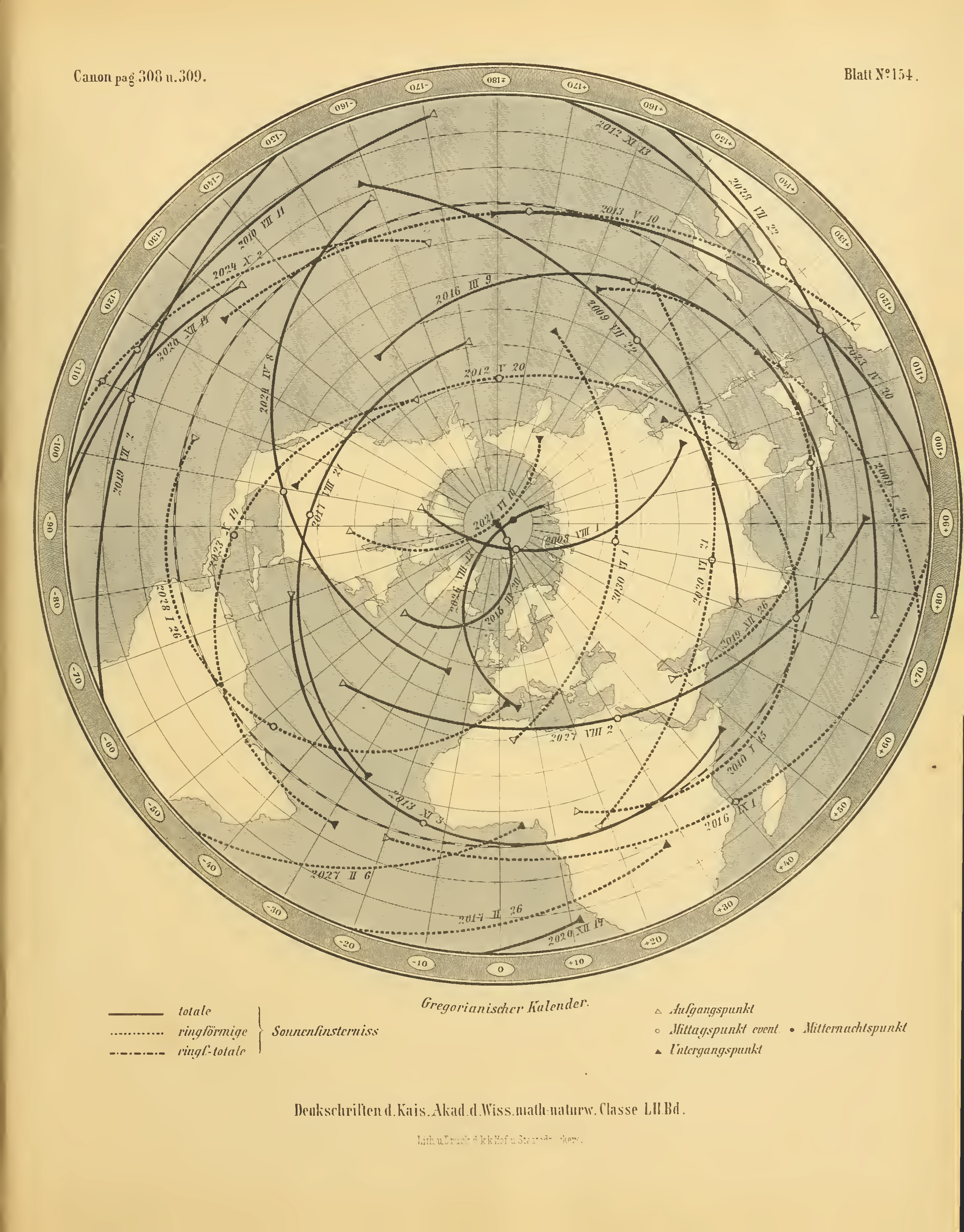
Actually, it was predicted a lot further in advance than that. The Canon der Finsternisse [1] published in 1887 shows the predicted track of the upcoming 2017 eclipse [2]. I think I read once that the author, Theodor Ritter von Oppolzer, only calculated the start, middle, and end points of each eclipse, which is why the track in [2] is a bit off.

[1] https://en.wikipedia.org/wiki/Canon_of_Eclipses

[2] http://eclipse-maps.com/Eclipse-Maps/History/History_files/C...

> the Aug 21 path is remarkable in that it includes the most important historic sites for almost all the dark aspects of US history

It really isn't, and it really doesn't. It doesn't cross Dresden or Nagasaki or My Lai or Guantanamo. It crosses a lot of sites of historical political and military domestic engagements in the USA, all of which are sad for the losing side, because it crosses a large cross section of the US.

I should have said domestic history. The proposal briefly mentions inviting the creation of monuments to international suffering. See more comments below.
I don't know about the other sites in your list but the Minidoka Internment Camp is 70 miles too far south to see the total eclipse.
My summary is oversimplified but if you look at the legend on the map it indicates that the prisoners at the camp were forced to build the Minidoka Irrigation Project which crosses the shadow path from the south where the Camp was located and extends north of it. So the Camp is tied into the shadow path which in the original vision would have been noted by a monument on the path. It was surprisingly easy (by going to many different sources of course) to get GIS layers with shapefiles for everything on the map
Out of curiosity, is there a reason you've chosen to focus on "dark" events in the path? Is it because of the shadow metaphor? I'm sure there are plenty of good things that happened in the path too.
The Trail of Tears and Sullivan's island leapt out at me the very first time I saw a map of the shadow path and I have for years thought that an honest painful day of atonement around the world would be healing and humbling and a good antidote to romanticized militarism. Only Germany has come close to real atonement. Most of the rest of the world is way overdue. So I thought it would be a valuable addition to a day that bonds a nation with many of the best activities for creating harmony - dancing, cheering, working and eating together rounded out with crying together and promising never again together. Many of my thoughts are in the proposal which is way long as the event is complicated. But I have run a camp at Burning Man I have been to the Virgin of Guadalupe Festivities, and past a critical point adding events and complexity really does create an unstoppable frenzy that is more and more likely to succeed and pretty soon you can't keep people away.