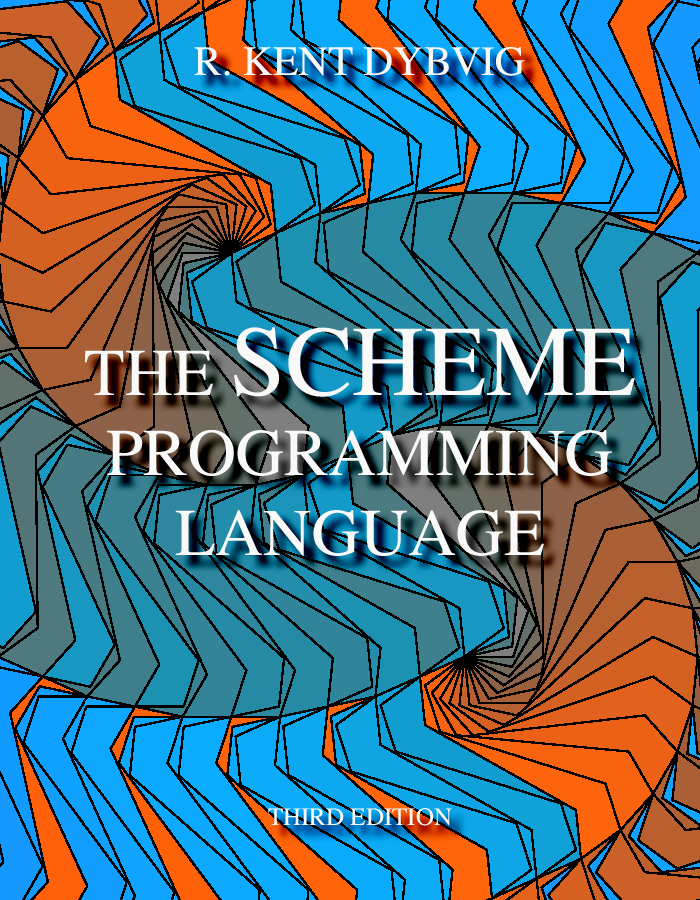
When it came to the description of "einsteins" (a single tile aperiodic tessellation), I couldn't help but think of the images in the 3rd edition of The Scheme Programming Language:
All three of the Scheme examples can be tiled periodically even though they aren't tiled periodically in the examples. How to tile them periodically is left as an exercise to the reader, but it's not hard.
"Depending on the particular definitions of nonperiodicity and the specifications of what sets may qualify as tiles and what types of matching rules are permitted, the problem is either open or solved."
The spiral images have tiles that are reflected, not just rotated. You'd otherwise need a third dimension to do another rotation. I think that might be considered two different tiles by the rules laid out in the article.
https://en.wikipedia.org/wiki/Aperiodic_tiling
All three of the Scheme examples can be tiled periodically even though they aren't tiled periodically in the examples. How to tile them periodically is left as an exercise to the reader, but it's not hard.