Hacker News new | ask | show | jobs
by monkeyprojects 3287 days ago
It depends on the market you look at.

At the moment uber is very useful (heck in the past fortnight I have used it in Bangalore, Helsinki and Vienna) but it does have a serious weakness - Uber competes on price but there is no evidence that it is profitable nor (far more worryingly) that it knows how it can make itself profitable.

Hence it's issue is very much similar to twitter - uber in many countries owns the sector, it just hasn't been able to find a means to make a profit from the sector.

2 comments

Well, there isn't any else service that is profitable and on those markets? Uber seems to be the only somewhat globally available this kind of service. Even lyft operates only in US. There are lots of local competitors but what I see the most important factor is for the service to work universally everywhere. That's also where I get the most value, because uber has made traveling in certain countries much, much nicer for me.
You are an extreme minority. People who frequently travel internationally are a tiny niche market. Most users just care about having a service that works where they are.
> there is no evidence that it is profitable nor (far more worryingly) that it knows how it can make itself profitable.

I'm sorry what? I keep reading these sorts of sentiments, but they sound, and I know this is insulting, they sound like people who don't understand business in even the 101 sense.

As long as the margin per sale is greater than the cost of that sale, it is possible for a business to be profitable one day. Given Uber charge a percent per ride, they definitely have a workable margin (which not all startups do BTW, e.g. many of the food startups like Bento https://gimletmedia.com/episode/kitchen-confidential-season-...).

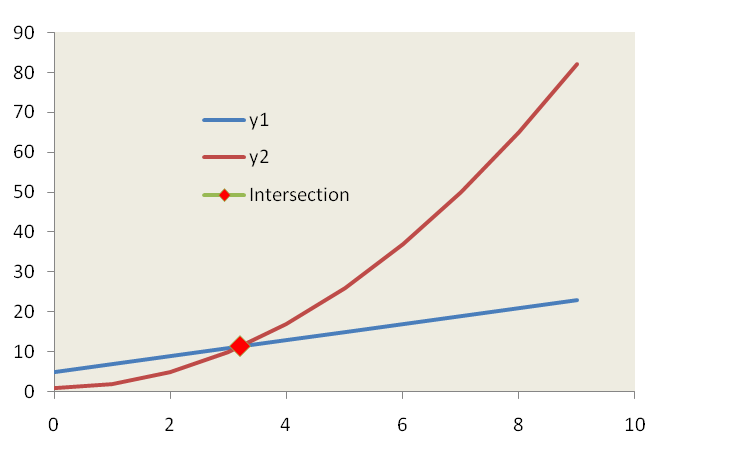
The question, for a growing business with money in the bank, is are we growing revenue FASTER than we are growing costs. As long as you are, then inevitably, the two lines will intersect at some point. http://4.bp.blogspot.com/-Yv7OoVt_q0I/UHcx99N5I5I/AAAAAAAAAZ... is the sort of graph Uber needs.

So the questions right now for Uber are: at what scale (aka total revenue) does Uber BECOME profitable with its current cost structure? How soon can Uber reach that date? And is Uber's runway long enough to get there?

I have no idea of any of these numbers, but http://uk.businessinsider.com/uber-leaked-finances-accounts-... has some "leaked" numbers. Seems in Q3 2016 they spent $2.5B and made $1.7B, so they would need to either grow by about 50% with zero cost growth, or cut about 32% of the costs to be profitable. Is that doable? How the F would I know? But I doubt that $2.5B includes many must have costs, like servers, developers and offices, and includes a F-ton of advertising and other incentives all of which are easy-ish to cut.

Lets use these numbers as examples:

* Costs: $2.5B * Margin: $1.7B * Monthly Costs Growth: 2% * Monthly Revenue Growth: 5%

If that is the case, Uber are 15 months from profitable.

That's the insane maths of startups: Revenue growth % > Costs Growth % = success.

And what about costs? If I were a betting man, I'd wager most of Uber's costs are things they could cut - advertising, non-essential staff, Given their revenue seems to growing rather well, I see no reason why there isn't a time horizon where Uber is inevitably profitable. Whether Uber has enough runway, and whether they can raise more cash, I have no idea.

Lastly, I find the idea that is floating about that Uber are subsidizing fares a really odd one. I think Uber are subsidizing things. Uber subsidize. development. Uber are also subsidizing the legal battle in certain markets, by paying for cases that will inevitably help competitors. Heck, Uber is even be subsidizing some drivers in some markets (my NYC driver told me they have some finance scheme in place to help new drivers purchase/lease cars). But subsidizing fares? They take a 20% cut, that is no subsidy!

Whether 20% is enough of a cut, and visa versa whether the fees are high enough that a 20% cut is enough raw revenue I don't know. Ditto I don't know whether Uber's runway is long enough, or if they can extend it with more funding. What I do know is all this writing Uber off doesn't seem to track with what seems to me a very sensible "build a moat by being the biggest while growing revenue faster than costs" strategy.

So a business that requires bulk advertising to recruit both drivers and riders (in the U.K. Driver recruitment is one of the most common radio adverts on commercial stations) could survive without advertising..

Given that I saw my first tv advert for uber last weekend (focused on rider recruitment) I suspect that instead of cutting advertising costs uber will have no choice but to continually increase them over the years

If you think advertising is easy to cut without losing market share its you who "don't (doesn't) understand business in even the 101 sense"
> The question, for a growing business with money in the bank, is are we growing revenue FASTER than we are growing costs. As long as you are, then inevitably, the two lines will intersect at some point.

You're implying an infinite market. The shared fever dream of all startup entrepreneurs.

The math works out nicely if you look at it this way, but the problem with uber is that it is people intensive. Their core asset are their drivers and not their technology. To maintain that driver supply they are paying out their drivers quite handsomely. Just to add I am currently in the largest south east asian market and there are 3 major competitors here fighting for the 250M+ population.

If you cut out those subsidies, you cut out the advertising, those numbers would go into a downward spiral. Drivers would go to the competition who keep subsidizing, there would be less cars as a result, less cars means a less useful service and users would eventually leave, which would mean THE END.

I personally think the core to this issue with Uber and all other ride hailing businesses is that the behavior they are promoting is far from what people deem as normal. A few years back , letting some random person into your car and taking them somewhere was the beginnings of many horror movies either for the driver who would be the victim or visa-versa (it would just depend on the title of the horror movie). In this day and age i still think its not normal to let a random person in your car, but with enough money to do it people will allow for this behavior. I mean if you were not getting paid enough would you let someone into your car randomly and take them where they wanted to go.

With this in mind uber must shell out the cash to allow drivers to want to loan out their cars for others to get in and also give up their time driving around waiting for a passenger to hail them and since they are not the only service like this in each country the cost gets exponentially hire when they compete for price hence why the crazy fund raising required by all businesses of this type in each specific region.

Very different to online marketplaces where the assets are the merchants within the marketplace who sell. In this scenario merchants sell, its what they have always done and is normal behaviour to them so having a channel to sell their goods to a wider audience is always going to be a better option and merchants hence dont need $$$ to keep them within the market place. Once you get them on board you dont have to deal with them potentially leaving, they can sell on your platform or any other platform it just comes down to driving traffic.

Even though with ride hailing you can be part of many different ride hailing services at once, if you are driving for one you are not driving for the other at that moment so their is solid competition for drivers time there and drivers will go with who pays the most which then comes in the for of subsidies. You let those subsidies go you loose your drivers, you loose your users and you loose the market share, then you loose.

Assets of ride hailing services are humans, humans change and get restless and always looking for something better, maintaining that asset happy without lots of cash (specially when there is other competitors doing the exact same thing) with more or less the same technology is going to require lots of cash.

Im curious to see where all this will end, for now im enjoying my crazily subsidized rides that has helped me save so much money in transportation, so im not complaining , but where this business will go eventually and where the regional players that compete with uber on a regional level are all going to end up is going to be dam interesting to see ... im excited :)