Hacker News new | ask | show | jobs
by tuna-piano 3319 days ago
Yes, it would be great if we could sub divide the large country into smaller areas, and give each of those areas control over most of the roads / bridges / etc.

If spending and benefits are primarily local, shouldn't the decisions be as well?

2 comments

You mean like the States?
Sure, but there's no regional intermediary. Government scales from city, to county, to state... then straight to federal.
> Sure, but there's no regional intermediary. Government scales from city, to county, to state... then straight to federal.

There are only 50 states. The median state is larger than Greece.

The true problem is that the federal government is responsible for spending three times as many tax dollars as all the states put together. The county government knows they need to fix the bridge, but the feds took all the money the local taxpayers could spare and spent it on not-the-bridge.

How many of those federal dollars spent are for the military?
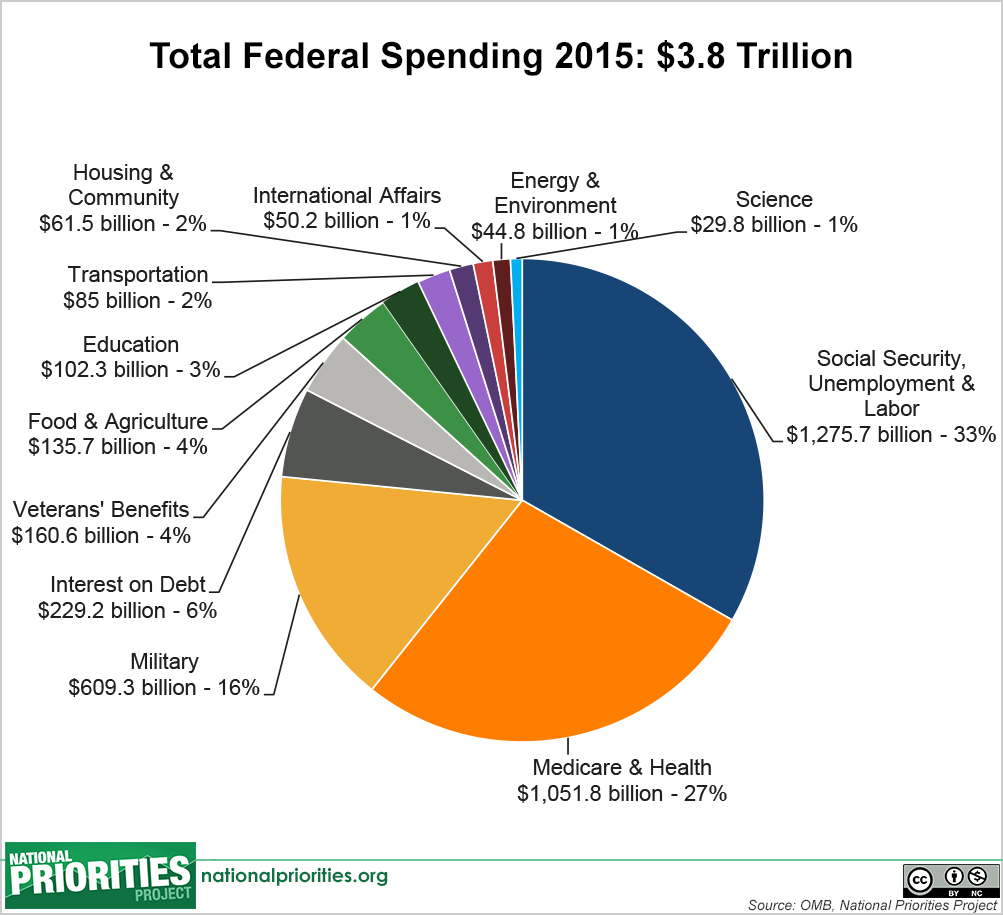
Roughly 16% of Federal expenditures go towards the military.
Federal Outlays: ~$3.8T

Federal Defense: ~$0.7T

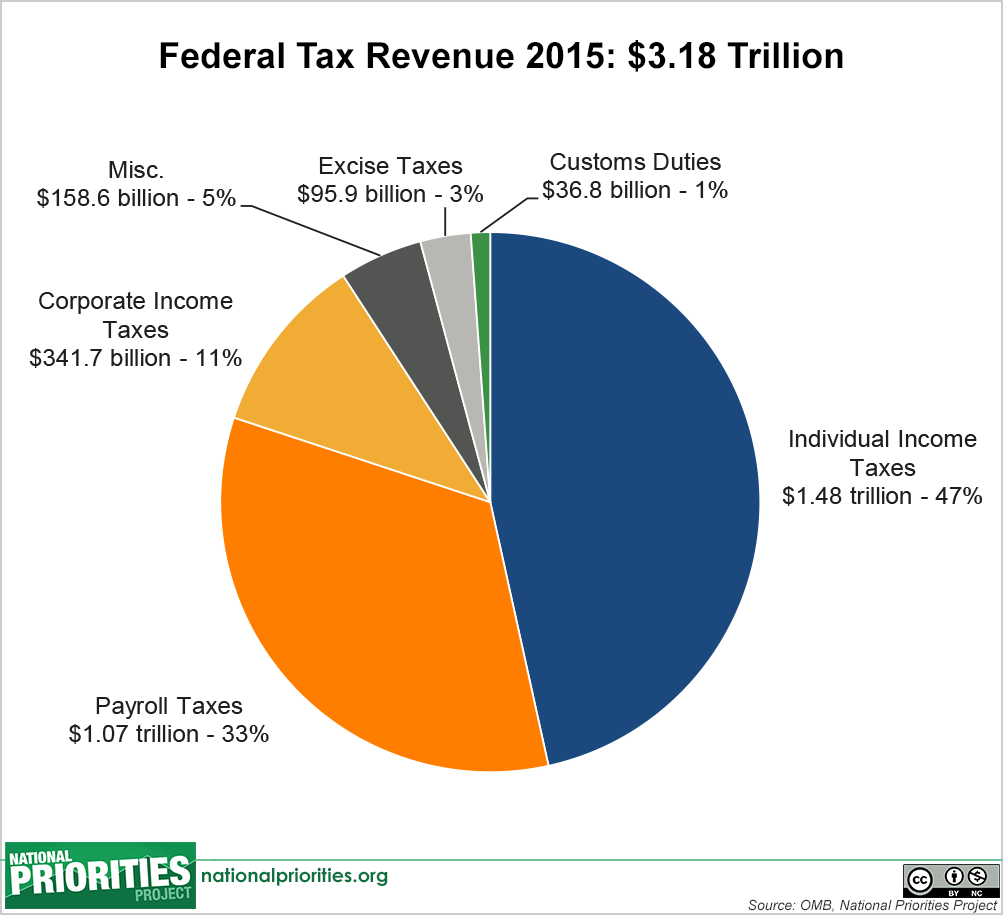
Heres a graph of federal revenues --

https://media.nationalpriorities.org/uploads/revenue_pie%2C_...

And here's a graph of federal spending --

https://media.nationalpriorities.org/uploads/total_spending_...

In theory the payroll taxes from the first picture completely cover the spending on social security/unemployment insurance -- (and this is currently the case) -- so including that category in the total federal outlays is a little disingenuous when making an argument about too much federal spending/taxation if you don't intend to cut that source of federal spending/taxation ...

If what you say is true that the issue with u.s. infrastructure is entirely the result of too much money going to federal tax authority and not enough to local tax authority -- then to make more dollars from the federal budget available for local taxation you are going to need to do one of the following in order of which action affects the largest monetary amounts:

- argue for reducing payroll taxes and cutting social security benefits

- argue for reducing federal healthcare spending

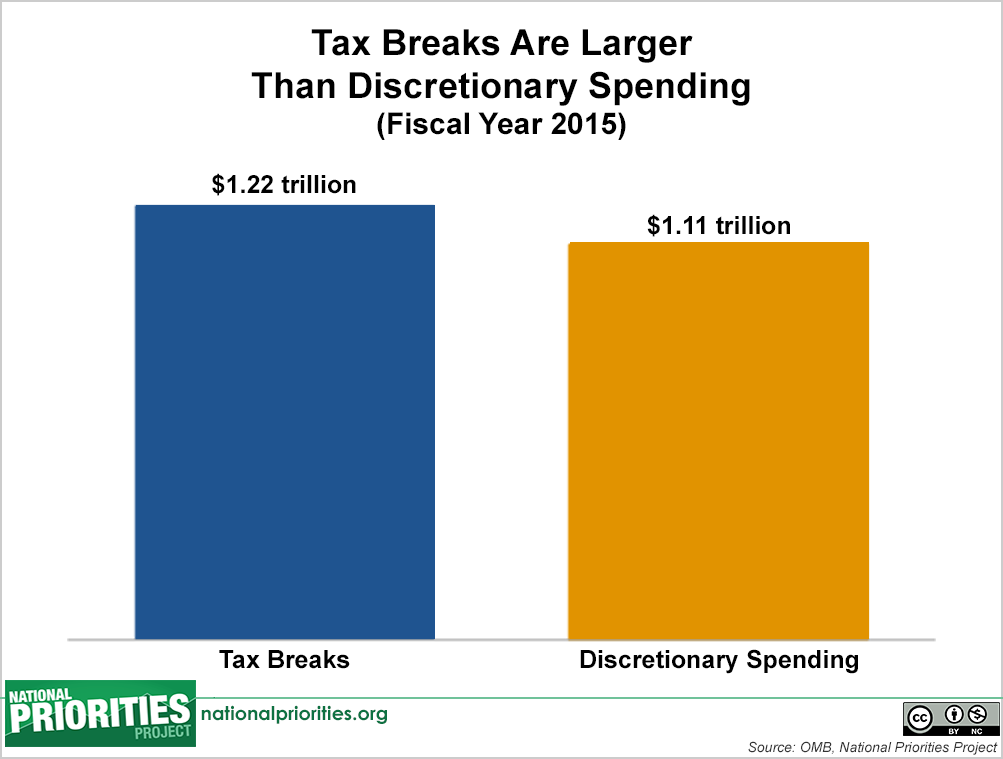
- argue for reducing tax expenditures https://media.nationalpriorities.org/uploads/taxexpenditures...

- argue for reducing the defense budget

- and then way down there at the bottom, the entire rest of the federal budget which is typically vilified as "government waste" and out of control federal spending by people who adamantly refuse to consider any of the above funding priorities when making arguments that try to scapegoat federal spending for regional management failures ...

Not always true. SF is both a city and a county, for example. Also, different states do it differently. Colorado has many cities that span county lines. Yes, going across the street in the same city means you now are under different laws. This isn't all that different than, say, a school district and it's tax base. We do also have regional systems, like the Mississippi/Colorado river watershed districts that help manage and maintain water usage in those areas. These inter-state issues have been cropping up for a long time (Bleeding Kansas, for an extreme example) and we mostly manage them pretty well and pretty silently. Turns out, the constitution actually does work alright.
It's my understanding that, from a constitutionalist perspective, states were meant to be sovereign and the Federal government was meant to have minimal presence. The idea is that states would be responsible for themselves only, through both success and failure.
I'd also imagine this could calm a lot of the "all our taxes go to the coastal elites" mentality and drum up support for local taxes (even though it's generally an errant stance).