Hacker News new | ask | show | jobs
by good_sir_ant 3363 days ago
The article's main argument is that the ISPs are selling something that doesn't belong to them, but to the consumer.

I don't like the idea of my personal information being sold, but how could you state this as fact? Shouldn't it be up to the consumer to choose to do business with a company that sells your personal info vs a company that does not?

9 comments

You say that as if everyone had the ability to changes ISPs freely. Consumer choice is irrelevant if there's nothing to choose from.
I have a single altenative ISP that offers over 15 mbs, there is no fiber in my area. I live in New York. not the city, and I do not live 'upstate'.

as the above pointed out to your comment, it is very difficult to chane ISP's I am not happy with mine and I do not have an alternative. my unhappiness came way before this bill.

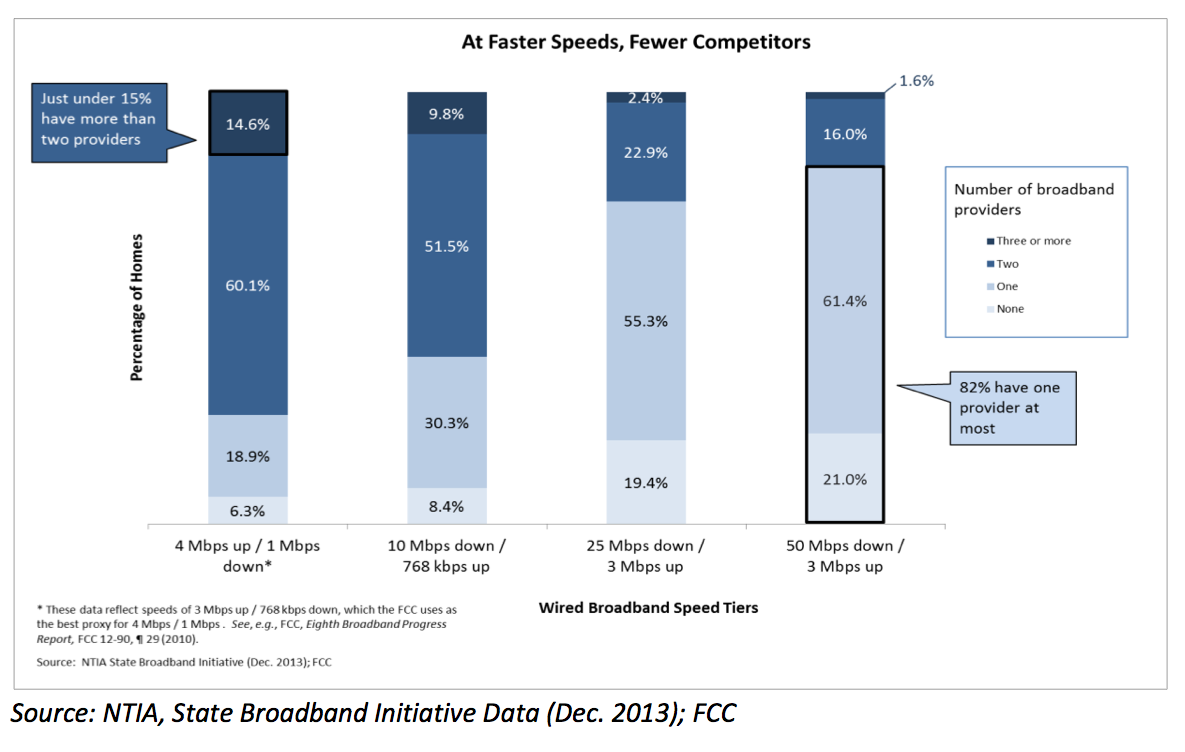
Ideally, that may be true (though whether people realize the value of their online data is unclear) - however the market for internet service is far from perfect. Over half of Americans only have one choice in broadband providers (at 25Mpbs), and just under 15% have more than two to chose from (at any speed)[1]. The cost of entering the broadband market and laying last mile cables is simply too high for there to be meaningful competition in much of the US. Hopefully, a policy like dig once[2] will eventually create real competition in ISP market, but until then the largely monopolistic ISP industry cannot go unchecked.

[1]: https://cdn.arstechnica.net/wp-content/uploads/2014/09/fcc-b...

[2]: https://www.washingtonpost.com/news/the-switch/wp/2015/09/22...

Via precedent set by protecting phone calls:

"For decades, in both Republican and Democratic administrations, federal rules have protected the privacy of the information in a telephone call. In 2016, the F.C.C., which I led as chairman under President Barack Obama, extended those same protections to the internet."

Regional monopolies are tolerated and the companies benefit tremendously from legislation and regulations that make it near impossible for meaningful competition to exist. Ideologically, the "harmful regulation" rhetoric is incredibly hypocritical.

Which is to say: most consumers have no choice among providers. That fact is a result of government action. If companies would tolerate legislation that would encourage increased competition in exchange for the right to sell consumer information, then you would be right. Of course, that isn't what happened here.

> Shouldn't it be up to the consumer to choose to do business with a company that sells your personal info vs a company that does not?

Ideally, yes. But there's a lack of competition in the ISP industry, due to either government-granted monopolies or plain old high fixed costs, which create a barrier to entry.

Though, the historically low interest rate environment should minimize this "barrier to entry" issue.

Are there notable startups in the ISP space?

That would be great, but privacy policies are unreadable and ISPs tend to be total or partial geographic monopolies anyway.

This is a classic case for regulation.

Should a company you pay to make phone calls over sell the data of who you call?

Should a company you pay to mail packages/letters inspect your mail and sell the data of what mail and subscriptions you are getting?

Don't downvote people who ask questions. Answer them if you disagree.
It's the same obvious policy applied to phone calls previously and mail previously previously.