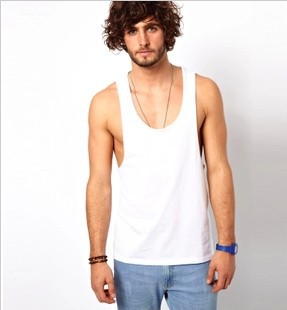
"Tina" is preying on the author's nascent anxieties about how her male co-workers perceive her body, clothing choices, etc. It's a form of harassment that's pretty obviously tailored to the author's gender (how many men report anxieties about being taken less seriously because they show too much skin?).
The modern use of the word "sexism" includes gender-tailored harassment. It's a broader term nowadays than just "holding a belief that women are worse at X".
I also don't think sexism is limited to gender1 < gender2.
That said, I think you're argument's too broad. If you want to call it harrassment, call it harrassment, but I don't get sexism.
> (how many men report anxieties about being taken less seriously because they show too much skin?).
How many guys wear tank tops at work? Some do. In order for your criteria to be consistent, you're saying that if a man were to wear a tank top at Uber and his boss told him not to wear a tank top, that it'd be sexist? I think that's what you're saying. If so, that's a slippery slope as it would lead to ALL dress codes being discriminatory.
> In order for your criteria to be consistent, you're saying that if a man were to wear a tank top at Uber and his boss told him not to wear a tank top, that it'd be sexist?
no... the exact opposite. it's sexist because, presumably, the manager would not try to reprimand and/or embarrass a male for a tank top.
to neutronicus' broader point though, i can't imagine anyone ever making these remarks to a male at all. because there are double standards when it comes to dress and skin. not trying to get political... like, there's no social expectation for men to hide their breasts at the beach.
"gender-tailored" is apt. it wouldn't even cross someones mind to say this stuff to a guy.
It was a comment based on her appearance (and assumedly how 'sexy' she was dressing). That's the reason.
If a Male manager told her she probably isn't doing well because of how she dresses (and she dresses reasonably) that would be sexism, so it's the same thing if it's another women doing it.
On the scale of sexism this isn't as bad as the other things reported about Uber (she wasn't propositioned for example), but I believe you could argue it as sexism (IANAL, you'd need to one tell you for sure).
Thanks for sharing your perspective. Your comment has broadened my perception of sexism beyond "Can this person win in court?"
> If a Male manager told her she probably isn't doing well because of how she dresses (and she dresses reasonably) that would be sexism, so it's the same thing if it's another women doing it.
Yet, this isn't what happened! ;-)
According to the author's own words. Manager in a 1:1 a) asked if the author noticed the lack of eye contact with the other manager b) tentatively asked if the author thought it was because of the tank top and c) suggested the author wears long sleeves. The author's convinced the tank top isn't an issue because she gets ice cream with the subordinates.
To me, the author's drawing wild conclusions. Maybe her manager knows something or heard another manager make an off-hand comment about the dress code. I would appreciate that advice so I can decide for myself whether to make a simple adjustment to my wardrobe.
> Maybe her manager knows something or heard another manager make an off-hand comment about the dress code.
then they either have an unclear dress code which they enforce in an unprofessional and inconsistent manner, or two sexist managers.
> I would appreciate that advice so I can decide for myself whether to make a simple adjustment to my wardrobe.
dress in whatever makes you most comfortable (and abides by your company's dress code). if someone has something to say, they're kind of a dick. if someone has something to say they wouldn't say to the other gender, they're a sexist kind of a dick.
It would be sexism if it was directed only at women which is not specified in the blog post. If you're meeting with another manager for a transfer, its probably a good idea not to wear a tank top both sexes included.
> It would be sexism if it was directed only at women [...]
So if a manager has a department composed of 100% of one gender they can't make sexist comments about their employees' clothes because there isn't someone of the opposite gender to see if it's 'sexist'?
It sounds a lot like things I've heard used as examples of sexism in lawsuits against companies before, so I'm willing to believe that it is sexist (sounds like it fits in my mind) and I believe it's what the writer was referring to in the title (whether others think it is sexism).
The manager wasn't telling male workers to wear long sleeved shirts, so that's the most obvious one. It was also obviously the last straw. Often in stories like these the last straw seems pretty stupid compared to a larger problem. People have a breaking point but it's often a small thing that puts them over it, the straw that broke the camels back.
Although the story doesn't spell out the gender of everyone on the team - the statistics of 11 engineers implies she could be the only female - only controlling her work behavior (where and when she can work), but not her coworkers (that they can work from home), if all her coworkers are male, is pretty sexist. And it may be indicative a deeper - and more pervasive - problem of sexism (for example, she was regularly managed differently because she was female, which sounds like the case) that was the main problem for her.
Where does it say the manager "wasn't telling male workers to wear long sleeved shirts?" Even if so, how's that sexist? To say that something's sexist because a man gets different advice than a woman with no context is unacceptable criteria for sexism.
Re: WFH, she's a junior employee (graduated in 2015) whose boss told her to "be at [her] desk to 'ensure that [she's] collaborating with the team and getting the support [she] need[s]."
She's complaining about getting reprimanded for "working from home for one hour in the morning." That sounds like she was expected to be in the office and didn't clear ahead with her manager. Why was she WFH for just one hour? How's the reprimand sexism?
Taking her claims at face value, she's not making a strong case for sexism.
> Where does it say the manager "wasn't telling male workers to wear long sleeved shirts?" Even if so, how's that sexist? To say that something's sexist because a man gets different advice than a woman with no context is unacceptable criteria for sexism.
I'm saying she was told to wear a long sleeve shirt. I find it exceedingly unlikely a man was told the same thing and she didn't hear about it (especially as the male employees were joking about it with her, it seems likely they would have told her). Hence, only she was told that, which is a sex based (a protected class) restriction on clothing.
> She's complaining about getting reprimanded for "working from home for one hour in the morning."
Something everyone else on her team did that day. You are right we don't have enough context. But I'm saying it's (reasonably) possible. Suppose she was the only female on the team (likely) and there was a male coworker who was also a similarly experienced junior dev (possible). If she is told not to work from home, but he is allowed to, she is told to work at his desk, he can work anywhere, she is told to work on thanksgiving, he is not... that is straight up sexism. Even without those conditions the tone of the emails could have also implied it in each of those instances (to be clear those instances are all reported by her, but her coworkers actions and identities are not).
So yes, it could be just a bad manager. But it sounds like she told HR a lot of times she thought it was sexism with no response. Regardless of if it was or wasn't sexism, HR did nothing. That puts the blame on Uber, rather than just a shitty manager. And that means Uber can't say whether it was or wasn't sexism, because they didn't bother enough to care to investigate it. All of which speaks poorly of Uber.
I think there is a deeper problem here with HR. Uber didn't care enough to figure out whether it was sexist or not (or even care enough to do anything about it at all). That means Uber is sexist simply by not caring enough to check (regardless of whether this was or wasn't sexism).
* As always a lot of caveats apply: If sexism is defined as legally culpable discrimination of a protected class (rather than looser social definitions, or even broader sociology definitions). If we take her statements at face value.
Just because she's female doesn't mean her sex is the reason. With such a sample, there are probably many distinguishing features for every one of the group. What if she was the only Jainist in the group, would it be religious discrimination?
It's also possible "inappropriate" clothing depends on the person in question. E.g. if I'm overweight and wear really tight fitting clothing, that might be more distracting than someone in good condition.
It could also be jealousy, unrelated to sex.
Everyone's assumption might be right, given Uber's culture. But this story isn't really conclusive by itself. Now if there were many female engineers with a lot of diversity among them under this manager, and only female engineers were banned from some work environments, then that'd be stronger evidence of sexism.
> What if she was the only Jainist in the group, would it be religious discrimination?
If it had to do with her religious practices, yes. If she was singled out for no other given reason and she was the only one and the decision maker had made comments on her protected class status related to it... yes (if it walks like a duck...)
> E.g. if I'm overweight
Not a protected class without a medical note classifying it as a disability. Bad example.
The better example would be a Hijab (religiously protected class, distracting clothing), which yes, she has a right to wear as long as it doesn't directly interfere with her work (e.g. assembly line or something); just saying it is distracting does not count.
Notably, sleeveless clothing is not a fireable piece of clothing unless it is for everyone. And since it seems exceedingly unlikely that this manager is saying the same thing to her male employees (especially as the male employees are joking about it, it seems likely they would have told her), it is sexist discrimination.
> It could also be jealousy, unrelated to sex.
Except no, it was pretty clear it would have to be related to her being female if that was the case (because unless the guy was bi-sexual, it's unlikely she would be getting jealous at a male coworker doing the same thing).
> Everyone's assumption might be right, given Uber's culture. But this story isn't really conclusive by itself. Now if there were many female engineers with a lot of diversity among them under this manager, and only female engineers were banned from some work environments, then that'd be stronger evidence of sexism.
Yes, but we don't have many female engineers (~15%) to ask. And many of them report sexism quite often when leaving the field entirely. Seems a bit of a chicken and an egg if it wasn't for the fact that both the chicken and the egg are very clear about the problem when asked.
You are right. It may not be sexism. And just a shitty manager. Even so, parts of it seem like they could be sexist. She is calling it sexist. And it is representative of a shitty culture either way. And the sexism charge could have been avoided by simply having better management practices. It's almost like if you don't protect your employees bad things (like sexism, racism, etc.) can happen.
> The manager wasn't telling male workers to wear long sleeved shirts, so that's the most obvious one
You don't know that.
In general if dress codes are sexist, they're sexist against men. Women have a much broader repertoire of appropriate clothing (skirt or pants, blouse or shirt, tie or no tie) than men (pants, shirt and tie, suit optional).
No we don't. But we do know the other people in the office made jokes about the manager telling the author to cover up. I think they might have shared a "Don't feel bad, she told me to cover up too" story if they had been told that.
> In general if dress codes are sexist, they're sexist against men.
Most offices I have worked at do not require men to wear suits and ties. Also, if you wanted to wear a skirt management wouldn't be able to get upset at you unless your contract specifically said you would follow the company dress code without a lawsuit. Also, I've seen men wear kilts to an office before, and that's also a protected class.