Hacker News new | ask | show | jobs
by niksakl 3450 days ago
Well, I kind of feel that I have to repost my comment on this old thread[1] with regards to the government of Egypt blocking Signal application:

"Isn't it "weird" that they chose to block Signal app and not the signal-protocol based Whatsapp? If Whatsapp really implements the same kind of security and privacy measures that Signal does, why is Whatsapp allowed to continue operating? If signal is preventing them spy on users and they ban it, is in't it safe to assume that Whatsapp is NOT preventing them spy on users, so they let it operate? Wouldn't you expect Whatsapp to be also targeted, especially considering the broad user-base it has compared to Signal? Yes, I know they had blocked Whatsapp in the past, but they didn't block it now. Which means that something has changed in the relationship of the Egyptian gov and Whatsapp since 2015."

1. https://news.ycombinator.com/item?id=13219304

7 comments

Simple explanation would be that activists use Signal. [1]

They don't trust WhatsApp and rely on Signal for secure messaging. Blocking Signal means they are able to target activists without impacting much of the rest of the population.

[1] Many of the people I know who are activists in countries where they need to protect their identities use Signal

I wouldn't trust whatsapp even before this revelation.

I would never trust a closed source messaging app if I was an activist, regardless of what encryption they claim to implement.

I wouldn't trust anything owned by Facebook. Period.
The security of a system is only as strong as it's weakest link, which in this case is the system software (OS and drivers) and hardware. Imagine that baseband-hardware has been fitted with a backdoor that simply says "encrypt all textual input and send to this address". Even better to piggy back to a well-known endpoint, like Facebook, then compromise that (which is easy if you're a state actor). The only thing that really saves us is that it's just too much data! (Well, that and the fact that most of us are happily playing the games of commerce, and not particularly interesting to state security services.)
Good point. At least as a technical person, I would like to use an open-source messaging application.

Of course I'm not going to read the source code but at least I'm sure developers behind the app do not open a backdoor for someone else.

The mobile space is tricky. A source code dump doesn't really do much beyond "trust us, this is what you get from App Store too". You also need the possibility to build the software yourself, which include things like API keys, before we're close to what assurances open source software used to give us.
The nice thing about a FOSS mobile app is that you can (in theory, at least) sideload it. A covert operation could just gather up everyone's devices, build a fresh copy of the app, and then sideload that copy for everybody.

Of course, for that to be feasible, the network architecture of the app must not require API keys—and so must either be purely peer-to-peer, or involve a FOSS server component that the developer can run an instance of themselves (as in the Matrix protocol.)

While I'm totally the same in this regard, this does feel a bit like an open-source version of the bystander effect.
I don't know what the bystander effect is, but I assume we're taking about the same thing: I often feel that everyone is, along with myself, thinking "great - open source! I'm sure someone's checking it."

Of course, the counter is that if you publish it you don't risk that someone actually is checking.

Open beats closed, but we must be careful not to think it immediately makes the code sound.

I've been thinking about this particularly recently in relation to Monzo, the will-be bank. There's no web app and slow progress on the android front. Lots of open source effort though, since they publish an API, but... That's my bank account I'm (not) giving open source developers access to.

but we must be careful not to think it immediately makes the code sound

nobody is saying it's automatically sound, but open is the only option that makes any security analysis possible.

I suppose the difference is that the bystander effect has a connotation with the person stepping in not getting any real benefit personally (e.g. breaking up a fight) vs. here where you would get some name recognition for calling out Signal (for example)
There is no logical way to verify that all activists (or even a majority of them) use Signal over WhatsApp. The perception that activists use Signal may have been enough to block them, but having a huge backdoor in WhatsApp is reason enough to not take action.
That's assuming it was a macro decision, and not a micro decision. The govt could have had specific intel on a particular activist, or cell that they knew were using Signal, and shut it down to deal with that situation at that time.
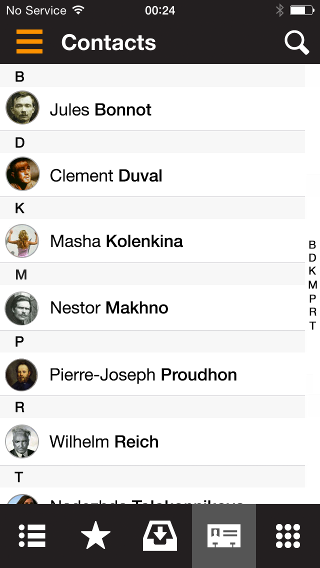
Signal actively promotes as activist messenger by using names of revolutionaries and anarchists (Makhno, Proudhon, Masha Kolenkina) all over their website. Just for example: https://whispersystems.org/blog/images/signal-faces.png
> Simple explanation would be that activists use Signal.

But why do activists simply not use WhatsApp, instead of Signal? If both were suppose to be fully encrypted and secure, why not use the tool that is available. I assume the needing encryption is to prevent the government snooping and eavesdropping on your plans rather than "liking the UI/UX of one system over the other"?

Maybe the activists know something we did not, and are right to be paranoid...

I think the rule of thumb around here is that any system that is closed-source must be treated as inherently untrustworthy from a security standpoint. WhatsApp has therefore always been untrustworthy for the scrupulous, regardless of the relatively flattering PR.
Based on news like this, rightfully so.
Facebook owns WhatsApp and has been increasingly hospitable to government intrusion on users' privacy. That seems like a good enough reason given that Facebook violated its pledge not to combine user data.
Also that the folks in the government doing the banning probably use WhatsApp themselves to conduct business and do their jobs.
WhatsApp is used by over a billion people. I'm sure some activists in Egypt use WhatsApp, too. That said, I think WhatsApp was blocked in Egypt, too, at least for a while. I don't know if they later "fixed" that or not, and how they did it.
A lot of Americans don't understand why messengers like WhatsApp are so popular around the world. The reason is that most carriers still extort users by charging text message fees.

In the US, everyone texts (or think they are using texts when running iMessage) because most plans give unlimited voice and texts, and charge by the GB of data.

Good point, but there is an explanation: blocking WhatsApp would lead to more intense backlash. See what happened in Brazil.

Not to say it isn't both, but the price of blocking (one of) the most popular messaging apps is higher to a government than blocking one in the low low percentiles of usage.

What you say makes blocking Signal pointless.

If they blocked Signal just because it was less of a trouble to block compared to WhatsApp, then all the people that were on Signal will easily switch to WhatsApp... What you have at this point, is a government paying the price of blocking a less popular messaging app they cannot control, while the people they are after can just switch to a MASSIVELY used messaging app the gov can also not control and additionally, is too expensive to block.

If this was the case,it would actually work against the gov. Do not underestimate gov authorities, they are not THAT naive. If they had not blocked Signal at all, they could at least track Signal users and at least have that information: that this small group of people (Signal users), contains the group of people they are after. They could have their honey pot there. Mixing the "dangerous" Signal userbase with the chaotic massive userbase of WhatsApp makes no sense, unless you really have WhatsApp on your side.

I hope you understand what I am trying to say.

edit: rephrasing

I wouldn't overestimate government authorities either. A report on a person of interest crosses the desk of a deputy minister that says the person uses Signal could be enough to get the application blocked in the country.

Elected officials and political appointees demand action on things that are counter to their interests all the time, the people that execute those orders (if they appreciate that the order is counter-productive in the first place) have to decide what measures are worth fighting and which ones are not.

Can you make an unblockable app?
An app that effectively used steganography[1] would probably come the closest to being an "unblockable app". As long as they don't detect that communication is going on, they can't usually block it -- short of blocking everything, which is rarely practical for long.

Some other interesting reading is: [2], [3], and [4]

[1] - https://en.wikipedia.org/wiki/Steganography

[2] - https://en.wikipedia.org/wiki/Covert_channel

[3] - https://en.wikipedia.org/wiki/Traffic_analysis

[4] - https://en.wikipedia.org/wiki/Anonymous_remailer

It would quickly reveal itself either by overtly disclosing its purpose on the app store it's indexed in or through a HUMINT/leaks.
First, just because an adversary understands how a given steganography app works, or knows that it exists doesn't mean that they can detect the specific communication that's occurring, or will move to block that communication.

The canonical image hiding stego applications are a case in point, where the applications are widely distributed and understood, but in principle (if not in practice due to steganalysis[1]) one could know of their existence and how they work but still be unable to detect that covert communication through them was going on, nor be able to block that communication short of blocking all image posting.

Second, they need not be on any app store.

Third, any leaks about their existence, if they come at all, may come too late. As Napoleon said, it's not necessary to censor the news -- it's sufficient to delay it until it no longer matters.

[1] - https://en.wikipedia.org/wiki/Steganalysis

No, but blocking it could piss off a large part of your population.

It all depends on how far you are willing to push the blocking and how much you are willing to disable so you can block anything.

Signal atm are using domain fronting. (iirc the app will soon test the network conditions before attempting to use domain fronting, but for now it checks the country code of your phone number)

It will open a HTTPS connection to google.com but after the connection is made sends a host request for something.appspot.com In order to block that you need to MITM the connection or block google.com (Not sure if DPI could be used to get the host header never really looked into it personally. I know that SNI Sends the host is part of the handshake so the webserver knows which cert to present you with. Could it be extracted, checked agasinst a list and then have the connection reset preventing connection? Dunno never played with it, but its an idea off the top of my head).

(Now for some mild rambling :-p)

Lets say you can't MITM/DPI s you can just block google then they would have to use another CDN, so you block that one too. How many you going to go though before your citizens get pissed off at you and do something?

But lets say you people really hated GMail anyway and put up with not having Google just so this message app was blocked (and the creators don't just change CDN's) then you just force your people to install your own Root Cert or they don't get any encrypted web traffic. Will people complain or just install the Cert and get their facebook back?

So people switch to using personal networks (bluetooth and WiFi hotspots when in a crowd of people) just jam Cell/2.4ghz/5ghz. Will people complain they can't use their phones?

And it just escalates to the point you need a Doctors note and a permission slip signed by your mum before you are allowed to make a phone call.

All the time who actually want to encrypt their messages use math they can do at a desk away from a computer or phone and just use whatever method the Goverment do allow / they can get away with (Standard SMS but who and when can be got from the telco's, dead drops, IRL meetings) but sacrifice their metadata in the process.

Nice description there. Google may not be pleased by this and be under pressure to revoke their access, but eventually they will make it clear that this shit doesn't fly. Nice workaround.
check out Ricochet. If i recall correctly, it uses blockchain type transport over tor.
how does that help, I think tor can be blocked..?
The GFW is able to recognise Tor usage.

> The firewall searches for a bunch of bytes which identify a network connection as Tor. If these bytes are found the firewall initiates a scan of the host which is believed to be a bridge. In particular the scan is run by seemingly arbitrary Chinese computers which connect to the bridge and try to “speak Tor” to it. If this succeeds, the bridge is blocked.

http://www.cs.kau.se/philwint/static/gfc/

With all the things GFW does I wonder if they have some secret conferences or industry journals related to the firewall's algorithms and infrastructure.
That same person developed ScrambleSuit[1], which is used as a pluggable transport to obfuscate traffic and prevent detection/active probing. Work is continuing to keep the GFW from being able to catch up [2][3].

[1] http://www.cs.kau.se/philwint/scramblesuit/

[2] https://github.com/Yawning/obfs4

[3] https://git.schwanenlied.me/yawning/basket2

I don't think Ricochet uses blockchain technology.
This is a nice idea, but it's also baseless speculation.

You're implying that WhatsApp, Inc. gave the Egyptian government the ability to remotely retrigger this backdoor whenever they want to (for those who haven't actually read the article: this backdoor only works when WhatsApp issues a key change for a conversation, and only then in certain circumstances). In other words, you imply that Egypt said "Hey WhatsApp, please actively hack into your Egyptian users' messages and send us the results" and WhatsApp said "ok sure here ya go".

It might be true, but Zuckerberg might be a FSB informant and I might be Elvis reincarnate. These are all baseless, yet not entirely implausible claims.

well it's only baseless speculation if you can provide at least one plausible alternative so we can say, "we don't know which is true".

niksakl's point is that the go-to "probably nothing going on" or the other "WhatsApp too popular to block so we block Signal instead" explanations are just not plausible at all.

So I don't think it's entirely baseless, and with this new information, even less so.

And Egypt making such a deal with a large company, you make it sound like you believe that's implausible, but this has in fact happened before: When Egypt hired Nokia and Siemens to develop, build and implement their DPI infrastructure. Later claiming "gosh we never expected they'd actually use this to hunt down, torture and kill dissidents". Maybe governments aren't that naive, but corporations surely will try and claim to be.

> You're implying that WhatsApp, Inc. gave the Egyptian government the ability to remotely retrigger this backdoor whenever they want to (for those who haven't actually read the article: this backdoor only works when WhatsApp issues a key change for a conversation, and only then in certain circumstances). In other words, you imply that Egypt said "Hey WhatsApp, please actively hack into your Egyptian users' messages and send us the results" and WhatsApp said "ok sure here ya go".

No, the private hackers Govs hire were able to use an exploit to snoop on Whatsapp. That's very probable.

Yeah, but that's not how the exploit would work. If you read the article, the "backdoor" is that WhatsApp could "generate" a new private key without your knowledge. Except that instead of generating a key, they'd use a well-known key. From there, they could give that key to state actors, or they could decrypt the traffic themselves and give it to state actors.

Either way, you need server side control of WhatsApp.

Which you could get by hacking WhatsApp endpoints.
Is there any evidence that this happened?
It is speculation, but it is far from baseless.

Not all speculation is inappropriate; sometimes it is the seed from which a correct conclusion ultimately grows.

Of course it is only speculation, but this is my argument: https://news.ycombinator.com/item?id=13390564
> You're implying that WhatsApp, Inc. gave the Egyptian government the ability to remotely retrigger this backdoor

It doesn't have to be THIS particular backdoor. "Why build one when you can build two at twice the price? Only, this [second] one can be kept secret."

There's a cost/benefit tradeoff to blocking each service and different governments have different thresholds.

It is more likely that the cost of blocking Signal was negligible in contrast to the benefit, while blocking WhatsApp would likely have huge cost - especially in a country that has only recently experienced a number of citizen-driven coupés.

It is also possible that they're specifically targeting a group (Muslim Brotherhood, or Jund al Islam and other Sinai insurgency groups) that utilize Signal.

To add to those who have referenced the cost to the government: consider who else uses WhatsApp besides just activists - it's likely many government employees use WhatsApp as well.

Anecdotal tidbit: I worked at the Rio 2016 Olympics. My team consisted of Brazilians, Americans, Britons, and Koreans. WhatsApp was how we communicated[1], I'm sure the same was true for most of the other thousands of people working setup for the Olympics.

When a power-hungry judge forced WhatsApp to be blocked a couple weeks before the opening ceremonies, it was rather problematic for the Olympics staff. My first thought was "uhhh. This isn't going to last for long," and it didn't.

I can't say for sure that it's because the IOC president called up the Brazilian president, and the Brazilian president yelled at the judge, but I like to think that's what happened.

[1] Integrated language translation would be a FANTASTIC feature to add.

Possibly answers your question: https://news.ycombinator.com/item?id=13234211
There was a different commenter, possibly in a different HN thread, who was explaining that as an Egyptian resident he thought the government was blocking things like Whatsapp and Signal to protect one of the non government employers in Egypt, the telecommunications industry, which makes money from charging for phone calls and sms messages.