|
|
|
|
|
|
by akiselev
3467 days ago
|
|
|
I think that point should be amended to say "rendering subtitles at the output resolution is always better than rendering them at the video resolution." You don't want to upscale 244p soft subtitles to 1080p but you do want to default to giving video authors creative control over how the subtitles are displayed. The ASS subtitle format allows for some very complex styling that can be used as an artistic element in video (or just to make sure there's proper contrast, can be read by color blind people, character differentiation, etc.) so you generally don't want to assume anything. There's also the issue of coordinates for where the subtitles are supposed to be that all go to shit if you render them on a transformed (up/downscaled) frame. |
|
|
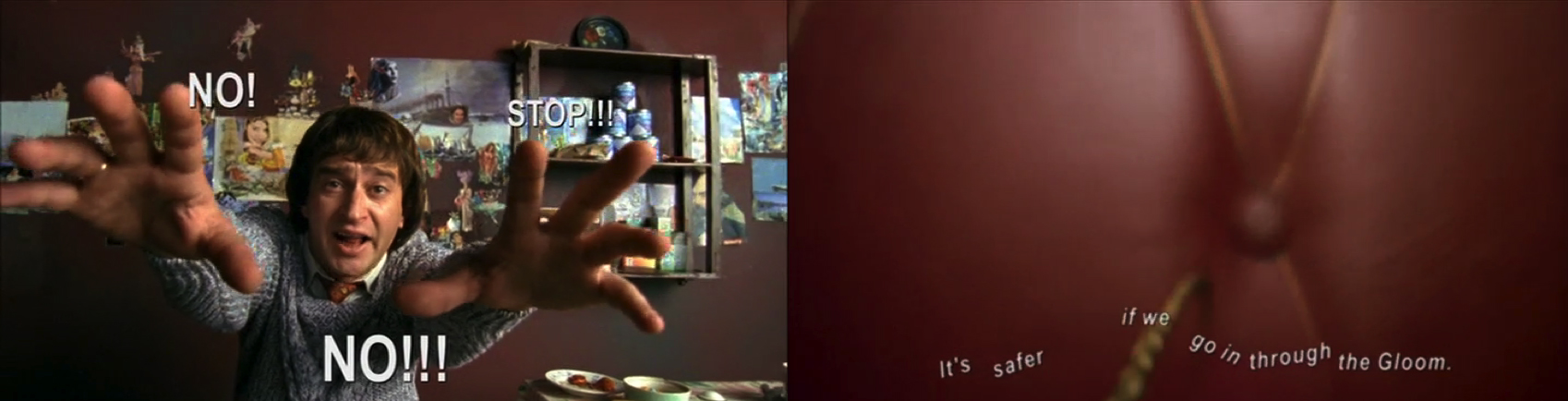
The issue you can run into in practice is stuff like softsubbed signs, which can clash and look out of place with the native video if you render them at full res. There's also a related issue, which is that if you're using something like motion interpolation (e.g. “smoothmotion”, “fluidmotion” etc. or even stuff like MVTools/SVP), softsubbed signs will not match the video during pans etc., making them stutter and look very out-of-place - the only way to fix that is to render them on top of the video before applying the relevant motion interpolation algorithms.
Personally I've always wished for a world in which subtitles are split into two files, one for dialogue and for signs, with an ability to distinguish between the two. (Heck, I think softsubbed signs should just be separate transparent video streams that are overlayed on top of the native picture, allowing you to essentially hardsub signs while still being capable of disabling them)
Also, sometimes, rendering at full resolution is prohibitively expensive, e.g. watching heavily softsubbed 720p content on a 4K screen.