|
|
|
|
|
|
by rtpg
3517 days ago
|
|
|
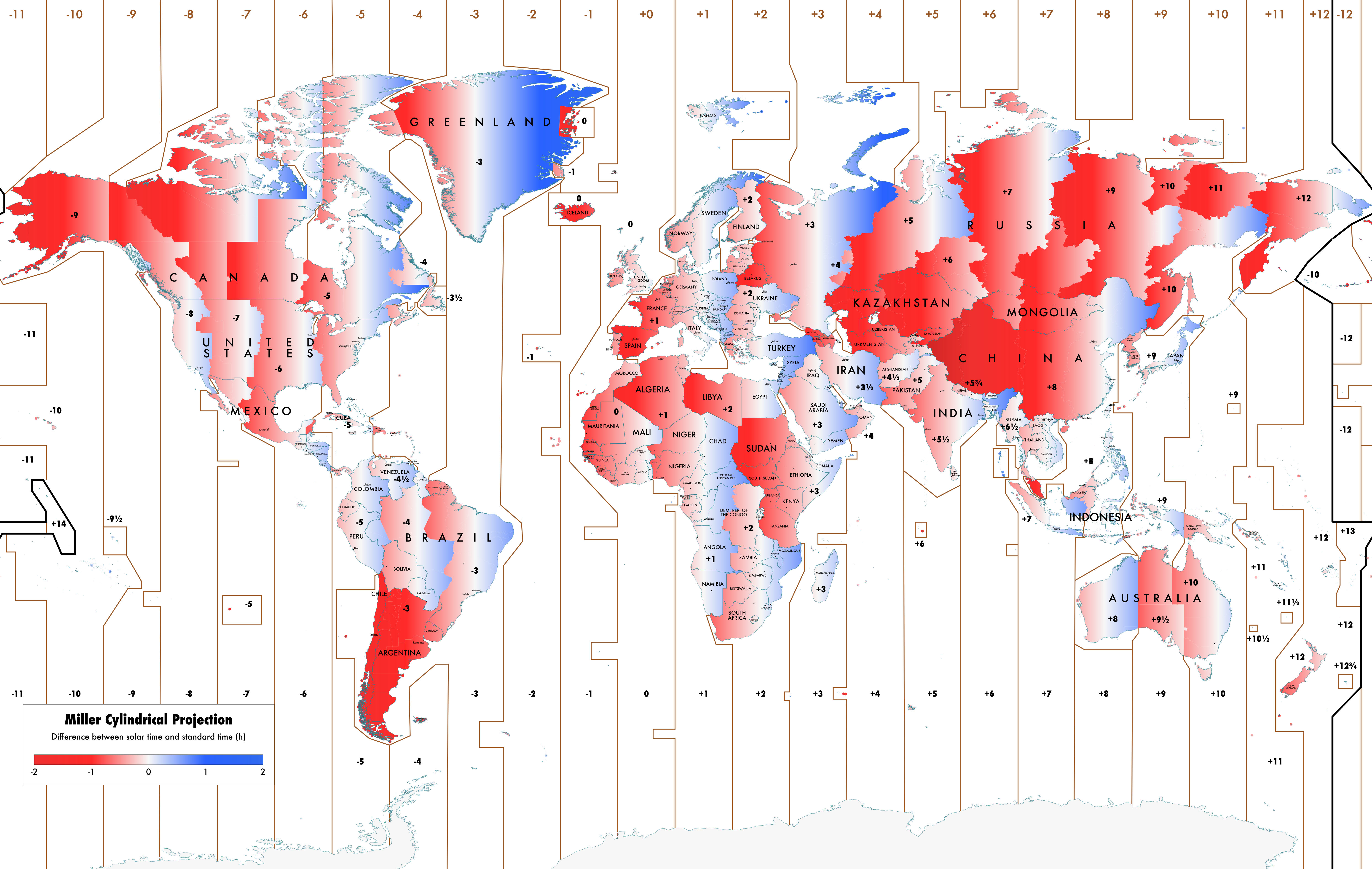
My point is that 9AM in Tokyo and 9AM in Madrid or Virginia are vastly different in terms of "position of the sun", despite being the same longitude. http://blog.poormansmath.net/images/SolarTimeVsStandardTimeV... <-- this map shows the difference between clock time and solar time. Western Europe and much of the US is 2 hours behind solar time compared to Tokyo. So Tokyo is set to a 9-5, but if they want to follow the same strategy of getting to work first thing in the morning, then they should be doing 7-3, or even a bit earlier due to DST non-observance. Main point is that 9 AM means vastly different things, even counting for longitude. Standard time has become standard, in setting when people wake up, but it's far from the locally ideal situations. |
|
|
http://blog.poormansmath.net/the-time-it-takes-to-change-the...
As the picture shows, Spain and the parts of France are the extremes in the Europe, in the rest of Europe the Sun is closer to being at 12:00 (not counting DST) not too different to Tokyo.
Yes, the map you link shows is that some parts of the world have wider time zones than it would allow all the people living there to have the Sun very close to 12:00. But your "Tokyo sunrise" argument is still not a good one. All the areas (and cities) in the map that are "relatively white" have Sun at the highest point around 12:00 noon. Tokyo is "relatively white." New York and LA are also "relatively white." So I still don't know what is your perspective for Tokyo being strange. Can you please explain? The dramatic example would in fact be Spain or even Argentina.