I'm surprised at how rugged the surface looks in these high-res images. Especially compared to the imagined flat landing areas we were used to seeing in the run up to the landing [1]. Just shows how difficult a task it was to land and keep the craft the right way up.
It was aimed at a flat spot, but when it failed to attach to the surface it bounced and floated for almost 2 hours, hitting the surface again 1 km away[1][2]. Its speed of 38 cm/s during that time was below escape velocity but not by much.
> it failed to attach to the surface it bounced and floated for almost 2 hours, hitting the surface again 1 km away[1][2]. Its speed of 38 cm/s during that time was below escape velocity but not by much.
These numbers sound completely ridiculous, unless you've played Kerbal Space Program, and know the visceral pain of bouncing above Minmus with a pixel of monopropellant left in the tanks.
There is no atmosphere and thus no wind (let alone flowing water), so no natural forces to smooth it out. On a related note, moon dust is apparently incredibly sharp for the same reason.
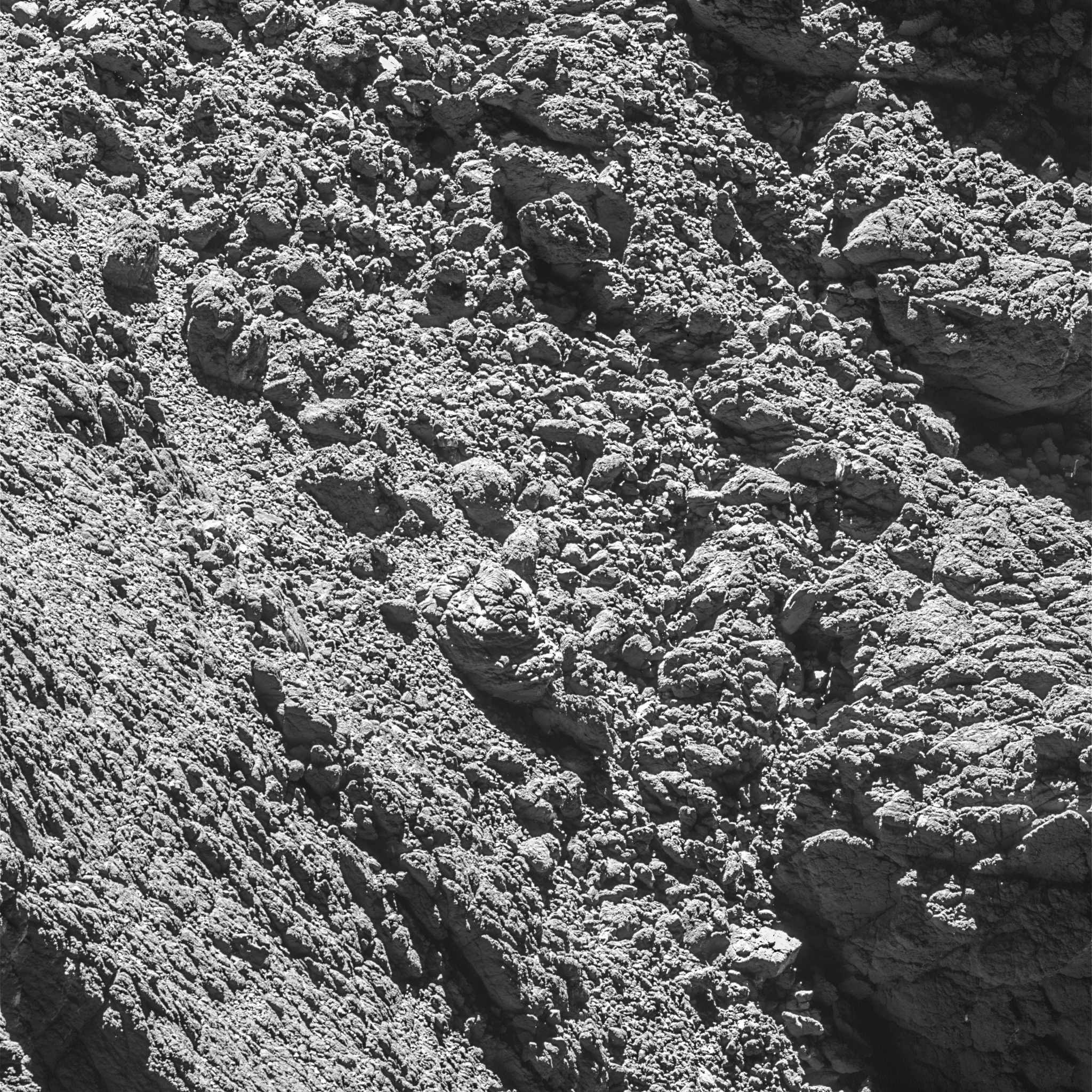
[1] https://en.wikipedia.org/wiki/Philae_(spacecraft)#/media/Fil...