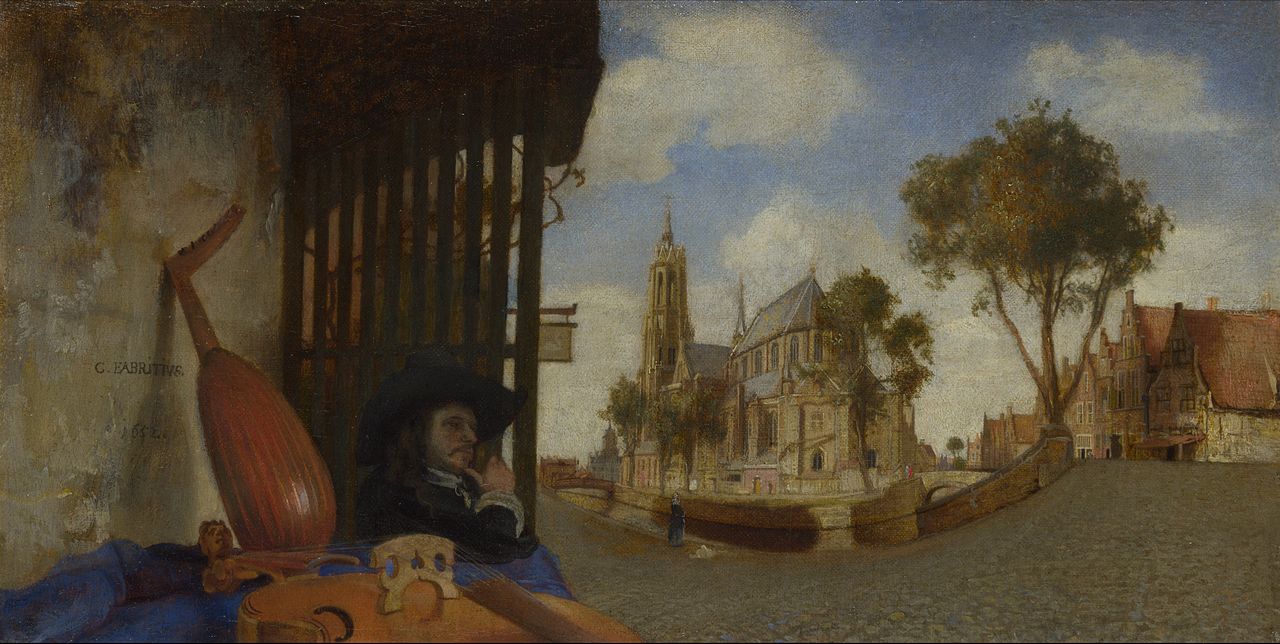
| I used to be a fine arts student and my favorite painters were/are Vermeer and Rembrandt and their circles. I always hated the theory that they used optics, but couldn't quite put my finger on why until I started reading press coverage of that documentary. The problem isn't with the argument (at this point I'm convinced that they did, it stands to reason given the context of them being artisans in the same time and place as people like Antonie van Leeuwenhoek, etc.) but with the way that some people in the press and public seem to see it as lessening their achievements. I.e. Tim's Vermeer copies are held up as examples of how anyone can paint like Vermeer given the tools, whereas to me a direct comparison makes it even more clear how perfectly Vermeer chose when to use a technological aid and when to change things: http://flyingfox.jonathanjanson.com/wp-content/uploads/2014/... Things like the bluriness of the paintings in the background and the slightly softer and more abstracted faces, the additional creams and blue tints in the whites of the walls, the blues that are picked out in the rug in the foreground, etc are what make me love Vermeer so much, not that he's photorealistic. Anyway, I realize I'm constructing a partial strawman here because I don't think people like David Hockney or others supporting the optical argument are trying to claim that Vermeer is less talented than we thought, but it does seem like the press sometimes spins it that way. As an aside, one of the only paintings of Carel Fabritius to escape the gunpowder explosion that killed him as well (made more famous recently by Donna Tartt's 'The Goldfinch') is a really cool example of a painting from the time that was clearly made using lenses. It looks to my eyes more or less exactly like a photo made using the iPhone's panoramic setting. Would be really cool if someone could find the same location in Delft and take the same type of image: https://upload.wikimedia.org/wikipedia/commons/thumb/d/d9/Fa... |

Questions like this are why, I think, realism became less valued on its own in the art world, after the advent of photography. Then it became merely about how the painting looked, rather than how difficult it was to produce.