|
|
|
|
|
|
by objectivistbrit
3652 days ago
|
|
|
> And from the late-1800s till the mid-1900s, there were huge government investments made in building new and innovative infrastructure in the US--railroads, the phone network, state universities and K-12 public education, electricity generation and distribution, highways, airports. Excluding the world wars, US government spending was much lower during that period than it is today. It increased greatly with the New Deal in the 30s, and has continued to increase until the present day. http://3.bp.blogspot.com/-ccxOaz-W_p0/UsgZkuJp-jI/AAAAAAAAAR... In the late 19th and early 20th centuries, there was huge private investment in infrastructure and basic research (e.g., Edison's research lab). |
|
|
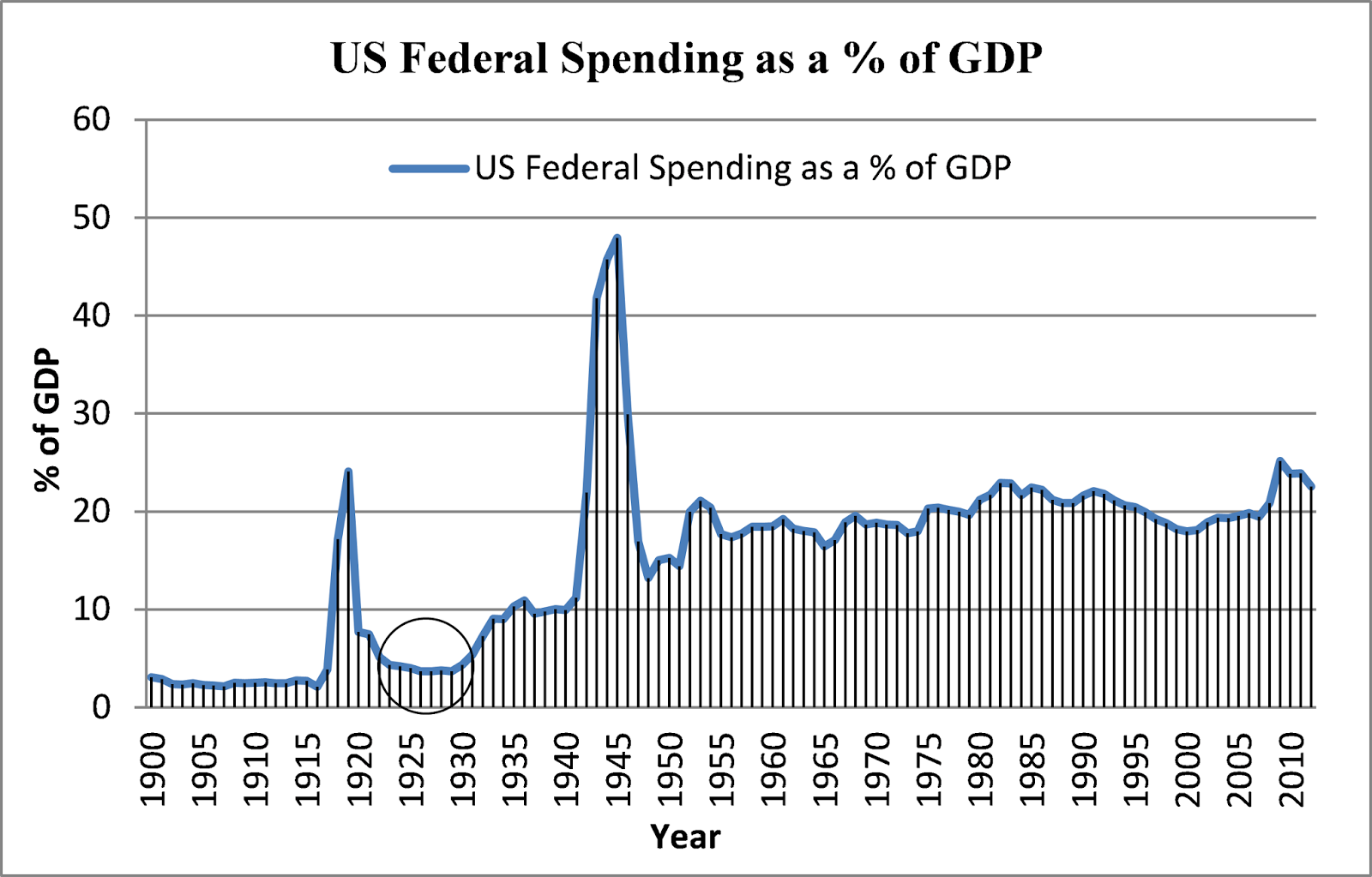
So in this sense you can both be correct.