|
|
|
|
|
|
by partiallypro
3657 days ago
|
|
|
They do? Global poverty is at an all time low. Things only the 1% had 10 years ago are now in the hands of almost every single individual, information no one had access to 30 years ago is now available to everyone in milliseconds. I'd say capitalism is doing just fine. The problem is that capitalism has been so successful that everyone feels entitled to its gains instantaneously. Because of global trade wealth can easily become concentrated because market expansion pushes up capital availability and equity of people who have it. Most people in the top echelon of wealth hold it in stocks. That's why when we have a crisis (like 2008) the wealth gap collapses. |
|
|
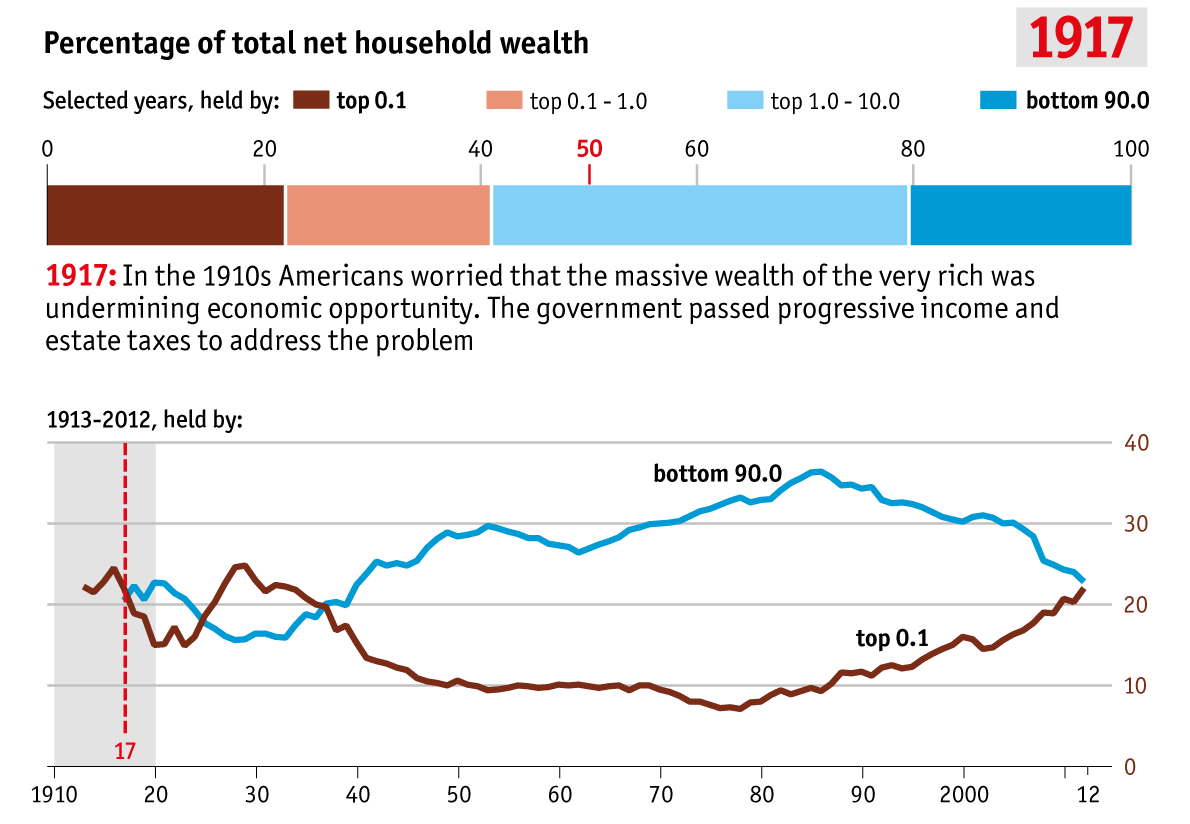
Most of the world isn't capitalist, or at least not traditional western capitalism. Including the west currently, which is in an orgy of corruption and distortion and central control and unfree markets.
Your explanation of how things that used to be valuable are now valueless is exactly the problem from the article. If technological trinkets that are highly entertaining but inherently fundamentally worthless are our generations Faberge Eggs, or clickbait journalism on the internet or music on the internet or pr0n on the internet or social signalling spirals on the internet, that's "great" that its worthless so everyone can have it even if they have no money. On the other hand, when its labor or skill or craft or art, that's kind of a problem for everyone who has nothing else to sell, when that's basically the entire population.
There is also a forest for the trees argument. A state that fails most of its population is a failed state. Doesn't matter if one tree is in the best shape in history, or really that one tree doesn't matter at all, if the rest of the forest is dead. Failed states are ripe for revolution and that really great tree is going to get chopped in the guillotine no matter how great its achievement. A state that fails to serve its population will eventually get replaced, peacefully or otherwise.