|
|
|
|
|
|
by tremon
3661 days ago
|
|
|
But the NT kernel is much more sophisticated and powerful than Linux That does not follow from the example. All it shows is that Microsoft prefers to put a lot of functionality in one interface, while Linux probably prefers low-level functions to be as small as possible, and probably offers things like filtering on a higher level (in glibc, for example). Neither explanation has anything to do with sophistication. I personally believe that small interfaces are a better design. |
|
|
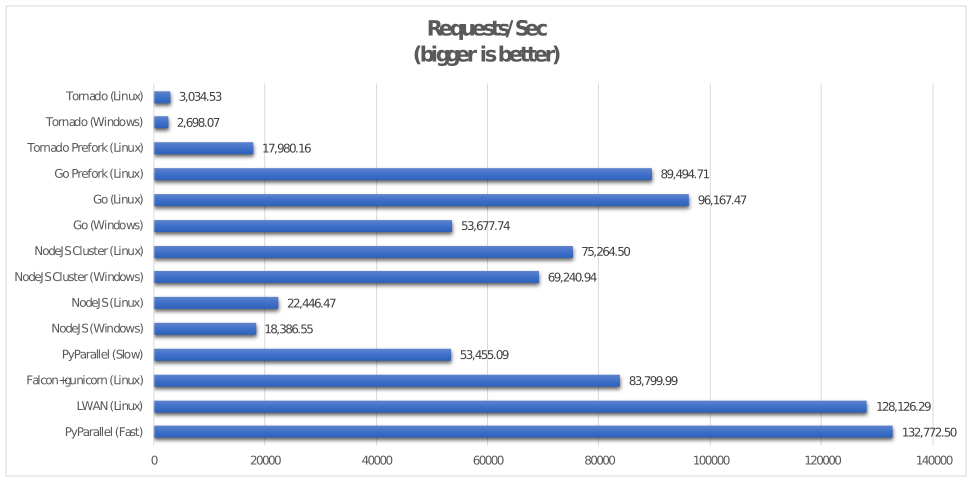
The I/O model that Windows supports is a strict superset of the Unix I/O model. Windows supports true async I/O, allowing process to start I/O operations and wait on an object like an I/O completion port for them to complete. Multiple threads can share a completion port, allowing for useful allocation of thread pools instead of thread-per-request.
In Unix all I/O is synchronous; asynchronicity must be faked by setting O_NONBLOCK and buzzing in a select loop, interleaving bits of I/O with other processing. It adds complexity to code to simulate what Windows gives you for real, for free. And sometimes it breaks down; if I/O is hung on a device the kernel considers "fast" like a disk, that process is hosed until the operation completes or errors out.