Hacker News new | ask | show | jobs
by fennecfoxen 3678 days ago
That's true.

But as far as making the second-avenue 4-track, it isn't the sort of thing that's going to make the subway open sooner to achieve that redundancy. Indeed, it was planned as 4-track and this abbreviated over-budget late 2-track stub is what we got instead.

It's shameful, but that's basically the story of NYC transit, dating back to when the city first drove the IRT and BMT subways into bankruptcy and then followed headlong after them.

1 comments

How did NYC drive IRT and BMT into bankruptcy? It's my understanding mass transit isn't profitable in the modern era.
NYC had a contract with the IRT and the BMT. The contract said that fares would be a nickel. This was before the modern era in which inflation was a thing (historically deflation was more common than inflation, barring gold rushes and the like) in 1913 or so.

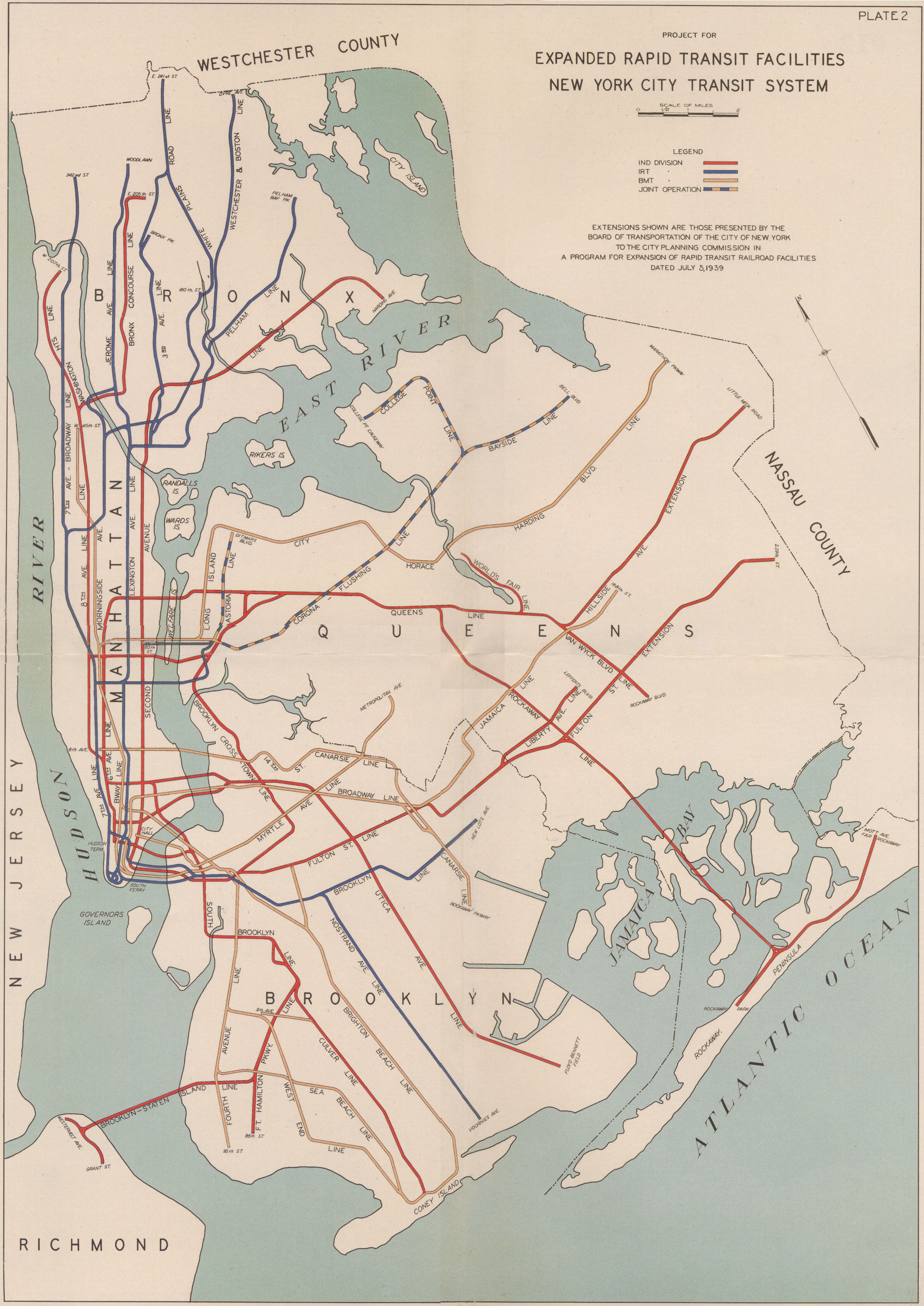
Fast-forward 5 decades. Inflation is real but fares are still a nickel. The city is quite happy with this contractual arrangement, quite happy to make the railways stick to it, and quite happy to take over their operations once they fail. Then they started their big "IND Second System" plan to build a kajillion subways out into all the different stretches of the boroughs (including the Second Avenue Subway up to Throgs Neck): https://upload.wikimedia.org/wikipedia/commons/b/b3/1939_IND...

... and by 1975 the city was on the brink of bankruptcy too.

As for mass transit in the modern era, it's certainly not surprising that it's unprofitable given who's operating it. Profitable mass transit is surely impossible today... politically, anyway. :b

Thats a wonderful map.
They didn't New York City bought the IRT, BMT and the IND - the original competing subway lines. The thought was that that the city shouldn't be beholden to privately owned transit systems. The sick irony is that now New York City is beholden to a monopoly(MTA) and as with most monopolies they are a dysfunctional, bloated bureaucracy, who have little incentive for improving service or innovating.
It is, in Hong Kong, and massively so. The MTR there had to reduce fares temporarily... to avoid too big a profit.

The real MTR strategy, though, is that they get to choose where stations go. That allows them to buy up land in the area, before they announce a train is going there. The land next to the train station suddenly skyrockets in value... and the MTR make out like bandits.