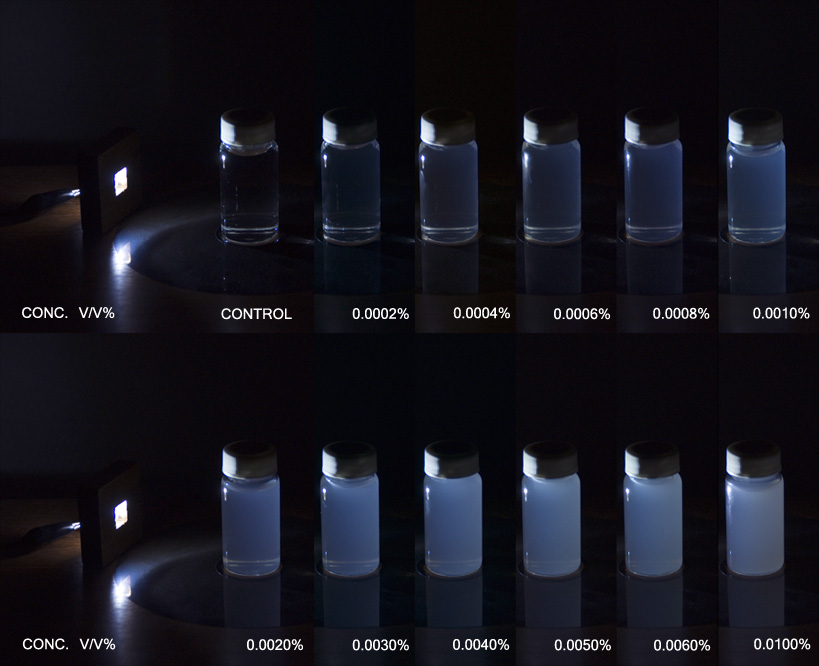
It feels like they charge so much not because there would be some principal engineering / technical obstacle but simply because they can. They have been the first who realized something like this can be done (now that LED lighting progressed so far) and for rich customers this is a feature that's highly desirable, so they are willing to pay so much.
They do have a good marketing. Their business model depends on others thinking there is some special magic.
I had to see that reddit post to even start questioning that something like this could be replicated.
They might charge as much as they do because they're making their special-sauce material in a really non-cost-effective small-batch way. If that's true, then if they just released their material process patent into the public domain, probably the windows would still cost $35k for a while, and then gradually decline, step-wise, as competitors created bigger and better processes to do the same thing.
I have a suspicion you may not even need scattering to achieve similar psychological effects.
In computer graphics, if you want to get "daylight" illumination for cheap, you simply use two lights - one white-to-yellowish directional and one bluish hemispherical:
You only compute expensive scattering if you need volumetric effects (e.g. god rays or atmospheric fog blueing things far away, on the order of at least hundreds of meters).
But here for simple indoor lighting, you don't really need volumetric effects. You just need proper light color coming from roughly appropriate directions - one strong white-to-yellowish light (coming from uniform direction) that will cast hard shadows and one weaker bluish diffuse light (coming from many directions) that will cast soft shadows.
Real physical double-light would look better - this demo lacks ambient occlusion for hemispheric component (soft shadows in real world are free, in rendering they are expensive).
LEDs are used to grow many varieties of coral, with a lot of success. The article below talks about many of the factors you have to consider when emulating sunlight.
Depends on what you mean by comparable. LEDs (and CFLs) aren't blackbody radiators. It's possible with many fine tuned LEDs you can get a spectral power distribution approximate to that of the sun, but... for now it's expensive. And difficult to make consistent.