It feels like they charge so much not because there would be some principal engineering / technical obstacle but simply because they can. They have been the first who realized something like this can be done (now that LED lighting progressed so far) and for rich customers this is a feature that's highly desirable, so they are willing to pay so much.
They do have a good marketing. Their business model depends on others thinking there is some special magic.
I had to see that reddit post to even start questioning that something like this could be replicated.
They might charge as much as they do because they're making their special-sauce material in a really non-cost-effective small-batch way. If that's true, then if they just released their material process patent into the public domain, probably the windows would still cost $35k for a while, and then gradually decline, step-wise, as competitors created bigger and better processes to do the same thing.
I have a suspicion you may not even need scattering to achieve similar psychological effects.
In computer graphics, if you want to get "daylight" illumination for cheap, you simply use two lights - one white-to-yellowish directional and one bluish hemispherical:
You only compute expensive scattering if you need volumetric effects (e.g. god rays or atmospheric fog blueing things far away, on the order of at least hundreds of meters).
But here for simple indoor lighting, you don't really need volumetric effects. You just need proper light color coming from roughly appropriate directions - one strong white-to-yellowish light (coming from uniform direction) that will cast hard shadows and one weaker bluish diffuse light (coming from many directions) that will cast soft shadows.
Real physical double-light would look better - this demo lacks ambient occlusion for hemispheric component (soft shadows in real world are free, in rendering they are expensive).
LEDs are used to grow many varieties of coral, with a lot of success. The article below talks about many of the factors you have to consider when emulating sunlight.
Depends on what you mean by comparable. LEDs (and CFLs) aren't blackbody radiators. It's possible with many fine tuned LEDs you can get a spectral power distribution approximate to that of the sun, but... for now it's expensive. And difficult to make consistent.
I'm looking up at my square white ceiling wondering what it would be like if the entire surface was this CoeLux panel. Imagine a vibrant blue sky with a beautiful sun tracking its way across your ceiling all day. I think it could be breathtaking.
This is the type of 'simple' invention that you could never really anticipate but changes the future profoundly.
Sadly they write little substantial about the internal construction principle so I'm making an educated guess:
Based on the pictures one can see that relatively hard shadows are created as expected by a point-like light source (like a far away sun). Also in the movie it can be seen that the 'sun' moves with the camera when the camera moves.
The hard shadows would be created if all light emitting the 'window' are almost parallel, which would require some kind of optics. So I'm guessing that the 'skylight' is made of a slightly curved backside supporting a large number of white LEDs. Each LED then would have a small lense so that all light is emitted within a very narrow angle. The slight curvature of the backside would then lead to the apparent movement of the light-source if the camera moves. (Because one would look into the opening angle of a different portion of the LEDs)
The blue color itself is a layer of nano-particles leading imitating Rayleigh scattering of the atmosphere.
Artificial sunlight could be revolutionary if applied with scale in cities. It could enable new, far denser forms of architecture "built for people", mitigating the ill psychological effects of being without natural surroundings.
The energy use would be heavy, but it might be worth the cost given the transportation energy savings and higher productivity and happiness of the city population.
Don't forget seasonal affective disorder, or just the general influence on affects that cloudy weather has. Imagine waking up to streaming sunlight every morning. I can see that making a huge change in people's lives.
My understanding is that (a) utilization of dietary vitamin D is significantly lower than naturally produced D (from sun exposure) and (b) vitamin D is one of several micronutrients produced from sun exposure.
> My understanding is that (a) utilization of dietary vitamin D is significantly lower than naturally produced D (from sun exposure)...
The end product of UVB irradiated skin (i.e., sunlight) is vitamin D3. (D3 is "activated" locally in tissues utilizing it.) Ingested D3 supplements effectively add to the body's supply, though the optimum intake is controversial and varies among individuals.
One difference between sunlight and supplements is that D3 production via UVB exposure has an upper bound, only so much can be made because there's a limited amount of substrate available in skin cells to convert to vitamin D. The upshot is sunlight is "safer" re: potential toxicity of excessive vitamin D intake.
AFAIK vitamin D is unique among nutritional factors in its reliance on UVB exposure. Don't know of any other micronutrients directly related to sunlight, but possible there's something I've overlooked.
That presumes that artificial sunlight is actually desirable. One of the important functions of a building is to block the sun. Very few people would want to live/work in direct sunlight.
For circadian light you just need something that is sufficiently bright and blue. ... or just blue for that matter, blue LEDs are cheap and efficient.
None of this can improve surroundings that are otherwise unpleasant...
I think that sunlight is highly desirable, to an extent!
A building's function is to block unpleasant sun, but a window's function is to let it in and to control it. Artificial sunlight could enable more control over the sunlight factor.
Regarding circadian rhythm, it is not fully understood and blue light may not be the only important factor. Perhaps the visual sense that there is sunlight is also an important cue. But yes, blue light is clearly important. I would hope that any public lighting system would strongly take it into account.
For example, the color and feel should reflect what happens in the natural world! The LED lights being installed on city streets right now might cause problems for us (not to mention the blue light in our screens).
Unpleasant surroundings take a huge toll on people in cities. I am dismayed by the noise, pollution, lack of overhead cover, and threatening cars when I walk around SOMA and so many other places. A single tech like artificial sunlight won't cure all ills, but it is a tool that will help cities become larger and more livable.
Construction robotics, new materials, methods to better maintain plants and trees, and obviously transportation are also important tools in this fight.
But, can we really replicate sunlight? Might sound pessimist but the sun is a star, 1AU away, with a huge mass compared to earth, and It's the energy source for life here. Seems like a very long shot aspiring to create an artificial replacement for that, even for the narrow objective of tricking our bodys.
There must be some scientific knowdlegde regarding this that I ignore.
Like you said, the sun is 1 AU away, we're getting a fraction of its energy. Actually that fraction is still way beyond what were able to generate, and will remain that way for quite some time. However, we only need to illuminate the part of the earth with humans in it, which is a more manageable scale.
What we consider sunlight is essentially the light emitted by any object at 6000K, which is reasonably easy to achieve but somewhat difficult to contain. And actually mimicking the sun is usually not the best method (for one, the unfiltered UV would be very unhealthy). It's possible to approximate the visible part of that light though, and we're gradually getting better at it.
Have you explored possibility of making this light rich enough in different wavelengths to also let plants grow under it? Or is it not possible with LEDs?
It’s also a 660-pound object installed in a drop ceiling nearly a meter thick. You’d need very high ceilings to start with, and you’d better hope it’s installed well. Not to mention that it consumes up to 300W of power.
HD was clearing out the first gen version with the larger heatsink at the base. I went back and bought the entire pallet. The newer V2 generation, with the plastic housing that no longer requires the large heat sink is running $3.97/piece.
I replace bulbs like Johnny Appleseed. I see an incandescent bulb that matches the soft yellow temp? Out it goes, gets replaced with a Cree bulb.
It's nice, but it's not $30,000 nice. Still, the cost of LEDs per lumen continues to drop. LED auto headlights are now below $100.
There's a market for this in hospitals, to keep patients in intensive care units in sync with the outside world. Fake windows with lighting tied to the day/night cycle have been used. Here's someone looking for funding for a startup to do a really good virtual window.[1]
It does look very realistic, but makes me wonder whether having an uneven light distribution is desirable or whether it's something that's needed to trick the body.
For those that work in office buildings and may be far away or do not have immediate access to Windows while working, would this be a good investment for companies to make?
The sun availability does seem to affect my daily energy and motivation.
Sure, I want that, but that article was a year old. Their website seems like it only mentioned things through 2015. Not for $60,000. I'm in seattle, add me as a reseller for say $1000 and I will sell 10,000 units.
In this video ( https://www.youtube.com/watch?v=aJ4TJ4-kkDw ) they talk about the usage for underground buildings. It could be for underground buildings what the lift is for high buildings (eg make it practical).
The company's website suggests that you can change the position of the sun, presumably there's nothing preventing you from modifying it on a timer or slider.
Actually, the light is set at a certain angle and can't be changed [0]. They let you choose between different angles – 60º, 45º, and 30º (mounted on the wall). They say that they are working on allowing for light adjustment in the future [1].
(Not your fault though - their website is pretty sparse on information.)
I had the same reaction until I read the article. I think it's the type of objects and the small room that looks a lot like the ones used in rendering demos that gave me that same impression. Just waiting for them to put a glass of water to show transparency or something similar ;p
I'm photophobic and am guaranteed a migraine when in direct sunlight or high contrast lighting environments. Diffused, evenly lit indoor environments are my safe harbor without dark/polarized/full-cover sunglasses. Please don't take that from those of us that'd love outdoor lighting, but physically cannot tolerate it.
Now that's the kind of thing that would make Vault 101 more cheery! The survivors of the nuclear apocalipse would surely revere the inventor of this thing as a god.
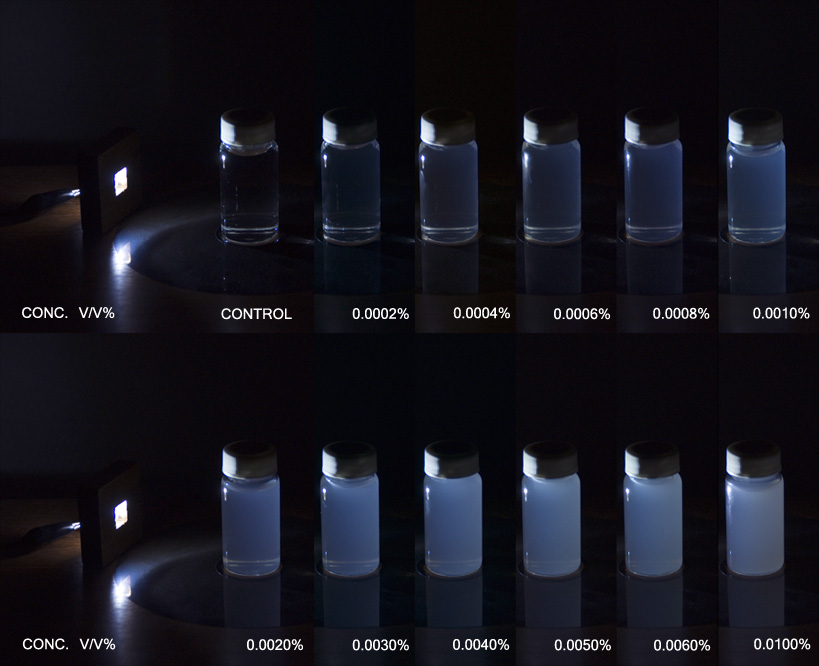
http://imgur.com/a/r31Gb
While definitely not the same, there should be an opportunity for something costing less than $35,000 while still getting closer.
For example here is DIY 90,000 lumen flashlight that supposedly cost $250-350:
https://www.youtube.com/watch?v=-JVqRy0sWWY&t=3m40s
Using 10 of these LED chips:
http://www.ebay.com/itm/100W-Warm-White-3000K-LED-Light-High...