|
|
|
|
|
|
by taterbase
3837 days ago
|
|
|
Error correction (or redundant parity data as est mentioned in another reply) just kicks the can down the road. Let's say you're using a 20/40 erasure encoding. You break a piece of data up into 20 pieces and create 20 extra parity pieces. Now you only need 20 out of the 40 to recreate the original data. Are we encoding the encrypted data? Ok well we need at least 20 good pieces, and that's to decode the original data. This method doesn't allow for seamless degradation but allows for some data loss in the transmission (while effectively doubling the amount we're trying to push in the first place). Let's say we're breaking up the original data, creating parity pieces and encrypting each little piece. Then it could decrypt each piece it got and use it and if it couldn't decrypt a piece just throw it away. This could potentially work but parity pieces are useless unless you are trying to recreate the original file neglecting the ability to degrade quality. So redundancy is more important in this scenario than parity. But, if we make the encrypted pieces small enough, say each packet body, then that could probably work but be resource intensive. Encode/decode every packet, if successful insert into feed, else throw the packet away. This would work a lot like the existing technology just requiring some middle step of decrypting each packet body. |
|
|
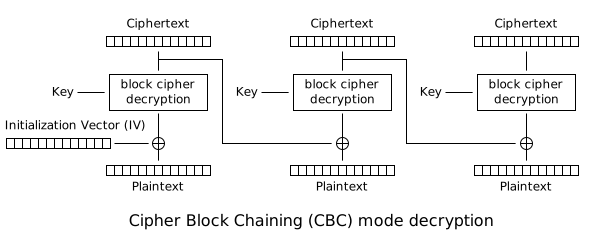
So in other words you can use what's basically the default mode of encryption, CBC. Each encrypted byte only depends on the adjacent 32 bytes, so you can allow errors through and they affect a couple pixels instead of a single pixel.