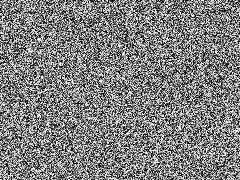
Uploading a URL of white noise from Wikipedia gave it a high-memorability (0.82) with lots of areas of interest. Secondly uploading a purely white image [2] produced high areas of interest in the top corners and a mediumly interesting image (0.62).
I thought the tests might reveal something useful, like the eye-tracking heat-maps of Jakob Nielsen [3] but I'm not convinced.
A machine-learned system is only as good as its training data, at best. In this case, it was trained on natural-looking images, so results on "unnatural" images will be unpredictable/random/wrong.
One way to fix this would be to provide "bug bounty"-style rewards for producing images that makes the system deviate significantly from mechanical turk workers performing the same task. I wouldn't be surprised to see google/fb etc starting such programs in the near future, as their ML systems reach maturity.

One way to fix this would be to provide "bug bounty"-style rewards for producing images that makes the system deviate significantly from mechanical turk workers performing the same task. I wouldn't be surprised to see google/fb etc starting such programs in the near future, as their ML systems reach maturity.