|
|
|
|
|
|
by zombition
3888 days ago
|
|
|
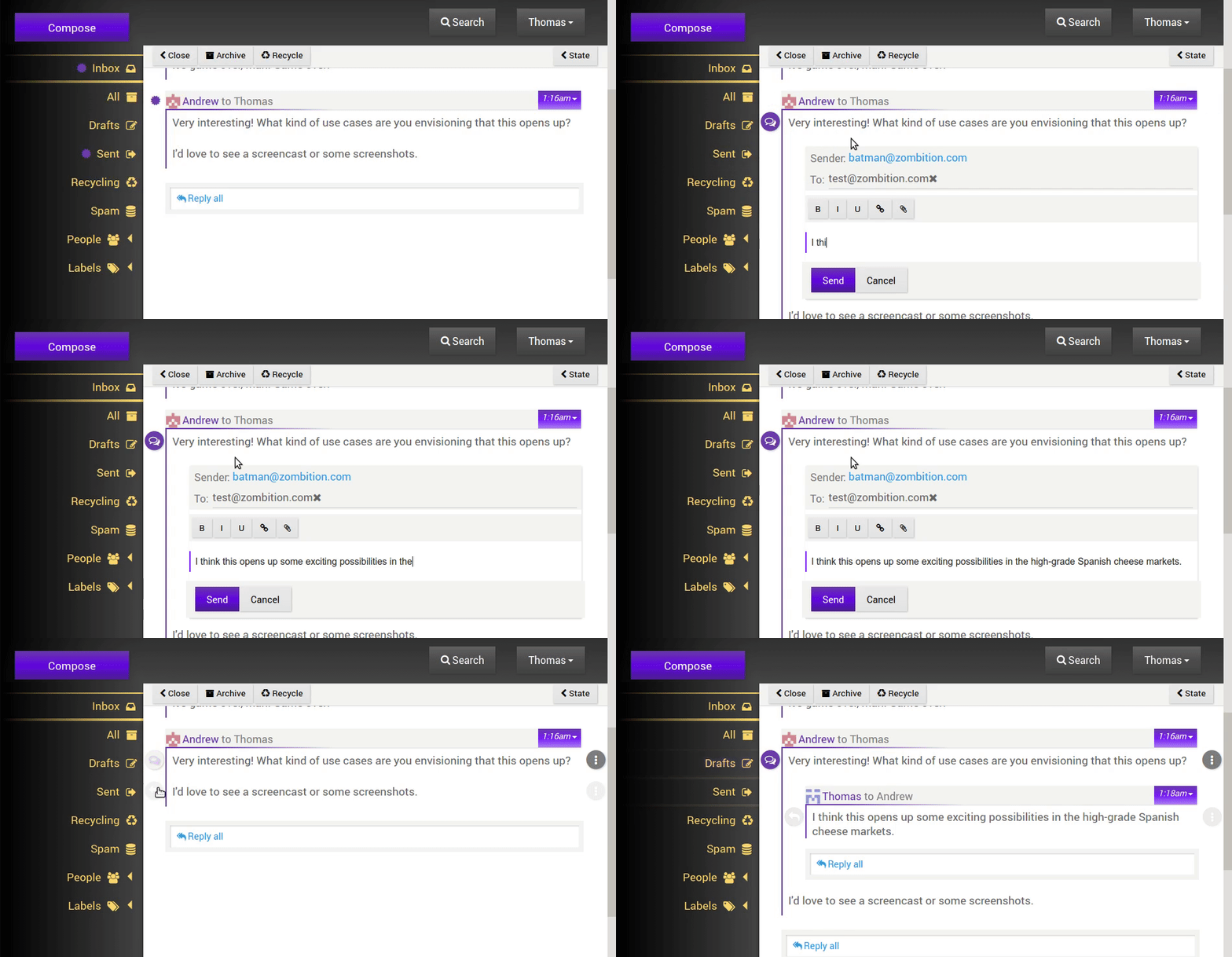
I tried some similar things when making Zombition, but I found that blurring the line between email and instant message mainly results in a more complicated UI and more details for end users to remember. For example, with instant messages you generally have some status information about whether or not the other user is online, whether or not they may have read whatever you just sent them, and whether or not they're typing a reply. If you want to add that into a email interface, how do you indicate to your end users that another user will never have associated status information because their account is on a server that is incompatible with the method you proposed? Plus the behavioral differences between email and instant message didn't blend well: was I going to wait in a mixed email/instant message conversation for a response, or was I going to move on to the other conversations in my inbox and send a reply or archive each so that I could move on to doing other things? And if I wanted to temporarily leave an instant-message-like conversation so that I could deal with some more email-like conversations, would the person I was chatting with know whether or not I would return? Eventually I stepped back to look at what additional value a user gained by blurring instant message and email in this way. Fundamentally they're both asynchronous text-based communication, and the things you can actually do with them aren't strikingly different. The biggest difference is in the expectations that a user has for each. Anyway I still wanted to "innovate in the email space", so I decided to go a more extreme route, and I made my own pull-based protocol (superficial similarities to IM2000 - http://cr.yp.to/im2000.html) that retains backwards compatibility with email while adding abilities like stateful plugins (JavaScript apps/widgets) that can share data through the new protocol, editing messages after they're sent (SMTP recipients receive the new version after the update), and inline replies to parts of messages to enable nested conversations. If you're interested, I posted it earlier this afternoon here (https://news.ycombinator.com/item?id=10693535). |
|
|
Just to be sure: You know that that is really easy with email as it existed until about 20 years ago, including BBS networks, usenet, etc., and that it is still trivial with good email clients? That was a solved problem that made email really efficient, until some clueless developers and users came along and disinvented (is that a word?) the solution in order to make email easy to use (or so they claimed).