Its interesting seeing this current trend of "Unicorns" (WeWork, Uber & Lyft) relentlessly pushed to quickly to grow and expand that they're getting pushed far past the bounds of a sustainable business.
Is this VC/Industry pressure that needs to be dialed back?
I'd say it's partly VCs but also the fact that, once they stop growing quickly, they need to start turning a profit, to justify a big valuation.
As long as they're still growing they can blame any losses on the costs of expansion. The hard part is becoming profitable once that growth period is over.
My feeling is that Uber, Lyft and WeWork will really struggle to turn big profits, there's just not enough differentiator to allow them to charge higher prices than other market participants.
with Uber/Lyft the endgame appears to have been self-driving vehicles, but it seems those are a long way off mass market adoption, so it's not likely they can sustain themselves while waiting for that to occur.
I'm not sure what WeWork thought the long term deal was...
Keep in mind that's the model that worked when unit economics made it possible to capture outsized profits.
Think of Facebook, their incremental infrastructure costs for delivering messaging and feed services to an additional user are negligible (significantly less than a dollar per quarter) compared to the revenue they're making per user (dozens of dollars per quarter). In that cost model, grow at all costs then monetize makes sense.
For Uber, Lyft, and WeWork, there are no economies of scale (ignoring
the fixed R&D costs). Twice the amount of rides given will have twice the driver costs, and the drivers will always petition to get a bigger slice of the pie.
Yes. You can tell because in addition to their lines of business they have these massive cash sinks tinkering away on random stuff. Why does Uber need to hire people to write a tool to eliminate null pointer exceptions in Java? There really might be a sustainable business - but it won't be doing most of this stuff:
I have been in companies that open-sourced small bits like this. Basically, it worked like this: someone came up with a cool tool that helped them (in this particular case, likely finding NPE's in their Android app). Then others heard about it and started to use it. Once the use spread a bit, the developer who built it tried to clean up the code and document it better and make it easy for others within the company to use, and then someone said "let's open source this" because that way it looks great for the company ('see, we're giving back, we're cool- more developers will want to work here') and the original engineer (who now has a open source project on his resume, also probably gets to go to a conference and give a talk on it, which the company will gladly pay for because it makes them look cooler and attract more developers). The LoE once you've built the tool is pretty small, and 'finding things that were causing crashes in our Android app' clearly has a direct bottom line impact on Uber.
But it isn't the crown jewels of the company: their data, their scheduling algorithms, anything like that, its little side projects. (Some companies do open-source the crown jewels and make their money on support contracts, but that's a totally different business model; outside of Red Hat I'm not sure how sustainable such businesses are.)
Why? They got their exit $$, didn't they? I think we're already seeing the inevitable effect: nobody's buying the bullshit anymore and WeWork's IPO is paying the price.
I expect the stock prices of the other fauxnicorns to collapse now that investors see that they got taken for a ride.
They could double their fares, and fire 90% of their engineers, and for a quarter or two, they'd make insane profits before the public flocked to other platforms and a lack of product innovation killed them.
Think AOL. They still have a lot of dialup customers, and still make profit from them.
Once the VC money dries up, I think it's likely that drivers and passengers will still want an app to facilitate the transaction. I've seen it suggested before that such an app could allow both parties to negotiate the rate between them.
Does such an app already exist? If so, why isn't it more popular? If not, why not?
Interesting suggestion. It is sometimes said that Uber was started based on Kalanick's Randian free market ideas. And at a superficial level, it sorta looks free market - the price responds to supply and demand for instance. But interestingly, that price is being set by, effectively, a central planning process, not a free market. The soviet union didn't have the computing power to pull that off, but Uber does.
Of course, there is all of the regulatory capture and monopoly tactics which are also inconsistent with free markets, although perhaps not inconsistent with Objectivism (depending on your view).
A true free market version of uber would be interesting.
> It is sometimes said that Uber was started based on Kalanick's Randian free market ideas. And at a superficial level, it sorta looks free market - the price responds to supply and demand for instance.
If you need to pump billions of dollars into the market every few months, it's definitely not free.
Free markets require agency on the part of the participants. Network effect businesses in many cases devolve to central planning, because it's more efficient.
You don't need computers to do this stuff. The problems and solutions that the Soviet Union faced in central planning are not dissimilar to what Uber faces in its corner of the universe. Fundamentally, Uber sells a product that is too expensive for the market to adopt in critical mass. So they implement price controls, first by flooding external capital, and then by squeezing the suppliers.
Ignoring subsidies that Uber pays drivers, if you let drivers set their own rates, I don't see how that's not worse for drivers. Whatever rates Uber sets, there is a willing driver 2 minutes away, so that price is clearly sufficient for a driver. Letting them set their own rates seems like it would just incentivize lower rates at a time when the gig is already pretty bad and hard to live on.
I wonder if there would be a way to allow someone to cap their amount they want to pay for a ride and the same for the driver ... I wonder if being able to schedule ahead of time and having a driver accept an exact job hours ahead would be interesting.
I can imagine a simple model where a customer requests a ride. The nearest 3 drivers get asked how much they want to take the fare (perhaps a simple UI saying "What would Bob have to pay you to get a ride to Brooklyn? [$12] [$15] [$20]"). Driver who offers the lowest gets the job.
Uber sets the middle choice to be their guess of the market rate, and the above and below options allow the driver to either undercut to be sure of getting the business, or raise prices to try and get more money.
Considering how much Uber is under pressure for employee vs contractor and unionisation, I'm surprised they don't do this.
This is spot on. Uber deep down is only a logistics company. Maybe logistics with a price modeling underneath, but its not a ride sharing company. That's what they are using their logistics software for today (and now meal delivery) but as soon as they realize the can license their logistics software for pretty much any industry, they will layoff thousands and simply license software and raking in buckets of money for YEARS. This is where they will finally find true meaning in their valuation.
If the VCs are being bankrolled by Saudi money (via Softbank) that has noplace else to go, because no one wants it, the money might not dry up. With this in mind, Khosrowshahi may be right about Uber's sustainability.
This could be smoothed with some thoughtful UI design though.
Drivers could set their preferred areas and rates beforehand, creating an inventory of drivers.
For riders asking for a ride to a destination, they'd get a slider that has a preset 'Uber suggested fare,' based on their driver inventory. One could slide it up or down and see the wait time for a pick up and car quality change.
They can just hide it behind a non obvious ui and create it for compliance purposes. Effectively it will be the same since very few passengers or drivers will use it.
The problem is how do you control for quality? What if the driver shows up in a filthy car, or they have a violent criminal background? I guess it could operate on a rating system, but the first wave of users would be taking risks.
Without either a company handling driver screening, or a authority handling licensing, aren't essentially just jumping into a random stranger's car - the one offering the lowest price?
thought about this too. Like a mesh network thing where you're connected to drivers and customers in your immediate vicinity.
There has to be an opportunity for something that is distributed and open because I don't really see why this even needs Uber at all, taking insane cuts that should belong to drivers or be savings for customers.
I’ve already started to see price gauging on UberEATS in SF. Not sure if I was an A/B test or not, but deliveries which include both a service fee and delivery fee totaling $7/8/9 AND the UI defaulting to a $3 tip before delivery, just has me scratching my head.
Throw in surge pricing which adds ~$15 for even close (<10 minute deliveries), and you quickly see it falling apart.
They laid off 400 marketing employees in July[1], out of 1200 total. If you assume an average salary of $75k (not sure how accurate that is; just the average in my non-CA market per Google) and a cost to Uber of 1.3-1.4x that (so ~$100k), that cut $13M every 3 months (of ~$40M for the team total). That's just payroll for 1 team and they employ 22k employees worldwide and 11k in the US. It's not difficult to see them spending $5B every 3 months.
Not sure why this is being downvoted. It's an interesting idea to consider.
It would probably require Uber going through a bankruptcy and reforming as a company with a dramatically different structure. Uber going through a bankruptcy process is not a far fetched idea considering their financials.
Are you implying Uber could convert to a worker cooperative? That would be a little difficult to pull off given the amount of VC money they've raised on top of already going public.
Uber's entire system is based on pushing the risk (varying levels of business, injury, etc) on to their drivers / customers... and they lose money on that.
I'm not sure being more friendly to drivers would get them anywhere.
Likely enough for Uber to bet on it.
The whole idea behind the company was bet that once they capture the majority of market via aggressive expansion, the self driving auto will hit the market allowing them to cut out people from the business.
Seems like they underestimated and going to crash (or they pivot and change the model to actually include human drivers as part of the business).
Some will blame the upcoming recession on trump. It’ll actually be caused by another Silicon Valley bubble. They’ve run out of cheap money and now the hobby investors are refusing to take the bait.
Sure, Uber will be sustainable, but only when the price of each ride increases to the point where Taxis are price competitive again. At which point, why would people use an Uber, when they can use a taxi at the same price?
There are benefits to Ubers, but 90% of people I know only use them because they are cheaper than a taxi.
Software, and the ease of getting one. If I want a taxi, I have to google for local taxis, call and hope they pick up, talk to someone who seemingly is always pissed about answering the phone, be lucky enough to speak to someone who I can understand, hope they actually show up, THEN deal with payment that is never available in the cab, and wait while they call in your credit card number to home base. It's a terrible experience.
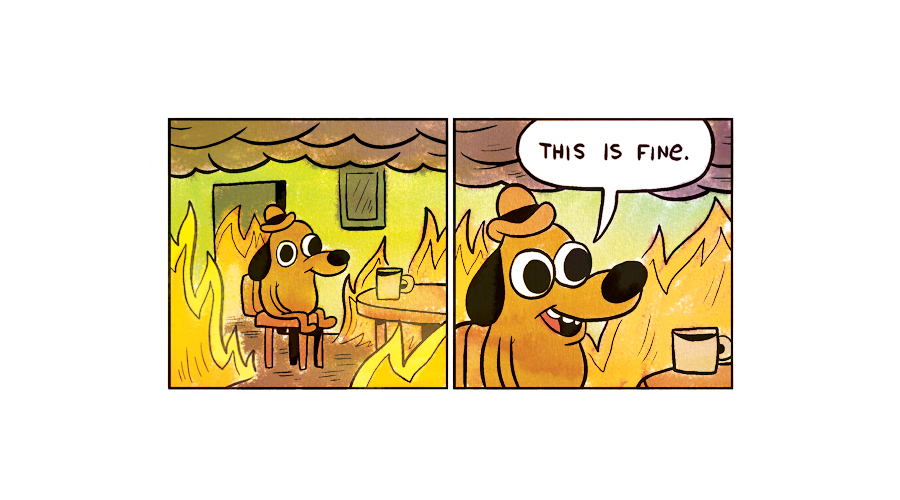
"Nope, the company is pretty much fucked. I'm out of here as soon as I negotiate a large enough golden parachute."